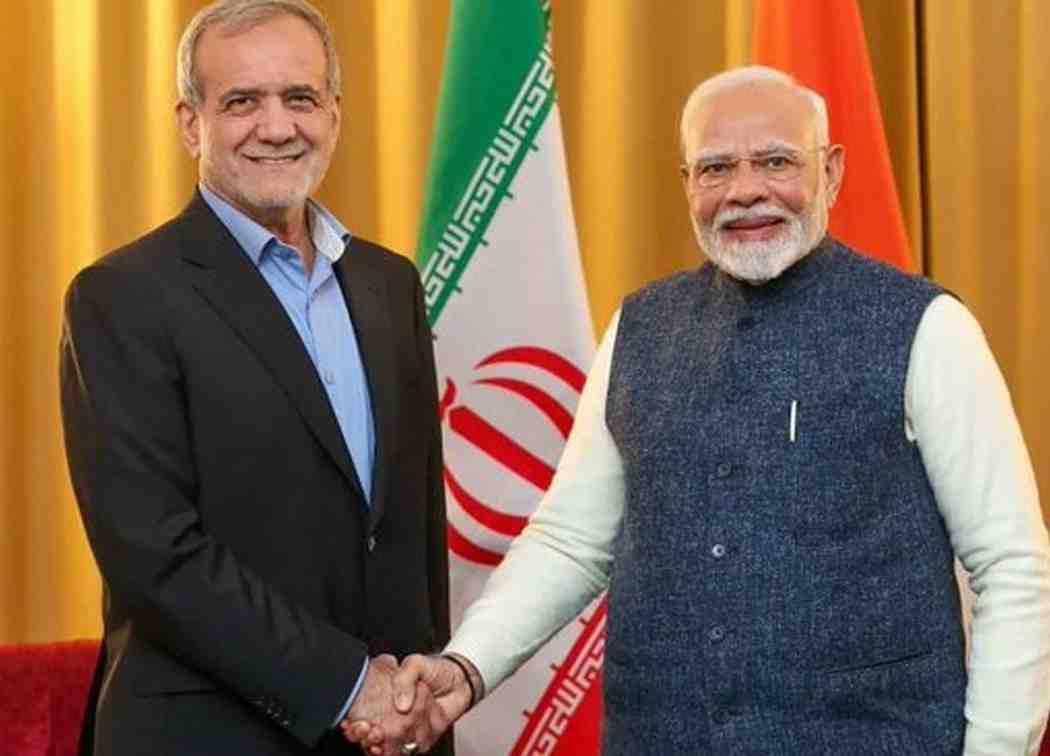
NEW DELHI: Prime Minister Narendra Modi on Tuesday held a telephone conversation with Iranian President Dr. Masoud Pezeshkian, during which the two leaders discussed the rapidly evolving situation in West Asia and exchanged views on the path towards restoring peace and stability in the region.
The conversation comes at a time when West Asia has witnessed weeks of heightened military tensions, diplomatic uncertainty, and concerns over regional security following the recent conflict involving Iran, Israel, and the United States. The developments have drawn global attention due to their impact on international peace, energy security, and maritime trade.
During the discussion, President Pezeshkian briefed Prime Minister Modi on the latest developments in the region and outlined Iran’s perspective on the current situation as well as the way forward.
Prime Minister Modi welcomed the recent understanding that has emerged in the region and reaffirmed India’s long-standing position that “all issues must be resolved through dialogue and diplomacy.” He stressed that peaceful engagement remains the most effective means of addressing conflicts and preventing further escalation.
India Reiterates Commitment to Peace
India has consistently maintained that dialogue, diplomacy, and respect for international law are essential for resolving disputes. During the conversation, Prime Minister Modi once again underlined the importance of sustained diplomatic engagement among all stakeholders to achieve lasting peace.
He also emphasized that continued efforts are necessary to ensure long-term stability in West Asia, a region that remains strategically important for global energy supplies and international commerce.
The Prime Minister highlighted the importance of safeguarding freedom of navigation and ensuring uninterrupted commercial activities through key maritime routes. Any disruption to shipping lanes in the region could have significant consequences for the global economy, particularly for countries dependent on energy imports and international trade.
West Asia Conflict and Rising Global Concerns
The latest tensions in West Asia stemmed from a sharp escalation involving Iran and Israel, following a series of military strikes and retaliatory actions. The conflict intensified further after the United States became directly involved through targeted military operations against Iranian nuclear facilities, raising fears of a broader regional war.
In response, Iran launched missile attacks targeting strategic locations, while regional countries remained on high alert amid concerns that the conflict could spread beyond national borders.
The escalation created uncertainty across global markets, with crude oil prices witnessing volatility due to fears of supply disruptions. Shipping companies also expressed concerns over the safety of vessels passing through critical waterways such as the Strait of Hormuz, one of the world’s busiest oil transit routes.
The possibility of prolonged conflict prompted diplomatic efforts from several countries, which called for restraint and immediate de-escalation.
A recent understanding between the concerned parties has helped reduce immediate military tensions, although the overall situation continues to remain sensitive.
Why West Asia Matters to India
West Asia occupies a vital place in India’s foreign policy and economic interests. Millions of Indian citizens live and work across Gulf countries, contributing significantly to India’s economy through remittances.
The region is also one of India’s largest sources of crude oil and natural gas. Any instability affecting production or transportation of energy resources directly influences India’s energy security and domestic fuel prices.
In addition, India maintains strong diplomatic and economic ties with several countries across West Asia, including Iran, Israel, Saudi Arabia, the United Arab Emirates, Qatar, and Oman. Maintaining balanced relations with all major regional partners has remained a key feature of India’s foreign policy.
New Delhi has consistently advocated peaceful dialogue while avoiding alignment with military confrontations.
Focus on Maritime Security
Prime Minister Modi also stressed the importance of protecting freedom of navigation and commercial shipping in international waters.
The Strait of Hormuz remains one of the world’s most strategically significant maritime passages, with nearly one-fifth of global oil supplies transported through the narrow waterway. Any disruption in this corridor can affect international trade, shipping costs, and energy prices across the globe.
India, as one of the world’s fastest-growing major economies and a leading importer of crude oil, has a strong interest in ensuring that maritime trade routes remain secure and open.
India Continues Diplomatic Outreach
The telephone conversation reflects India’s continued diplomatic engagement with key regional leaders during periods of international uncertainty.
By reaffirming that disputes should be settled through dialogue and diplomacy rather than military action, India has once again projected its support for peaceful conflict resolution.
As West Asia continues to navigate a fragile security environment, India’s emphasis on diplomacy, regional stability, and uninterrupted global commerce highlights its broader commitment to maintaining peace while protecting its national interests and supporting international stability.