
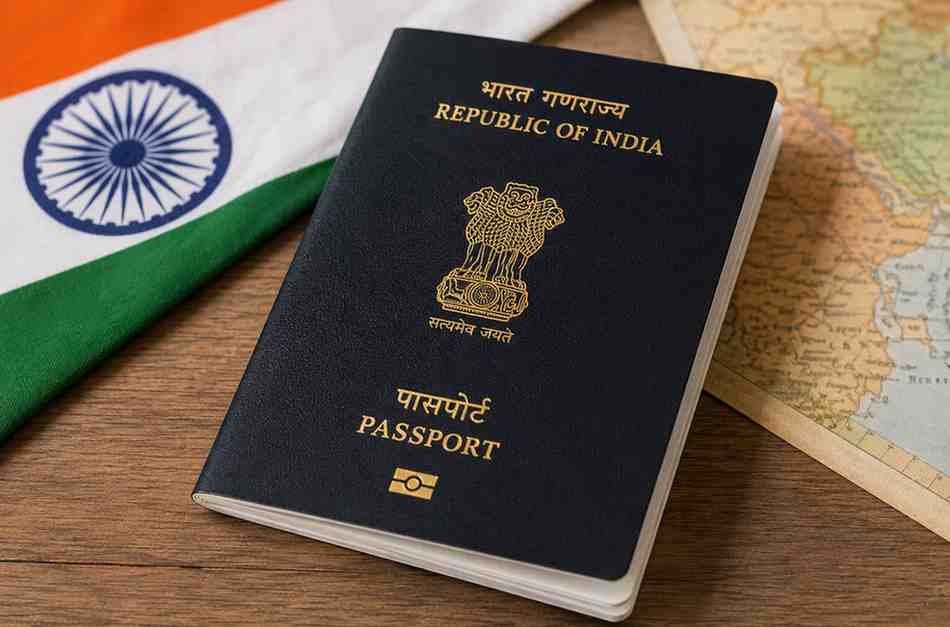
The Union Government has clarified that an Indian passport should not be treated as definitive proof of citizenship, reaffirming a legal position that has existed for decades. The clarification, issued by the Ministry of External Affairs (MEA), has sparked widespread discussion across the country, particularly regarding the status of commonly used identity documents such as Aadhaar cards, voter identity cards, PAN cards, and driving licences.
Passport Is a Travel Document, Says MEA
The clarification came during the observance of Passport Seva Divas, where government officials highlighted improvements in passport services, including the rollout of e-passports and expanded accessibility across India. During the event, officials emphasized that a passport’s primary purpose is to facilitate international travel and establish nationality abroad rather than serve as a conclusive legal proof of citizenship.
According to the government, the distinction between nationality, identity, and citizenship is often misunderstood. While a passport may indicate that its holder is an Indian national for travel purposes, it does not automatically settle questions of citizenship under Indian law.
Why the Clarification Matters
The issue has gained significance amid ongoing public discussions surrounding citizenship verification, voter eligibility, and identity documentation. Many Indians traditionally consider passports among the most reliable government-issued documents because of the extensive verification process involved in obtaining one. However, legal experts note that the passport system and citizenship laws operate under separate legal frameworks.
The government has stressed that this is not a new policy. Rather, it is a reaffirmation of a long-standing legal interpretation supported by legislation and judicial decisions. Authorities have cited provisions under the Passports Act and past court rulings to explain why a passport cannot be regarded as conclusive evidence of citizenship.
What About Aadhaar and Voter ID Cards?
The clarification has also renewed scrutiny over other commonly used documents.
Government agencies and courts have repeatedly stated that Aadhaar is designed as a proof of identity and residency, not proof of citizenship. Similarly, PAN cards are intended for taxation purposes, while driving licences establish an individual’s eligibility to drive. None of these documents independently certify citizenship status.
The Election Commission and various courts have also indicated that voter identity cards, while issued to eligible voters, should not automatically be treated as definitive proof of citizenship in every legal context.
Recent legal proceedings have further reinforced the distinction between identity documents and citizenship records. The Supreme Court has been examining issues related to Aadhaar’s use beyond identity verification, with petitions arguing that it should not be used as evidence of citizenship or domicile.
Is There a Single Citizenship Document in India?
One of the most significant questions arising from the debate is whether India has a single universally accepted citizenship certificate.
The answer is complex. Unlike some countries that issue citizenship certificates to all citizens, India does not automatically provide a universal citizenship document at birth. Citizenship may be acquired through birth, descent, registration, naturalisation, or incorporation of territory under the Citizenship Act.
Citizenship certificates are generally issued only in specific circumstances, such as naturalisation or registration. Individuals who acquire citizenship through these routes may receive formal certificates documenting their status.
For the vast majority of Indians who become citizens by birth or descent, citizenship is often established through a combination of records rather than a single standalone document. These may include birth records, family records, educational certificates, and other supporting documents depending on the circumstances.
OCI Status Adds Another Layer
The discussion has also highlighted confusion surrounding the Overseas Citizen of India (OCI) scheme. Despite its name, OCI status does not confer Indian citizenship. OCI cardholders remain citizens of other countries and do not enjoy several constitutional and political rights reserved for Indian citizens.
The Ministry of External Affairs has repeatedly clarified that OCI should not be interpreted as dual citizenship. India does not permit dual citizenship under its existing legal framework.
Political Reactions Emerge
The clarification has also generated political reactions. Several opposition leaders questioned the practical implications of the government’s position and called for greater clarity regarding the documents citizens should rely upon when proving their nationality. The remarks have reignited broader debates over citizenship verification mechanisms and documentation requirements in India.
A Long-Standing Legal Position
Legal experts point out that the government’s latest statement does not introduce any new rule. Rather, it reiterates an established legal understanding that has existed for decades. What remains unresolved, however, is public confusion over how citizenship should be demonstrated when questions arise.
As discussions continue, the Centre’s clarification has drawn attention to a fundamental distinction in Indian law: identity documents, travel documents, and citizenship records are not always the same thing. While passports, Aadhaar cards, voter IDs, and PAN cards remain essential for various administrative and civic purposes, none of them alone serves as conclusive proof of Indian citizenship under the law.
The debate has underscored the need for greater public awareness about citizenship laws and documentation, especially at a time when questions of identity and nationality continue to feature prominently in public discourse across the country.