NEW DELHI: The Delhi Election Commission has initiated preparations for the Special Intensive Revision (SIR) 2026 of the electoral rolls and conducted a detailed meeting with representatives of major political parties in the national capital. The objective of the exercise is to ensure that every eligible citizen is included in the voter list while removing the names of ineligible individuals, thereby enhancing the accuracy and transparency of the electoral database.
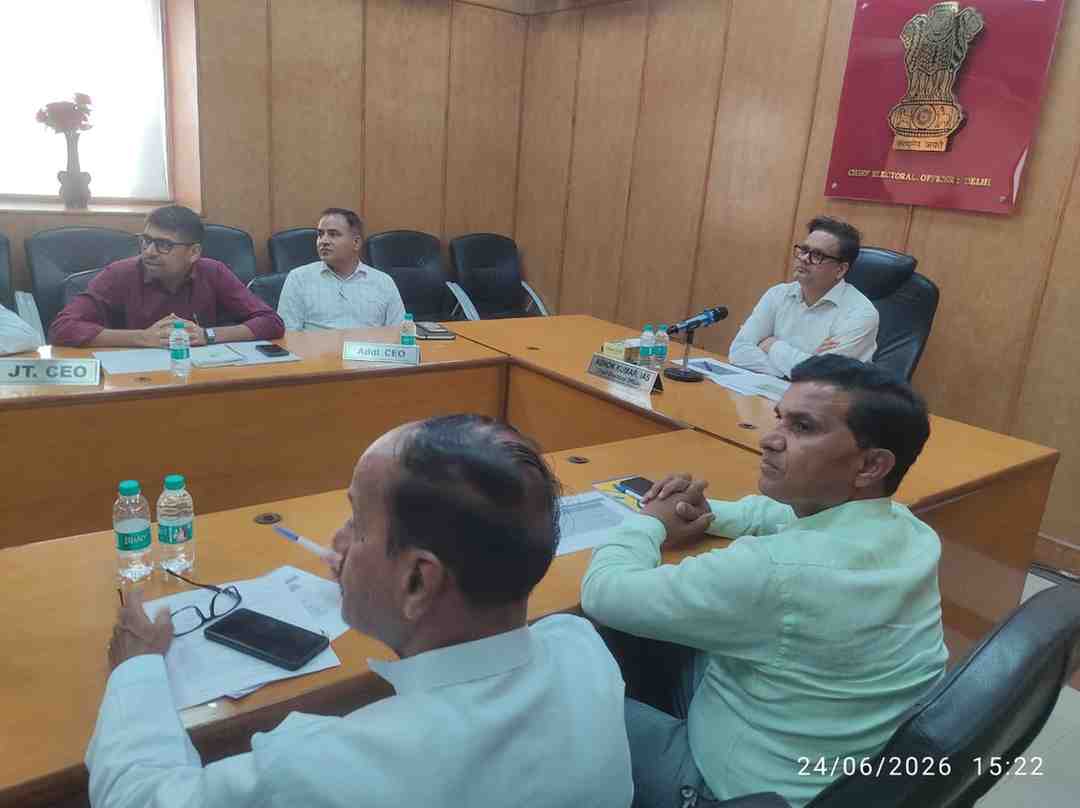
During the meeting held at the office of the Chief Electoral Officer (CEO), political party representatives were informed about the complete revision process, implementation strategy, and timelines. The Commission also sought suggestions from the parties and addressed several concerns related to voter verification and registration procedures.
Comprehensive Schedule for SIR-2026
The Election Commission has announced a detailed timeline for the Special Intensive Revision programme.
The preparation phase, including training of officials and printing-related work, will be conducted from June 20 to June 29, 2026. This will be followed by a large-scale door-to-door verification drive by Booth Level Officers (BLOs) from June 30 to July 29, 2026.
The rationalisation of polling stations is scheduled to be completed by July 29, 2026. Subsequently, the draft electoral roll will be published on August 5, 2026, allowing voters and stakeholders to review the updated list.
Citizens will be able to submit claims and objections regarding additions, deletions, or corrections in the voter list between August 5 and September 4, 2026. The disposal of claims and objections will take place in a phased manner from August 5 to October 3, 2026. The final electoral roll is scheduled to be published on October 7, 2026.
Door-to-Door Verification Drive
According to the CEO’s office, one of the key components of SIR-2026 will be an extensive house-to-house verification campaign. Booth Level Officers will visit every household across Delhi between June 30 and July 29.
During these visits, BLOs will distribute enumeration forms to existing voters. Each voter will receive two copies of the form. Residents are required to fill out one copy and return it to the BLO while retaining the acknowledgment copy for their records.
Election officials stated that this exercise will help verify voter details, identify changes in residence, and update records wherever necessary.
Political Parties Extend Support
Representatives from major political parties, including the Aam Aadmi Party (AAP), Bharatiya Janata Party (BJP), Bahujan Samaj Party (BSP), Communist Party of India (Marxist) [CPI(M)], and the Indian National Congress (INC), attended the meeting.
All participating parties assured the Election Commission of their full cooperation during the revision process. They also raised several queries related to voter data mapping and registration procedures.
Key Issues Raised During the Meeting
Several technical and administrative aspects were discussed during the interaction. Political party representatives sought clarification on matters such as self-mapping, progeny mapping, cases where voter records could not be linked with the 2002 electoral rolls, and the process for registering married women who shifted to Delhi after previous revisions.
Election officials responded to these concerns and assured stakeholders that detailed guidelines would be followed to ensure that eligible voters are not excluded due to procedural issues.
What Delhi Voters Need to Do
The Election Commission has advised residents to remain alert and cooperate fully with BLOs during the verification process.
Voters should wait for the BLO visit between June 30 and July 29 and keep relevant documents ready for verification and comparison with previous electoral records. Citizens are also encouraged to carefully review the draft electoral roll once it is published on August 5.
If a voter’s name is missing from the list or if there are any errors in personal details, claims and objections should be submitted within the prescribed period from August 5 to September 4. Election officials have emphasized that timely submission of applications is essential for corrections to be considered before the publication of the final electoral roll.
Revision Applicable Only to Delhi Voters
The Election Commission clarified that the Special Intensive Revision 2026 is specifically meant for voters residing in Delhi. The exercise aims to maintain an updated, accurate, and inclusive electoral roll ahead of future elections in the capital.
Officials reiterated that public participation, cooperation from political parties, and timely response from voters will be crucial to the success of the revision programme. The Commission expressed confidence that the process will strengthen electoral integrity and ensure that every eligible citizen of Delhi gets an opportunity to exercise their democratic right.