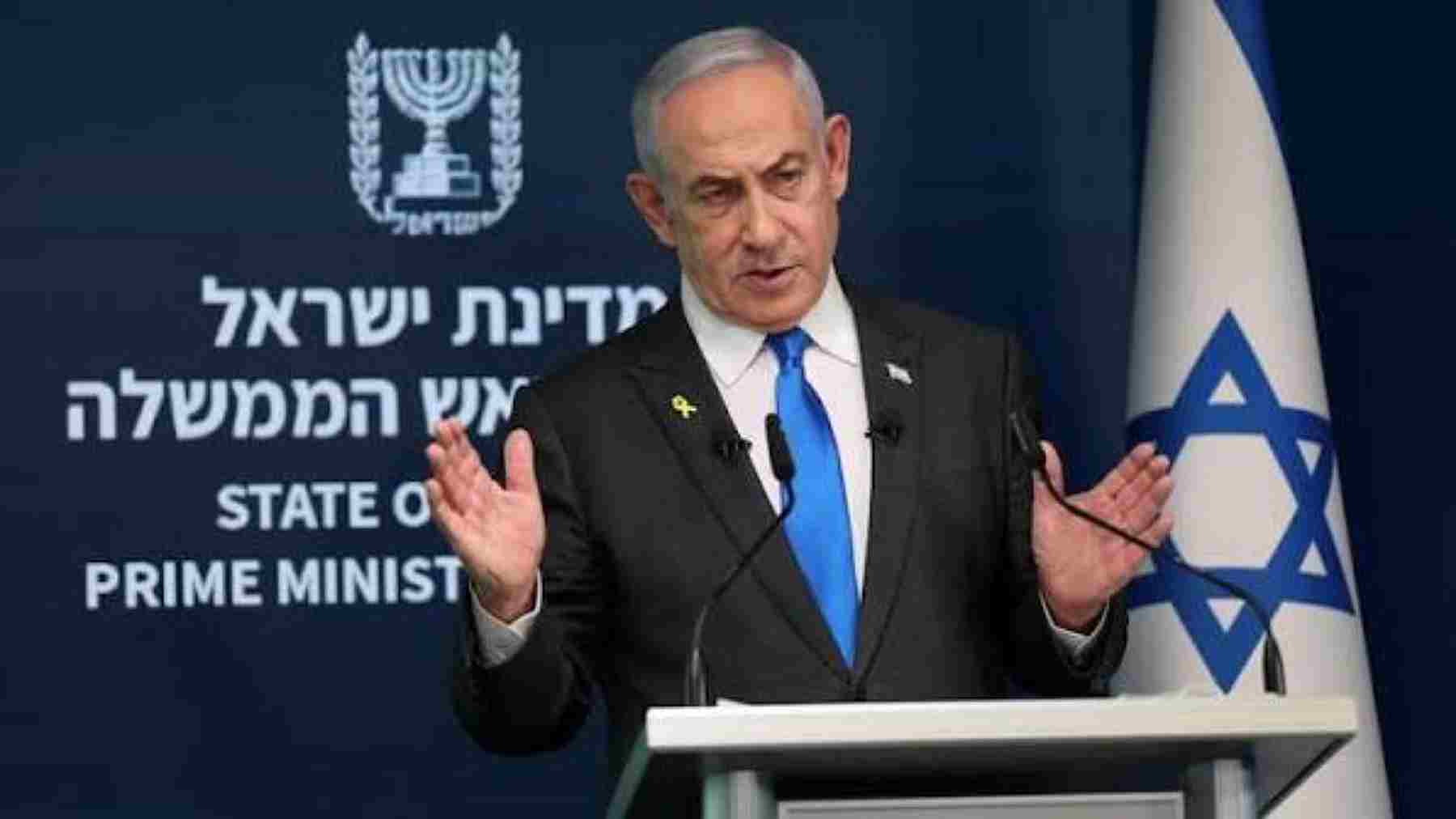
Israeli Prime Minister Benjamin Netanyahu has vowed a forceful response against Hezbollah after four Israeli soldiers were killed in southern Lebanon, marking one of the deadliest incidents in recent weeks and further raising concerns over a broader regional conflict.
In an official statement, Netanyahu expressed condolences to the families of the fallen soldiers, including Lt. Col. Dor Gedalia Ben Simhon, commander of the 52nd Battalion of the Armored Corps, and three other soldiers whose identities had not yet been publicly released at the time of his address. He also wished a speedy recovery to soldiers injured during the clashes.
The Israeli leader accused Hezbollah of carrying out a “heinous attack” that constituted a serious violation of the ceasefire and announced that he had immediately instructed the Israel Defense Forces (IDF) to launch extensive retaliatory operations.
Israel Launches Major Counterstrikes
According to Netanyahu, Israeli forces struck more than 80 Hezbollah-linked targets following the attack. The operations reportedly targeted militant infrastructure, command centres and strategic positions across southern Lebanon and the Beqaa Valley.
“The directive is clear: Israel will not tolerate attacks on our soldiers or our territory, and it will exact a very heavy price from Hezbollah,” Netanyahu said in his statement.
The IDF subsequently carried out another round of strikes against Hezbollah command posts in Lebanon’s eastern Beqaa Valley after conducting an overnight operation.
Israeli authorities stated that the military would continue operations aimed at eliminating threats to Israeli communities and security personnel stationed near the northern border.
Key Developments At A Glance
On June 19, 2026, tensions escalated along the Israel-Lebanon border after an attack left four Israeli soldiers dead and several others wounded. Among those killed was Lt. Col. Dor Gedalia Ben Simhon, commander of the 52nd Battalion. In response, Israel launched extensive military operations, with the Israeli Defence Forces (IDF) striking more than 80 Hezbollah targets and carrying out additional attacks on Hezbollah command centres in Lebanon’s Beqaa Valley.
The Israeli government reiterated its security policy, stating that its troops would remain deployed in southern Lebanon for as long as necessary to protect northern Israeli communities and counter potential threats from Hezbollah.
Israel To Maintain Presence In Southern Lebanon
Netanyahu reiterated that Israel would continue maintaining what it calls a “security zone” in southern Lebanon for as long as necessary.
He argued that the deployment is essential to protect residents living in northern Israel, many of whom have experienced prolonged security concerns due to repeated cross-border attacks.
“As I have made unequivocally clear, Israel will remain in the security zone in southern Lebanon for as long as necessary for the protection of the communities of the North,” he said.
This position, however, is likely to intensify disagreements with international actors seeking de-escalation and a full implementation of ceasefire commitments.
Wider Regional Tensions Continue To Grow
The latest violence comes at a delicate diplomatic moment. Recent international efforts, including discussions linked to a broader US-Iran understanding aimed at reducing regional hostilities, have struggled to contain the fighting between Israel and Hezbollah.
Despite those efforts, both sides have continued military operations. Hezbollah has claimed responsibility for attacks against Israeli forces operating inside southern Lebanon, while Israel insists its actions are defensive and aimed at preventing future attacks.
The prolonged conflict has already displaced large populations across Lebanon and caused significant damage to infrastructure in southern parts of the country. Lebanese authorities have reported thousands of deaths since hostilities resumed earlier this year, while Israel has also suffered military and civilian casualties.
Growing Concerns Over A Larger Conflict
Analysts warn that the latest escalation could undermine diplomatic efforts to stabilize the region. Netanyahu’s uncompromising stance and Hezbollah’s continued attacks indicate that neither side is currently prepared to significantly reduce military activities.
The developments also increase pressure on international mediators, particularly the United States and European nations, which have been attempting to prevent the Israel-Lebanon conflict from expanding into a broader regional war involving multiple actors.
For now, both Israel and Hezbollah appear committed to maintaining pressure on each other, leaving the prospect of a durable ceasefire increasingly uncertain.