NEW DELHI: A major legal battle has emerged between the Indian government and messaging platform Telegram over a temporary nationwide restriction imposed ahead of the NEET-UG 2026 re-examination.
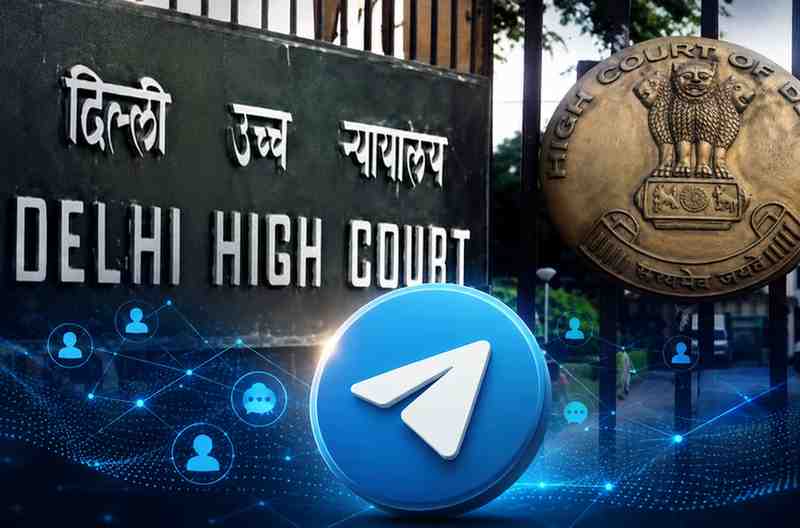
The Delhi High Court on Thursday reserved its verdict after hearing extensive arguments from both Telegram and the Centre regarding the decision to block access to the platform until June 22. The government has defended the move by saying that Telegram has increasingly become a key medium for organised examination fraud and misinformation campaigns linked to the highly sensitive medical entrance examination.
The case has sparked a larger debate on whether authorities can temporarily suspend a communication platform used by millions of people to protect the integrity of a national examination.
Why was Telegram restricted?
The temporary restriction was introduced ahead of the NEET-UG re-examination scheduled for June 21.
Authorities alleged that several groups had been using Telegram channels, anonymous bots and editing tools to circulate fake claims and potentially facilitate cheating operations. The National Testing Agency (NTA) recommended urgent intervention after investigators flagged organised misuse of the platform.
The government said previous efforts to control the spread of such content through direct communication with Telegram had not produced satisfactory results. As a result, authorities invoked emergency powers under Section 69A of the Information Technology Act.
Besides the temporary restriction, authorities also directed that certain message editing functionalities remain disabled for a longer period to prevent manipulation of timestamps and fabricated evidence.
What happened during the Delhi High Court hearing?
Justice Tejas Karia raised important constitutional questions while hearing the matter.
The court questioned whether the rights of nearly 150 million Telegram users in India could be curtailed simply because a section of citizens was appearing for an examination.
The bench also examined whether the government’s actions were proportionate and legally justified under emergency provisions.
Among the key questions raised by the court were:
- Can an entire platform be restricted to prevent wrongdoing by a limited number of users?
- Was there sufficient evidence to justify invoking emergency powers?
- Were less restrictive alternatives available?
- Does the move violate citizens’ rights to communication and access to information?
The court ultimately reserved its judgment after hearing both parties.
Centre’s arguments against Telegram
Solicitor General Tushar Mehta strongly defended the government’s actions.
According to him, Telegram’s architecture presents unique challenges compared to other social media platforms.
The government highlighted several concerns:
Anonymous accounts
Users can hide critical identity information and operate primarily through usernames, making it difficult for investigators to trace activities.
Bot Networks
The Centre said a single account can create dozens of bots capable of rapidly distributing information across massive networks.
Mirror Channels
Authorities claimed that shutting down one channel often leads to immediate creation of duplicate channels under different names.
Message Editing Concerns
One of the government’s biggest concerns involves Telegram’s editing feature.
Officials argued that users could upload examination papers after an exam concludes and then alter content in a way that creates an impression the material had been leaked beforehand.
The Centre warned that such misinformation could trigger nationwide outrage among students and undermine trust in the examination process.
The government said similar situations had previously created significant public unrest surrounding examination credibility.
Telegram’s defence
Telegram has strongly opposed the government’s decision.
The company argued that a blanket ban is disproportionate and punishes millions of innocent users for the actions of a small number of offenders.
The platform also stated that it has been actively cooperating with authorities and removing problematic content whenever identified.
Telegram questioned whether an entrance examination issue qualifies as an emergency severe enough to justify nationwide restrictions under Section 69A.
The company further argued that specific channels, groups or pieces of content could have been targeted instead of suspending access to the entire platform.
Telegram reportedly submitted a detailed legal challenge running into hundreds of pages, emphasising concerns over free speech and access to information.
Background: Why is NEET under intense scrutiny?
The controversy stems from the original NEET-UG 2026 examination conducted on May 3.
The examination was later cancelled amid allegations of paper leaks and irregularities. The matter triggered widespread protests and led to demands for accountability from educational authorities. Investigations are currently underway.
As a result, the NTA announced a re-examination scheduled for June 21 and significantly tightened security measures.
Authorities now consider preventing misinformation and fraudulent activity as a top priority to restore confidence in one of India’s most important entrance examinations.
Bigger debate: Security versus digital freedom
The Telegram case could become a landmark legal test for India’s digital governance framework.
The central issue is whether governments can temporarily suspend large digital platforms to protect public interest objectives such as examination integrity.
Supporters of the ban argue that extraordinary situations require extraordinary measures.
Critics, however, warn that blanket restrictions may set a precedent for future limitations on online communication services affecting millions of ordinary users.
The Delhi High Court’s final decision is expected to have implications not only for Telegram but also for how India regulates major digital platforms during emergencies in the future.