Modi Calls for Diplomacy Amid Global Conflicts at G7 Summit
Prime Minister Narendra Modi delivered a strong message in favour of peace, diplomacy and international cooperation during an outreach session at the G7 Summit in Evian, France, on Tuesday. Addressing global leaders, including US President Donald Trump, Modi said that wars and ongoing geopolitical tensions can only be resolved through dialogue and collective efforts rather than confrontation.
The Indian Prime Minister participated in the outreach session themed “Forging New Partnerships and Rebuilding International Solidarity”, where partner countries including India, Brazil, Egypt, Kenya and South Korea joined G7 leaders to discuss pressing global challenges.
His remarks came at a sensitive time, just days after a US military strike on a merchant vessel near Oman resulted in the deaths of three Indian sailors, escalating concerns about maritime security and the safety of civilian workers operating in conflict zones.
Maritime Security Must Be a Global Responsibility
Modi placed significant emphasis on protecting international sea routes and ensuring the safety of seafarers who play a crucial role in sustaining global trade.
He said the world has a collective responsibility to guarantee secure maritime corridors so that sailors can perform their duties without fear.
“The safety of seafarers, who connect all countries through global maritime trade, is our responsibility. We must ensure that sea lanes remain safe,” Modi said while addressing the gathering.
He added that India remains fully prepared to work with international partners to strengthen maritime security frameworks and protect global supply chains.
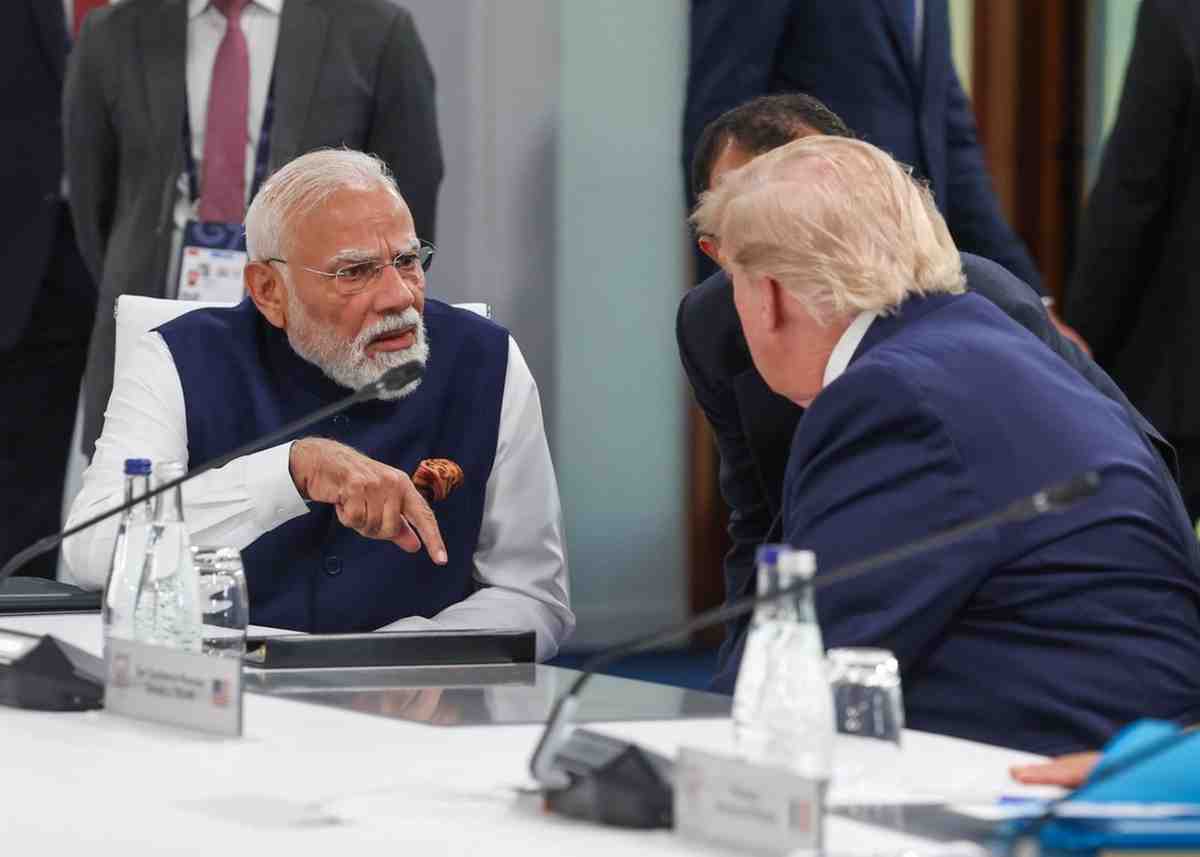
The statement carried added significance as President Trump was seated directly beside Modi during the session.
West Asia Conflict Has Global Consequences
The Prime Minister also welcomed recent progress towards peace efforts in West Asia, noting that prolonged instability has caused immense human suffering and economic damage.
He highlighted that several Indian civilians had lost their lives due to the conflict and that friendly nations across the region had also suffered extensive destruction.
Modi pointed out that disruptions in shipping through the strategically important Strait of Hormuz had negatively impacted the global economy, energy supplies and international trade networks.
The comments came shortly after Iran and the United States reportedly agreed on a peace deal aimed at reducing regional tensions.
Dialogue Is the Only Sustainable Solution
Reiterating India’s long-standing diplomatic position, Modi said enduring peace cannot be achieved through military escalation.
He stressed that nations must invest in communication channels, diplomacy and collaborative mechanisms to prevent conflicts from worsening.
“India firmly believes that a lasting solution to ongoing tensions and wars in different parts of the world is possible only through dialogue, diplomacy and international cooperation,” he said.
His message reinforced India’s image as a nation advocating balanced diplomacy and peaceful conflict resolution amid growing geopolitical rivalries.
Modi and Trump Hold First In-Person Interaction in 16 Months
The outreach session also marked the first face-to-face interaction between Modi and Trump in 16 months.
The two leaders briefly exchanged greetings before the session began and were scheduled to hold a bilateral meeting on the sidelines of the summit.
The meeting is considered important because India and the United States have experienced a challenging phase in their relationship over the past year.
Trade disputes intensified after the Trump administration imposed 50% tariffs on several Indian products, leading both sides to engage in negotiations for a bilateral trade agreement.
Officials from both countries are currently working on addressing tariff-related issues and expanding economic cooperation.
Indian Sailors Killed in Oman Incident
Last week, three Indian sailors were killed when tanker MT Settebello was struck during a US military operation near Oman.
According to reports, the US Navy targeted merchant vessels suspected of violating an American blockade involving Iran. More than 65 Indian crew members were reportedly present on the affected vessels. The incident prompted strong diplomatic reactions from India.
The Ministry of External Affairs summoned the senior-most American diplomat in New Delhi twice to register formal protests. External Affairs Minister S Jaishankar also raised India’s concerns during a telephone conversation with US Secretary of State Marco Rubio.
However, the United States has not publicly expressed regret over the incident and has maintained that it would strictly enforce its blockade policies.
Meanwhile, 13 Indians have reportedly lost their lives in West Asia since tensions escalated following military operations against Iran earlier this year.
Global Trust Is the Most Valuable Strategic Asset
A major theme of PM Modi’s speech centred on rebuilding trust in international relations. He said today’s world is deeply interconnected, with energy security, food security, healthcare, cybersecurity and economic prosperity transcending national borders.
According to him, technology, data, investment and human mobility have linked countries closer than ever before. However, he warned that trust built over decades is gradually eroding.
Referring to lessons learned during the Covid-19 pandemic, Modi argued that many claims of international solidarity proved hollow when countries prioritised national interests over collective welfare.
“The world today does not suffer from a lack of resources; it suffers from a lack of trust,” PM Modi said. He further emphasised that future partnerships will succeed only if nations rebuild confidence in one another.
Modi Invokes Ronald Reagan’s Famous Principle
During his address, Modi referred to former US President Ronald Reagan’s famous phrase, “Trust, but verify”.
He said the principle remains relevant in today’s geopolitical environment and underlined the need to build a reliable, rules-based international order suitable for a rapidly changing world.
Though he did not directly name any country, his remarks reflected broader concerns over shifting global alliances, protectionist policies and increasing strategic competition among major powers.
India’s message at the G7 Summit ultimately focused on a simple but significant principle: global challenges require collective solutions built on trust, dialogue and cooperation rather than confrontation.