
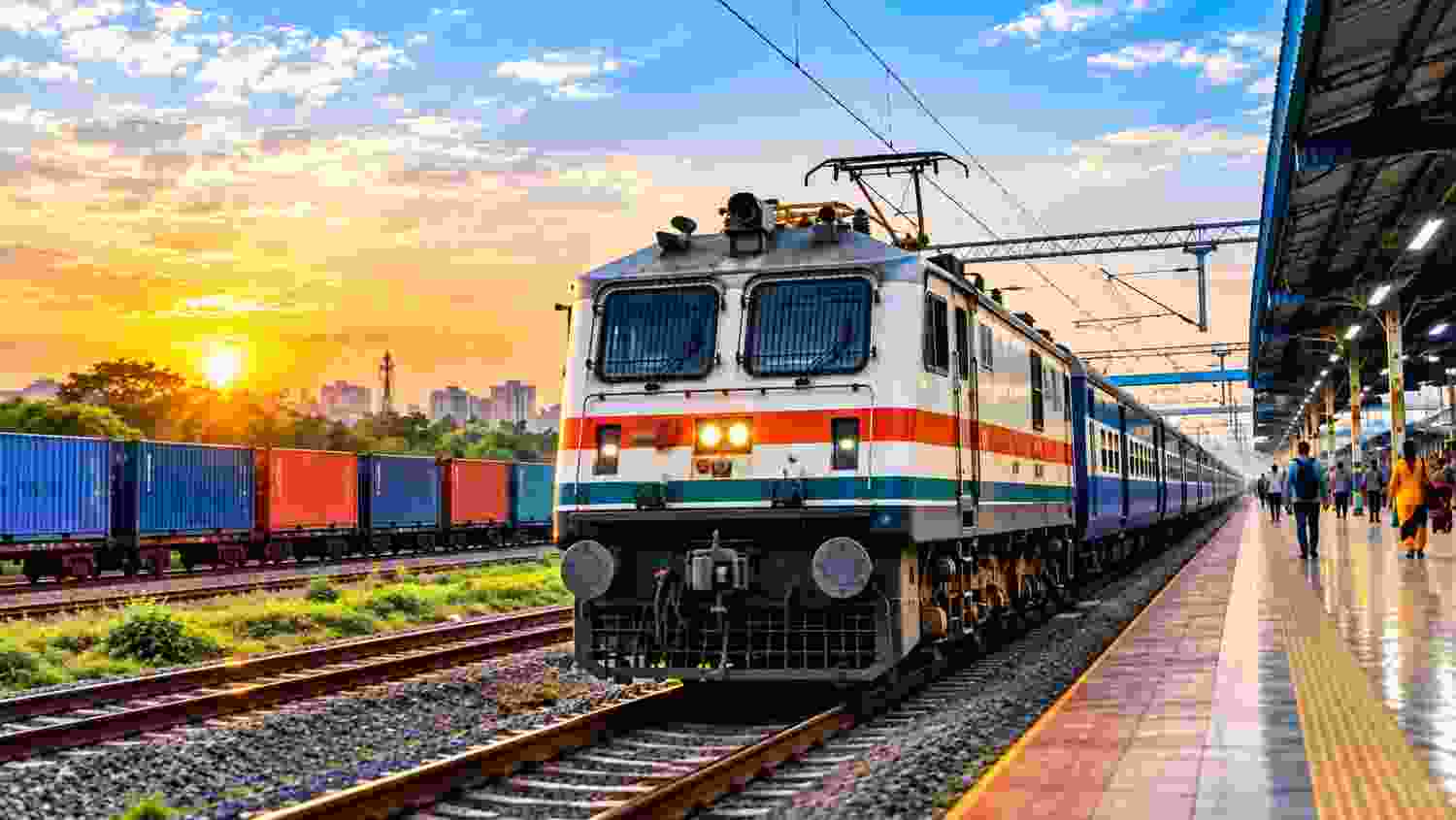
Indian Railways recorded significant growth across passenger services, freight transportation and connectivity during August 2026, strengthening its role as a key pillar of India’s mobility and logistics network. During the month, 14 Amrit Bharat services were regularised, five new Gati Shakti Cargo Terminals (GCTs) were commissioned and freight loading rose by 5.4 per cent year-on-year.
The railway network also witnessed higher passenger movement, supported by additional special train services during the festival season. The developments underline the continued expansion of affordable rail travel while strengthening freight infrastructure for industries and supply chains.
Freight Loading Rises 5.4 Per Cent in August
Indian Railways loaded 137.9 million tonnes of freight in August 2026, compared with 130.9 million tonnes during the corresponding month in 2025. This represented a year-on-year increase of 5.4 per cent.
Freight revenue also registered a 6.27 per cent rise compared with August 2025, reflecting continued momentum in the freight segment. Higher rail movement of commodities supports industries by providing reliable transportation for essential raw materials, industrial inputs and finished products across different regions.
Key commodities recorded notable growth during the month. Iron Ore loading increased by 12.1 per cent, while Clinker grew by 10.4 per cent. Domestic Container loading rose 9.2 per cent and Coal loading increased by 6 per cent.
Finished Steel loading recorded 4.9 per cent growth, while Mineral Oil and Fertilizers increased by 3.1 per cent and 1.6 per cent respectively. Balance Other Goods registered an 8.2 per cent rise.
Five New Gati Shakti Cargo Terminals Commissioned
Indian Railways commissioned five new Gati Shakti Cargo Terminals in August, taking the cumulative number of commissioned GCTs to 149 as of August 31, 2026.
The newly commissioned terminals are located at Shivlakha in Gujarat, Nalli in Tamil Nadu, Shaktinagar in Uttar Pradesh, Deoragram in Madhya Pradesh and Brajrajnagar in Odisha.
The expansion of the GCT network is aimed at bringing modern freight-handling facilities closer to production and consumption centres. Better access to cargo terminals can improve logistics efficiency, support faster freight evacuation and provide industries with greater access to rail-based transportation.
The growing network also strengthens the integration of railways with India’s broader logistics ecosystem, supporting more efficient movement of goods across the country.
14 Amrit Bharat Services Regularised
Passenger connectivity received a major boost in August with 14 Amrit Bharat services being regularised from special services to regular trains. With these additions, the total number of Amrit Bharat services reached 86.
Among the services are Subedarganj–Lokmanya Tilak Terminus, Gorakhpur–Bandra Terminus, Gorakhpur–Delhi Junction, Ahmedabad–Bhagalpur, Lokmanya Tilak Terminus–Prayagraj Junction, Prayagraj Junction–Udhna Junction and Dhanbad–Coimbatore, among others.
The services expand long-distance travel options between major cities and regional centres. The Gorakhpur services provide additional links from eastern Uttar Pradesh to Delhi and Mumbai, while Ahmedabad–Bhagalpur strengthens connectivity between Gujarat and Bihar.
“Here, Voices Are Heard”: PM Modi’s Strong BRICS Message For Global South
The Dhanbad–Coimbatore service provides an important long-distance rail link between eastern and southern India. Meanwhile, Prayagraj–Udhna and Prayagraj–Mumbai connectivity gives passengers from Uttar Pradesh additional options for travelling towards western India.
Passenger Traffic Records Strong Growth
Indian Railways carried 67.27 crore passengers in August 2026, compared with 64.43 crore passengers in August 2025. Suburban traffic witnessed particularly strong growth, rising 9.02 per cent during the month.
A total of 38.01 crore suburban passengers travelled in August 2026, compared with 34.89 crore during August 2025. The increase highlights the continuing importance of railways as an affordable and dependable mode of daily transportation, particularly across densely populated urban and suburban areas.
144 Rakshabandhan Special Train Trips Operated
Indian Railways also expanded special train operations to meet increased festival-season demand. Between August 25 and 31, 2026, the railway network operated 144 trips of Rakshabandhan Special trains, compared with 48 trips between August 8 and 14, 2025.
The additional services increased travel capacity during a period of exceptionally high demand and provided passengers with more opportunities to reach their hometowns and families.
Rail Network Expansion Strengthens Mobility and Logistics
The August figures reflect a broader push by Indian Railways to strengthen passenger connectivity, expand freight infrastructure and respond to changing travel demand.
The regularisation of Amrit Bharat services is widening access to affordable long-distance travel, while additional festival trains are helping manage seasonal passenger pressure. At the same time, the expansion of Gati Shakti Cargo Terminals is improving the rail freight ecosystem and strengthening logistics support for industries.
With rising passenger movement, stronger freight loading and expanding infrastructure, Indian Railways continues to reinforce its role in supporting everyday mobility, industrial activity and nationwide connectivity.
Click here to join our WhatsApp Channel for real-time news updates and exclusive coverage.