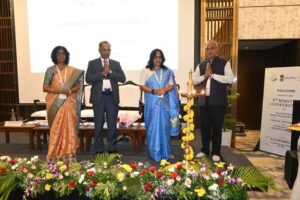
The Third BIMSTEC Conference on Traditional Medicine Knowledge, Genetic Resources and Intellectual Property Rights began in Goa on September 16, bringing together experts, government officials and representatives from the seven BIMSTEC member countries to strengthen regional cooperation on traditional medicine.
Organised by the Ministry of Ayush, Government of India, with the All India Institute of Ayurveda (AIIA), Goa, serving as the nodal institute, the two-day conference is being held alongside the Second Meeting of the BIMSTEC Nodal Group on Traditional Medicine Knowledge, Genetic Resources and Intellectual Property Rights.
Focus on stronger regional cooperation
The conference is examining ways to protect traditional medicine knowledge while enabling responsible research, innovation and knowledge-sharing across the Bay of Bengal region.
During the inaugural session, Monalisa Das, Joint Secretary, Ministry of Ayush, who chaired the session, highlighted the role of the BIMSTEC Task Force for Traditional Medicine (BTFTM) in advancing cooperation among member states.
She said the working group could contribute to collaboration in several areas, including research, education, capacity building, standardisation, pharmacopoeial development, regulatory cooperation and the exchange of traditional medicine knowledge.
Das also referred to the proposed BIMSTEC Centre of Excellence in Traditional Medicine, announced by Prime Minister Narendra Modi during the Sixth BIMSTEC Summit in Bangkok in April 2025.
The proposed centre is intended to provide a platform for deeper regional engagement in traditional medicine and related areas.
Traditional knowledge and community rights take centre stage
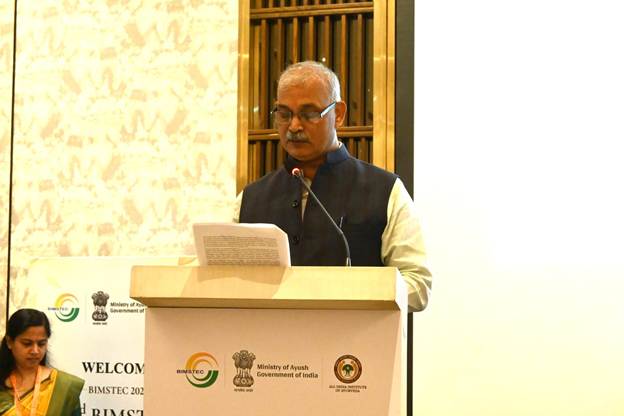
In his inaugural address, Prof. Vaidya P.K. Prajapati, Director of the All India Institute of Ayurveda, underlined the extensive traditional medicine heritage found across the BIMSTEC region.
He noted that the region possesses diverse traditional healthcare systems, biological resources and community-held knowledge developed over generations.
According to Prajapati, the conference seeks to develop a collaborative framework that supports the conservation of traditional knowledge while facilitating legitimate research and innovation.
The discussions also emphasise safeguarding community interests through principles such as prior informed consent, mutually agreed terms and equitable benefit-sharing.
These mechanisms are particularly relevant when traditional knowledge or genetic resources are used for research, commercial development or other forms of innovation.
BIMSTEC cooperation linked to health and heritage
Kadirkamu Kandasamy Yoganaadan, Director – Science, Technology & Innovation and Health and Human Resource Development Division, BIMSTEC, said regional cooperation ultimately aims to improve people’s well-being, strengthen health systems and preserve the traditional medicine heritage of the region for future generations.
Representatives from Bangladesh, Bhutan, India, Myanmar, Nepal, Sri Lanka and Thailand are participating in the conference and sharing information about their respective national policies, legal frameworks and experiences.
The exchange is expected to help identify areas where BIMSTEC members can develop common approaches and strengthen institutional cooperation.
Intellectual property and genetic resources discussed
The technical sessions are addressing several interconnected issues involving traditional medicine and intellectual property.
Key subjects include the documentation of traditional knowledge, intellectual property rights, genetic resources, access and benefit-sharing, prior informed consent and community rights.
The conference is also examining initiatives associated with the World Intellectual Property Organization (WIPO) and the World Health Organization (WHO).
Another important area of discussion is India’s Traditional Knowledge Digital Library (TKDL). Delegates are considering aspects such as controlled-access documentation and prior-art protection, as well as the potential relevance of India’s experience for other BIMSTEC countries.
The TKDL model has been discussed in the context of documenting traditional knowledge in a manner that can help address concerns surrounding inappropriate claims over established traditional practices.
Artificial intelligence adds a new dimension
The conference is also exploring the growing role of artificial intelligence in documenting and managing traditional knowledge.
Discussions are examining the opportunities created by digital technologies alongside questions concerning intellectual property, ethics, documentation practices and responsible use of information.
The inclusion of AI reflects the changing technological environment in which traditional knowledge is being recorded, organised and shared.
Nodal Group to shape future collaboration
The Second Meeting of the BIMSTEC Nodal Group is expected to deliberate on regional cooperation, capacity building, expert networks, documentation standards and data management.
Participants will also consider potential mechanisms for institutional collaboration among member countries.
Recommendations emerging from the conference deliberations are expected to be drafted with the objective of strengthening cooperation on the conservation and responsible use of traditional medicine knowledge throughout the BIMSTEC region.
Goa conference to conclude on September 17
Prof. Dr. Sujata Kadam, Dean, All India Institute of Ayurveda, Goa, said every BIMSTEC member country has a rich traditional knowledge heritage developed over generations.
Indian Navy-Pakistan Ship Collision: New Delhi Summons Islamabad’s Envoy
She expressed gratitude to participating delegates, experts and institutions for contributing to the conference and its discussions.
The Goa conference is scheduled to conclude on September 17, 2026, following deliberations aimed at strengthening regional frameworks for traditional medicine knowledge, genetic resources and intellectual property rights.
Click here to join our WhatsApp Channel for real-time news updates and exclusive coverage.