
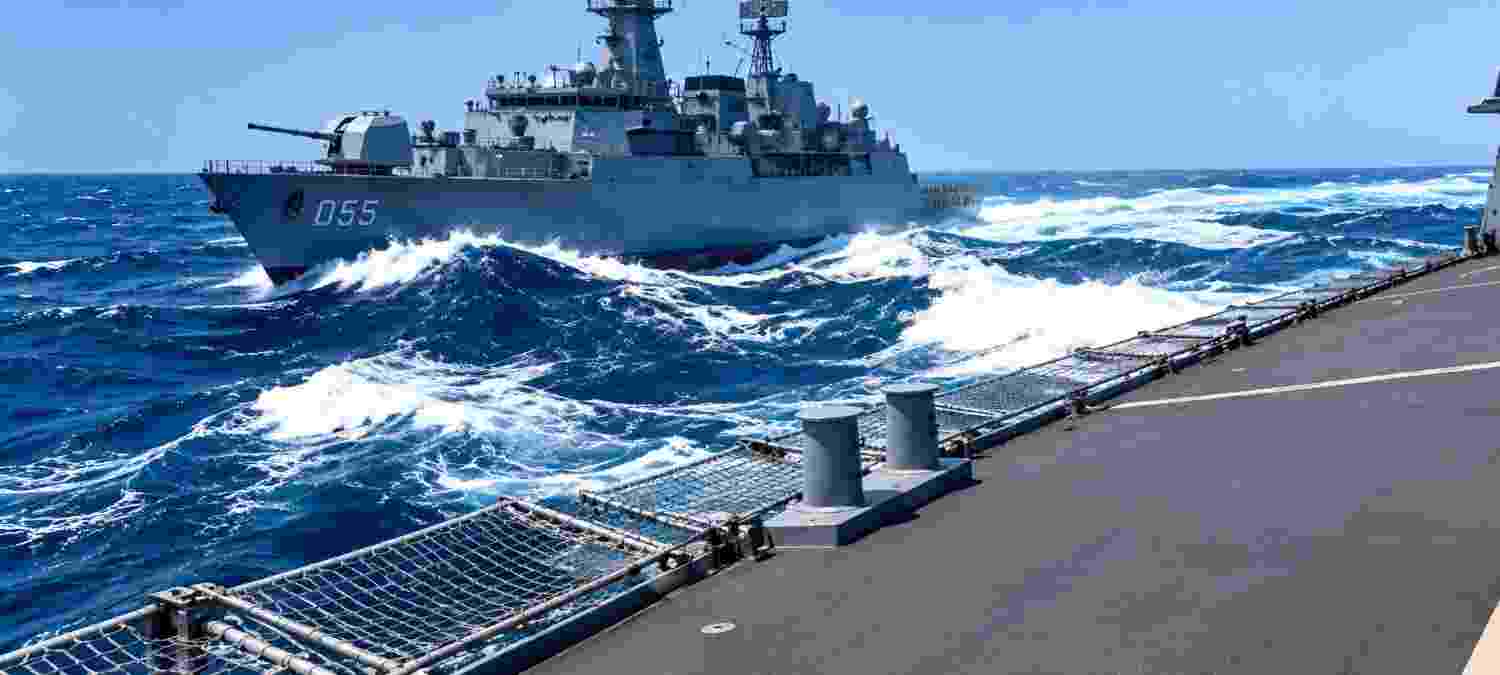
India has lodged a strong diplomatic protest with Islamabad after a Pakistani naval vessel collided with an Indian Navy warship in international waters in the North Arabian Sea, prompting New Delhi to summon Pakistan’s Charge d’Affaires on Wednesday, September 16. The incident occurred on Tuesday evening and has drawn attention to maritime safety protocols between the two countries.
Pakistani Naval Vessel Collides With Indian Warship
According to reports, the collision took place while an Indian Navy Kolkata-class destroyer was carrying out a surveillance mission in the North Arabian Sea. The Pakistani vessel involved was PNS Hunain, an offshore patrol vessel that was operating in the area as part of the Pak Navy’s Sea Spark exercise.
Sources cited by India Today said the Pakistani vessel shadowed the Indian warship before making a close manoeuvre. Repeated warnings were reportedly issued through Channel 16, the internationally recognised maritime radio channel used for distress and safety communications.
Despite those warnings, the Pakistani vessel allegedly increased speed and crossed the Indian ship’s bow from the starboard side. The two vessels subsequently came into contact.
No Major Damage or Injuries Reported
The collision did not result in reported injuries or major structural damage to the Indian Navy vessel. According to information cited by India Today, the Indian warship remained operational and continued its assigned mission following the incident.
The Pakistani vessel reportedly sustained minor damage, according to a separate report by The Indian Express. However, official details regarding the full extent of damage to both vessels remain limited.
The incident occurred in international waters, making established maritime conduct and bilateral safety arrangements particularly significant.
India Summons Pakistan’s Charge d’Affaires
Following the incident, India’s Ministry of External Affairs summoned Pakistan’s Charge d’Affaires in New Delhi and lodged a strong protest.
The MEA described the conduct of the Pakistani naval units as “unacceptable and unprofessional” and called for greater caution by military units operating at sea. India has also instructed its Charge d’Affaires in Islamabad to raise the matter with Pakistan’s Ministry of Foreign Affairs through diplomatic channels.
The diplomatic move represents New Delhi’s formal response to the maritime incident and seeks to reinforce established procedures intended to prevent dangerous encounters between Indian and Pakistani military assets.
India Points to 1991 Bilateral Agreement
A central element of India’s protest is its reference to the 1991 Agreement between New Delhi and Islamabad on Advance Notice of Military Exercises, Manoeuvres and Troop Movements.
According to the MEA, the conduct of the Pakistani naval vessel was in direct contravention of Article 10 of that agreement. The provision contains safety guidelines governing the operations of naval vessels and submarines belonging to the two countries in international waters.
Also Read — Manipur Violence: 2 Kuki Women Killed, Farmhouses Torched In Fresh Tamenglong Attack
India has stated that the agreement requires naval vessels of both countries to maintain a separation of at least three nautical miles, or approximately 5.6 kilometres, when operating in international waters, with the objective of preventing accidents and potentially dangerous encounters.
Indian Navy Continues Mission
Despite the collision, the Indian warship reportedly continued its operational duties without losing its capability. The incident therefore did not result in an interruption of the Indian Navy’s ongoing maritime deployment, according to sources cited in reports.
The Indian Navy has separately raised the issue with the Pakistan military through established communication channels. The diplomatic and military-level engagement indicates that India is pursuing the matter through formal mechanisms while seeking to prevent a recurrence.
Incident Comes Amid Tense
The maritime episode comes against the backdrop of strained relations between India and Pakistan. International reports have noted that bilateral tensions have remained high following military developments last year.
The two countries have previously experienced incidents involving their military assets at sea. The latest collision has also brought renewed attention to the importance of established communication channels and safety agreements governing interactions between their forces.
A similar naval incident in 2011 had also raised concerns about maritime conduct between the two countries, making the latest episode particularly significant from a naval safety perspective.
Focus Shifts to Preventing Future Maritime Incidents
India has called for Pakistani military units to exercise due care and comply with bilateral agreements to ensure that similar incidents do not happen again.
At present, there is no indication from the reported incident of major damage, casualties or loss of operational capability on the Indian side. Pakistan’s government had not issued an immediate public response to the latest diplomatic protest at the time of reporting.
The incident now places emphasis on adherence to maritime safety protocols, professional conduct and established India-Pakistan communication mechanisms as both countries continue to operate naval assets in strategically important waters of the Arabian Sea.
Click here to join our WhatsApp Channel for real-time news updates and exclusive coverage.