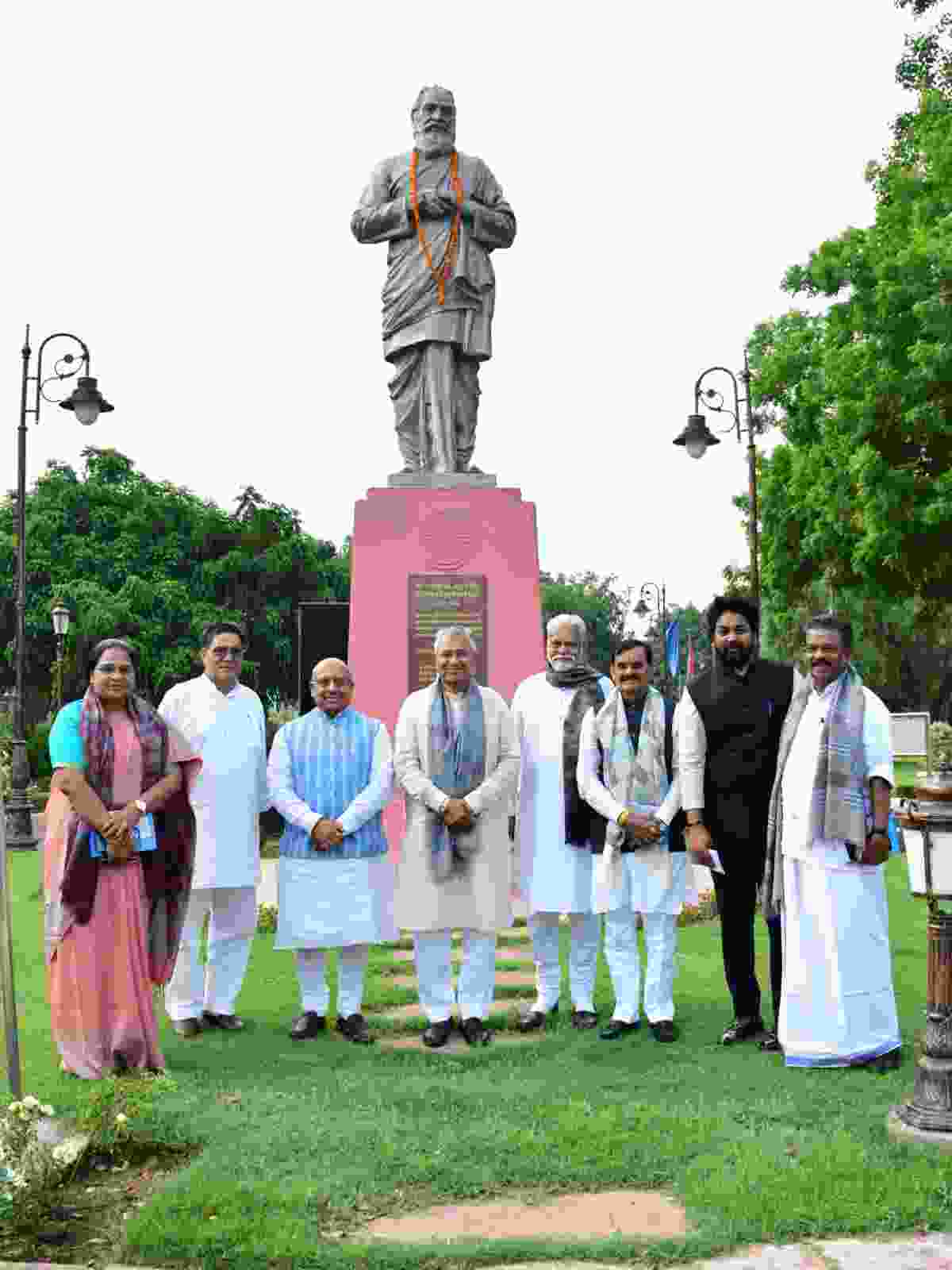
NEW DELHI: The debate over the proposed ‘One Nation, One Election’ framework gathered further momentum as Delhi Legislative Assembly Speaker Vijender Gupta interacted with members of the Parliamentary Joint Committee (JPC) examining the Constitution (One Hundred and Twenty-Ninth Amendment) Bill, 2024 and the Union Territories Laws (Amendment) Bill, 2024 during the committee’s study visit to the Delhi Assembly.
The meeting, chaired by P.P. Chaudhary, forms part of a nationwide consultation process aimed at evaluating the constitutional, legal, administrative and electoral implications of synchronising elections across the country. The committee is expected to submit its recommendations to Parliament after engaging with governments, constitutional authorities, political parties, legislators and other stakeholders.
Vijender Gupta Highlights Need for Constitutional Safeguards
During the interaction, Vijender Gupta presented a series of recommendations before the committee, stressing that any move towards simultaneous elections must be based on broad political consensus while safeguarding India’s democratic and federal framework.
He noted that India witnessed synchronised elections during the early decades after Independence. However, frequent dissolution of legislatures and changing political circumstances gradually resulted in different electoral cycles across states and the Union government.
Gupta observed that repeated elections impose significant administrative and financial burdens on the country. He pointed out that the frequent enforcement of the Model Code of Conduct often affects governance, delays development projects and diverts administrative machinery from developmental priorities.
“While simultaneous elections were the norm in the initial decades after Independence, political developments and the premature dissolution of legislatures gradually led to divergent electoral cycles. Any reform must rest on broad political consensus and robust constitutional safeguards,” Vijender Gupta said.
The Delhi Assembly Speaker also urged the committee to comprehensively examine critical constitutional and institutional issues before implementing any such reform.
Among the issues highlighted by Gupta were the synchronisation of electoral cycles, constructive votes of no-confidence, provisions dealing with premature dissolution of legislatures, harmonisation of electoral rolls, strengthening the Election Commission’s logistical preparedness and creating institutional mechanisms to ensure political stability without compromising India’s democratic values.
Committee Conducting Nationwide Consultations
Parliamentary Joint Committee Chairperson P.P. Chaudhary reiterated that Parliament had entrusted the committee with the responsibility of thoroughly examining the proposed constitutional amendments and legislative changes related to simultaneous elections.
He described the exercise as one that could have long-term implications for India’s democratic and electoral architecture and said the committee was committed to ensuring that every stakeholder’s perspective is taken into account before finalising its report.
“The Committee has been entrusted by Parliament with examining the proposed constitutional and legislative framework for simultaneous elections. We are engaging with State Governments, constitutional authorities, legislators and other stakeholders across the country so that our recommendations reflect India’s diverse constitutional, political and federal perspectives,” Chaudhary said.
He further emphasised that extensive consultations would enable the committee to submit a balanced, comprehensive and well-informed report to Parliament.
Deputy Speaker Backs Careful Examination
Delhi Legislative Assembly Deputy Speaker Mohan Singh Bisht also addressed the gathering and expressed support for the committee’s consultative approach.
He observed that the proposal for simultaneous elections deserved careful consideration because of its potential to improve administrative efficiency and reduce the recurring expenditure associated with conducting frequent elections across different states and the country.
“The proposal for simultaneous elections deserves careful consideration in view of its potential to enhance administrative efficiency and reduce the recurring expenditure associated with frequent electoral exercises. I am confident that the Parliamentary Joint Committee’s deliberations will contribute towards developing a pragmatic and nationally beneficial electoral framework,” Bisht said.
Senior Officials Participate in Consultation
The consultation programme was attended by senior officials from the Ministry of Law and Justice, the Lok Sabha Secretariat, the Government of the National Capital Territory of Delhi, and the Delhi Legislative Assembly Secretariat, along with other concerned officers.
The interaction forms part of a broader nationwide exercise being undertaken by the Parliamentary Joint Committee to gather inputs before making recommendations on one of the country’s most significant proposed electoral reforms.
The committee’s discussions are expected to play an important role in shaping the future framework for synchronised elections, with constitutional safeguards, political consensus and administrative preparedness remaining central themes throughout the consultation process.