
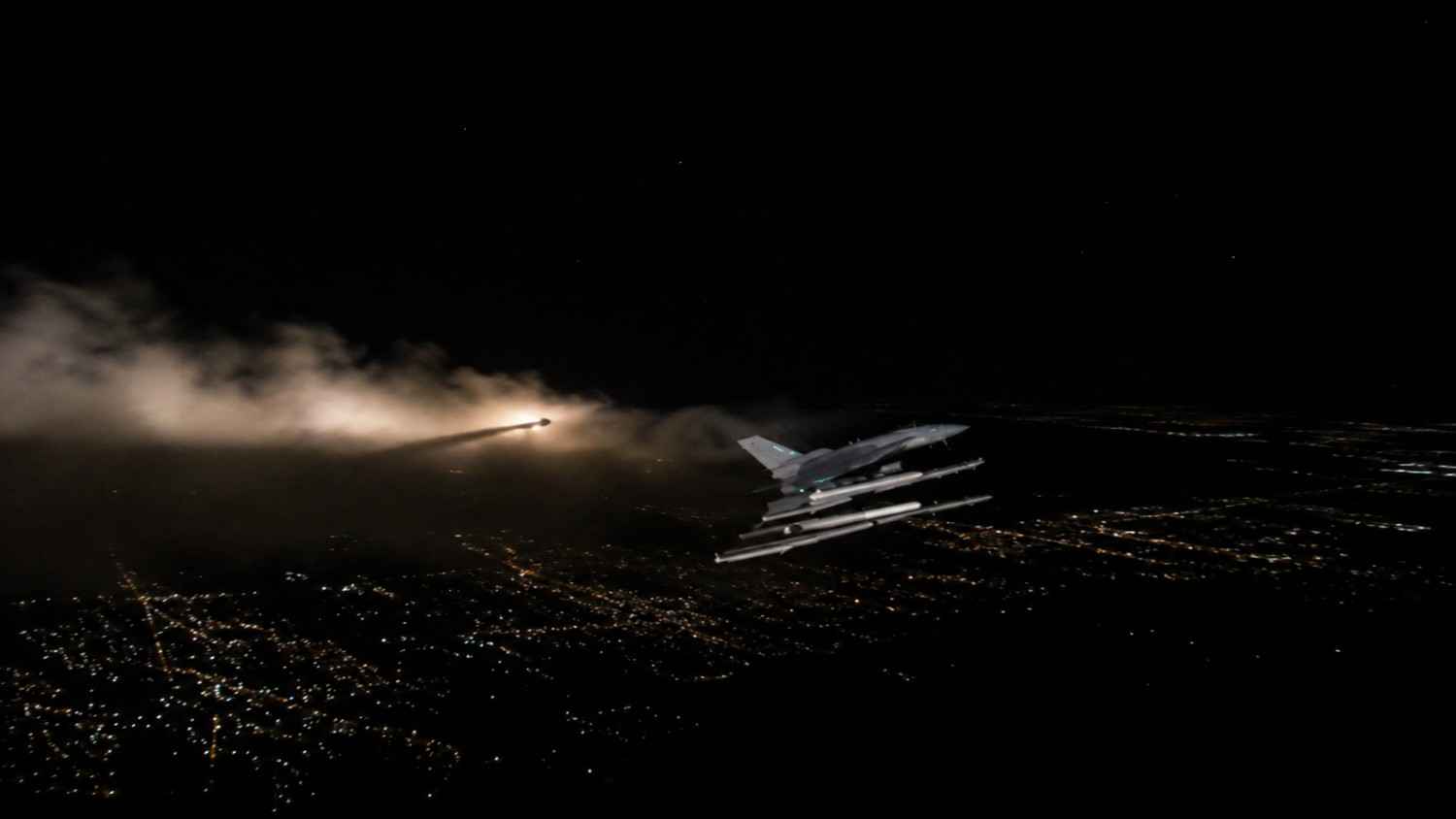
The United States has intensified its military campaign against Iran, launching a fresh wave of airstrikes on strategic military installations, including targets near the Iran-Kuwait border, as tensions in the Middle East continue to spiral. The latest strikes came amid growing concerns over the security of the Strait of Hormuz and a widening regional conflict involving several Gulf nations.
The renewed military action follows days of escalating hostilities between Washington and Tehran, with both sides accusing each other of violating previous understandings aimed at reducing tensions. US officials said the strikes were intended to weaken Iran’s military capabilities and protect international shipping routes, while Iran described the attacks as a serious act of aggression.
Border Region Comes Under Fire
Among the latest targets were Iranian military positions and border infrastructure close to Kuwait. According to reports, US aircraft struck command facilities, radar installations, and logistical sites believed to support Iranian military operations in the region. The strikes marked another expansion of the conflict beyond central Iranian military bases and toward sensitive border areas.
Although no official casualty figures were immediately released, explosions were reported in several locations, and emergency response teams were deployed to assess the damage.
Iran Launches Retaliatory Attacks
Iran responded by launching missiles and drones toward Gulf countries that host American military facilities, including Kuwait, Bahrain, Qatar, the United Arab Emirates, Jordan and Oman. Air defence systems were activated across the region, intercepting several incoming projectiles, while authorities issued emergency alerts to residents.
Kuwait confirmed heightened security measures following the attacks, while Bahrain and Qatar also reported missile alerts. Some falling debris caused limited damage and injuries, though officials stressed that defensive systems successfully intercepted many threats.
Strait of Hormuz Remains Flashpoint
The strategic Strait of Hormuz remains at the centre of the crisis. Iran has reiterated its claim over navigation through the waterway and warned that it could restrict shipping if military pressure continues.
The United States, however, insists that international maritime traffic will remain protected. US military officials stated that naval forces continue to patrol the region to ensure freedom of navigation despite Iran’s threats.
The Strait carries nearly one-fifth of the world’s seaborne oil exports, making any disruption a major concern for global energy markets.
Trump Signals Tough Response
US President Donald Trump defended the latest military operations, saying the strikes were necessary to respond to Iranian actions that threatened regional stability and international commerce. He maintained that the United States would continue protecting commercial shipping and allied interests in the Gulf.
At the same time, Washington indicated that diplomatic channels remain available if Iran chooses to reduce military activities, though officials acknowledged that prospects for immediate de-escalation have become increasingly uncertain.
Oil Markets and Shipping Under Pressure
Global energy markets reacted cautiously as investors monitored developments around the Strait of Hormuz. Shipping companies operating in the Gulf have increased security measures, while insurers have raised premiums for vessels travelling through the region.
Analysts warn that any prolonged disruption to oil exports could trigger higher fuel prices worldwide and place additional pressure on global supply chains.
Also Read: Meghalaya Plans Mandatory Tourist Registration On ILP Model
Several commercial vessels have reportedly altered their routes or delayed departures until the security situation becomes clearer.
Regional Security Tightened
Governments across the Gulf have significantly strengthened security around military bases, oil facilities, airports and ports. Air defence systems remain on high alert amid fears of additional missile or drone attacks.
Military cooperation among Gulf allies has also increased, with intelligence-sharing and surveillance operations expanding to monitor possible threats.
Airlines have continued rerouting flights away from high-risk airspace to ensure passenger safety.
International Concern Grows
The latest escalation has prompted renewed calls for restraint from the international community. Several countries urged both Washington and Tehran to avoid actions that could further destabilise the region.
Diplomatic efforts involving regional mediators continue, but repeated military exchanges have complicated attempts to restore confidence between the two sides.
The United Nations and other international organisations have warned that continued conflict could have serious humanitarian, economic and security consequences extending well beyond the Middle East.
Uncertain Days Ahead
With US airstrikes continuing and Iran maintaining its retaliatory posture, the possibility of further escalation remains high. Security experts believe both nations are attempting to project military strength while avoiding an uncontrolled regional war, but the growing involvement of Gulf countries has made the situation increasingly volatile.
As military operations continue around the Strait of Hormuz and along Iran’s borders, governments, energy markets and international shipping companies are expected to remain on heightened alert, watching closely for the next phase of one of the region’s most dangerous confrontations in recent years.
Click here to join our WhatsApp Channel for real-time news updates and exclusive coverage.