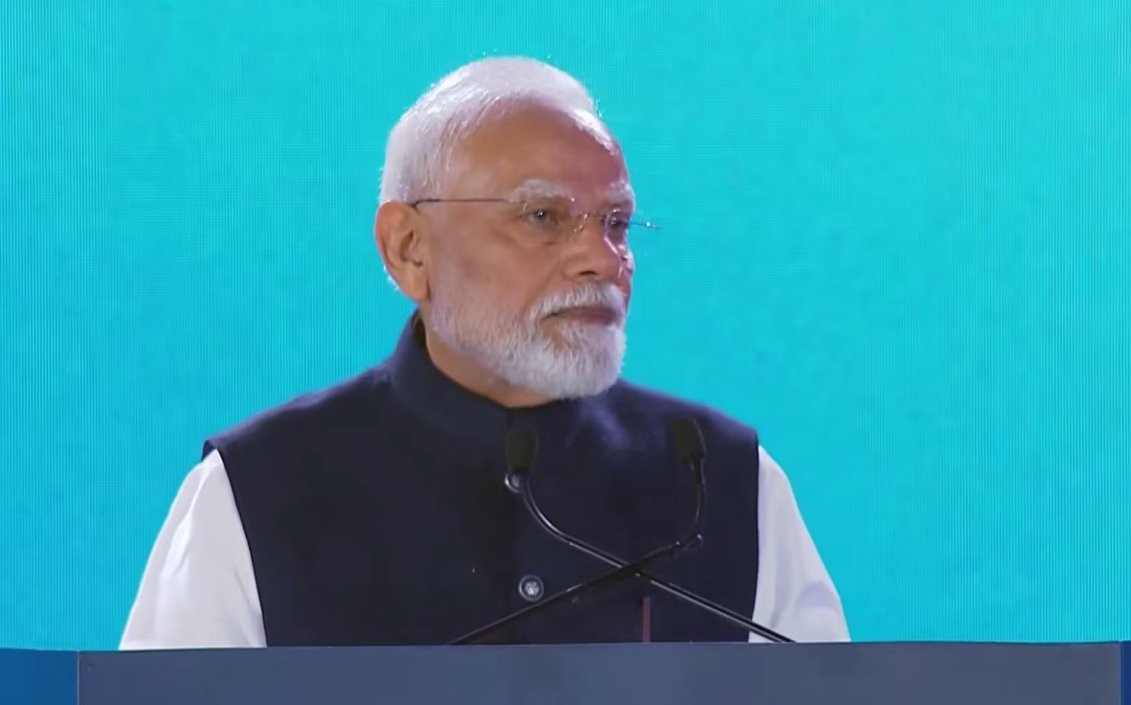
Prime Minister Narendra Modi has called for a new approach to economic growth and technological advancement, urging countries and businesses to use their capabilities to empower people rather than concentrate power in the hands of a few.
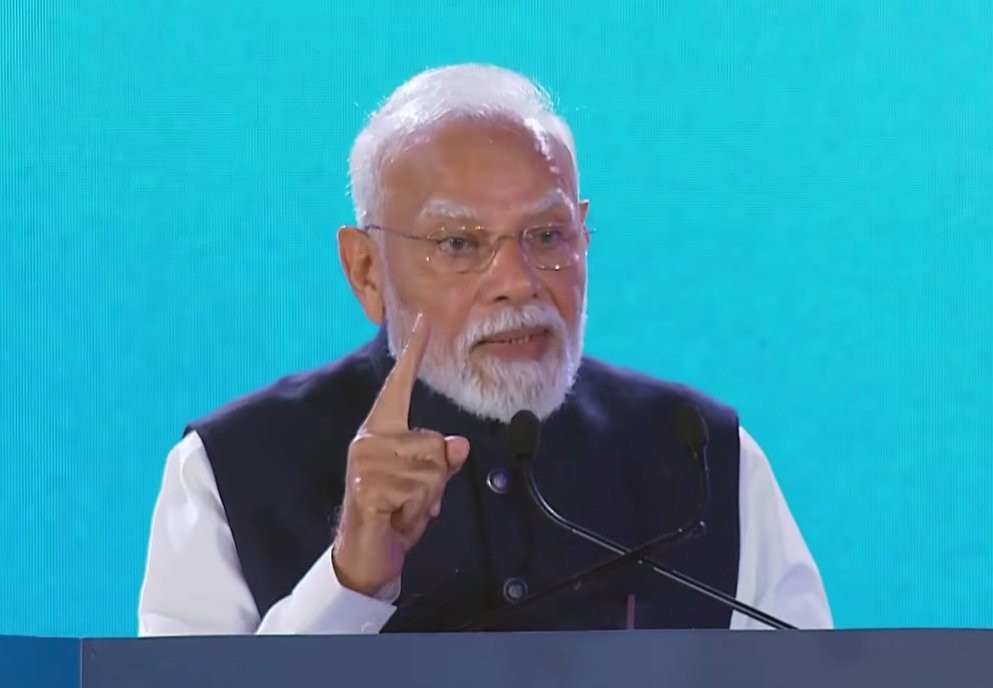
Delivering his address at the Bloomberg Economic Forum, held in India for the first time, Modi outlined his vision of “Power to Empower”, arguing that technology, data, knowledge and innovation should create opportunities for millions of people and contribute to global development.
“Today, Technology is Power, Data is Power, Knowledge is Power, Innovation is Power,” the Prime Minister said, emphasising that the central question is how these resources are used and who benefits from them.
He added that the world must move beyond using power for control and competition towards enabling others, collaborating and helping people succeed.
‘Power to Empower’: Modi’s Vision for the Future
Modi said the principle of empowering others was rooted in India’s traditional philosophy, which places importance on the purpose for which knowledge, wealth and strength are used.
“The true value of power lies in its purpose,” he said, connecting the idea to India’s governance approach, technology policies and international partnerships.
The Prime Minister argued that governments should use their authority to make citizens more capable and independent rather than dependent on administrative systems. He presented digital inclusion, entrepreneurship, poverty reduction and clean energy as examples of this approach.
Welcoming the international delegates, business leaders and policymakers, Modi thanked Bloomberg and his team for bringing the forum to India. He also acknowledged Bloomberg’s longstanding interest in the country and said the event provided an important platform for discussing the economy, technology, energy and global affairs.
Digital India and Inclusive Technology
Highlighting India’s digital transformation, Modi said affordable mobile data and wider internet access had expanded opportunities for students, small businesses and young people.
He noted that digital connectivity had helped students in smaller towns access online education, enabled village shopkeepers to reach more customers and allowed young people to enrol in digital courses.
“Connectivity in India has not merely connected people; it has connected opportunities as well,” he said.
Modi also invited international visitors to examine India’s digital payments ecosystem, pointing out that street vendors and large automobile showrooms could use the same digital infrastructure.
He said India was sharing its experience in Digital Public Infrastructure with partner countries, particularly those in the Global South. The CoWIN platform, developed during the COVID-19 pandemic, was cited as an example of technology designed to support wider public access.
Startup Growth and Women’s Participation
The Prime Minister highlighted India’s expanding startup ecosystem as evidence of the growing reach of innovation. According to figures cited in his speech, the country now has more than 250,000 startups, compared with only a few hundred before 2014.
He said nearly half of these startups originated in smaller cities and towns, while more than 45% had at least one woman director or partner.
Modi argued that innovation becomes more impactful when opportunities extend beyond established business centres and reach people from diverse backgrounds.
He also referred to government welfare delivery through the Jan Dhan-Aadhaar-Mobile, or JAM, Trinity and Direct Benefit Transfer systems. These mechanisms, he said, had helped transfer government assistance directly into beneficiaries’ bank accounts, improving convenience and reducing opportunities for corruption.
The Prime Minister added that India had lifted approximately 250 million people out of poverty over the past decade, presenting the figure as a key indicator of the country’s development efforts.
Renewable Energy and Climate Commitments
Modi placed renewable energy at the centre of his argument that economic growth should generate wider social and environmental benefits.
He recalled India’s commitment under the Paris Agreement to achieve 40% of its installed electricity capacity from non-fossil fuel sources by 2030. He said India had reached that milestone in November 2021, ahead of its original deadline.
Also Read | Supreme Court Flags 14 Defects in Rahul Gandhi’s Plea Against CEC Gyanesh Kumar
According to the figures presented in his address, India’s renewable energy capacity had increased from approximately 75 gigawatts in 2014 to around 300 gigawatts.
He also highlighted the PM Surya Ghar scheme, which promotes rooftop solar power for households, and PM-KUSUM, which supports solar energy adoption in agriculture.
Modi said these initiatives were helping households and farmers participate in the energy transition while reducing dependence on conventional energy sources. He estimated that the schemes would reduce annual carbon emissions by more than 30 million tonnes.
India’s Global Role Amid Uncertainty
Addressing global challenges, Modi referred to the COVID-19 pandemic, regional conflicts, disruptions in trade and energy supplies, and competition over critical minerals and emerging technologies.
He said these developments had made trust and reliability increasingly important in international relations.
“When the world needs affordable medicines, one out of every five generic medicines comes from India,” he said, pointing to the country’s pharmaceutical sector, skilled workforce and more than 2,000 Global Capability Centres as examples of its international contribution.
He also recalled India’s supply of vaccines to more than 100 countries during the pandemic, describing the effort as an example of using domestic manufacturing capacity to support other nations.
Modi cited initiatives including the International Solar Alliance, the Coalition for Disaster Resilient Infrastructure, the Global Biofuel Alliance and Mission LiFE as examples of India’s efforts to develop solutions to shared global challenges.
Economic Reforms and the Message of Cooperation
The Prime Minister also highlighted India’s economic performance and reform agenda. He cited a 7.8% growth rate for the April-June quarter and foreign exchange reserves exceeding $700 billion.
He referred to the Goods and Services Tax, the Insolvency and Bankruptcy Code, the consolidation of 29 labour laws into four labour codes, and the decriminalisation of numerous minor business-related offences.
“Reforms are not a compulsion. Reforms are our conviction,” Modi said, describing the government’s approach to improving the business environment.
Concluding his address, the Prime Minister invoked a Vedic mantra calling for people to walk and work together through dialogue and mutual understanding.
“Let us walk together. Let us speak together. Let us strive to understand one another,” he said.
Modi reiterated that national progress should contribute to the well-being of others, arguing that cooperation, shared innovation and collective problem-solving would be essential to addressing the world’s economic, technological and environmental challenges.
Click here to join our WhatsApp Channel for real-time news updates and exclusive coverage.