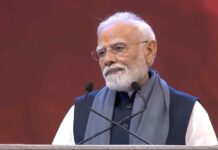
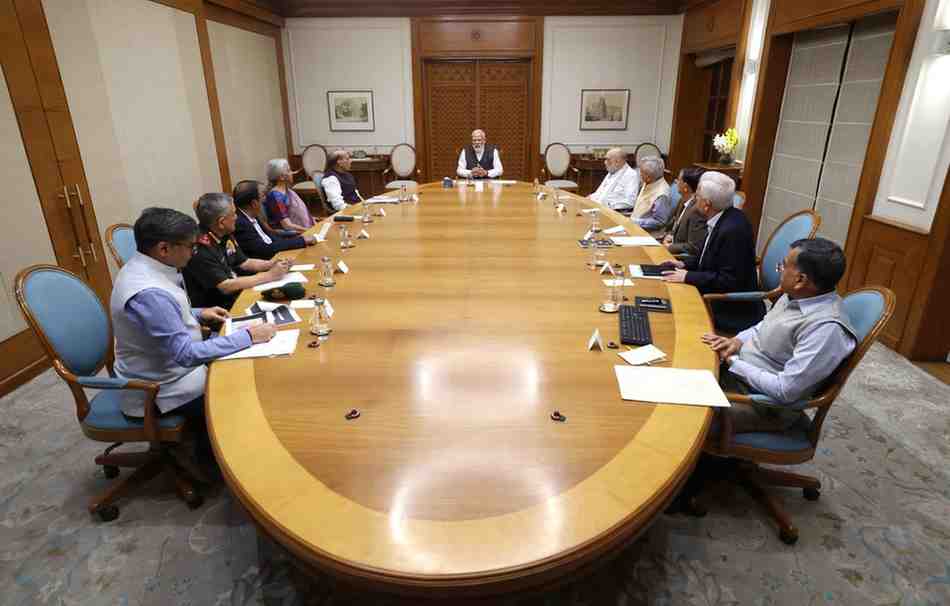
Prime Minister Narendra Modi chaired a crucial meeting of the Cabinet Committee on Security (CCS) in Parliament on Thursday to assess the rapidly evolving security situation in West Asia and its possible impact on India’s strategic and economic interests. The high-level meeting brought together the country’s top political leadership, security establishment, and senior officials responsible for defence, diplomacy, finance, and energy.
The meeting comes at a time when the conflict in West Asia has intensified, raising concerns over regional stability, global energy markets, and the uninterrupted flow of crude oil and liquefied natural gas (LNG), both of which are critical for India’s energy requirements.
Government sources said the CCS focused on evaluating potential risks arising from the conflict and reviewed contingency plans to ensure that India’s energy security remains protected even if the regional situation deteriorates further.
Top Leadership Participates In Strategic Meeting
The meeting witnessed the participation of several key members of the Union Cabinet and the national security establishment.
Among those present were Defence Minister Rajnath Singh, Finance Minister Nirmala Sitharaman, External Affairs Minister S. Jaishankar, Union Home Minister Amit Shah, Commerce Minister Piyush Goyal, Parliamentary Affairs Minister Kiren Rijiju, Health Minister JP Nadda, Petroleum and Natural Gas Minister Hardeep Singh Puri, and Ports, Shipping and Waterways Minister Sarbananda Sonowal.
National Security Adviser Ajit Doval also attended the meeting alongside senior security and intelligence officials, highlighting the seriousness with which the government is monitoring developments in the region.
Focus On India’s Energy Security
A major agenda of the CCS meeting was safeguarding India’s energy supplies.
India imports a substantial portion of its crude oil and natural gas from West Asian countries. Any disruption caused by military escalation or instability in the region could affect shipping routes, fuel prices, and domestic energy availability.
Officials reviewed India’s preparedness to deal with possible supply disruptions and discussed measures to maintain uninterrupted imports of crude oil, petroleum products, LPG and LNG if the conflict escalates further.
The government is also understood to have examined alternative supply mechanisms and emergency preparedness strategies to minimise the impact of any prolonged crisis on India’s economy and consumers.
Strategic Importance Of West Asia For India
West Asia remains one of India’s most significant strategic partners due to its role as a major energy supplier and its large Indian diaspora.
Millions of Indians live and work across Gulf countries, making regional stability vital not only for energy security but also for the safety and welfare of Indian citizens abroad.
The region also serves as an important trade corridor connecting Asia, Europe and Africa. Any prolonged conflict could influence shipping routes, insurance costs, and international trade, making continuous monitoring essential for New Delhi.
Also Read: Birbhum Treasure Bust: Massive ₹28.5 Crore Cash Haul And Gold Recovery Rock West Bengal
Government officials are closely tracking developments while maintaining regular diplomatic engagement with partner nations in the region.
Security Agencies Assess Emerging Risks
Apart from energy concerns, the CCS reportedly reviewed the broader national security implications arising from the evolving geopolitical situation.
Senior officials briefed the Prime Minister on intelligence assessments, regional military developments, and possible implications for India’s strategic interests.
The presence of senior ministers handling defence, external affairs, finance, petroleum, shipping and commerce reflected the government’s comprehensive approach to managing both security and economic challenges arising from the crisis.
Officials also discussed coordination among various ministries to ensure a swift response if circumstances require additional policy measures.
Government Monitoring Situation Closely
The CCS meeting took place during the ongoing Monsoon Session of Parliament, underlining the urgency attached to the issue.
While the government has not yet released an official statement detailing the decisions taken during the meeting, sources indicated that the review focused on preparedness rather than immediate emergency measures.
The Centre is expected to continue monitoring the evolving geopolitical situation and remain in close touch with international partners to safeguard India’s national interests.
With energy security emerging as a critical concern amid global uncertainty, the high-level review demonstrates the government’s emphasis on ensuring uninterrupted fuel supplies, protecting economic stability and maintaining national security in the face of rapidly changing international developments.
Click here to join our WhatsApp Channel for real-time news updates and exclusive coverage.