
NEW DELHI: “Our stand remains unchanged,” India declared on Thursday, firmly reiterating that the Indus Waters Treaty (IWT) will continue to remain in abeyance until Pakistan takes credible and irreversible steps to end cross-border terrorism. The statement came in response to Pakistan’s recent criticism of New Delhi’s decision to suspend the decades-old water-sharing agreement and its renewed attempts to raise the issue internationally.
“Our Stand Remains Unchanged,” Says MEA
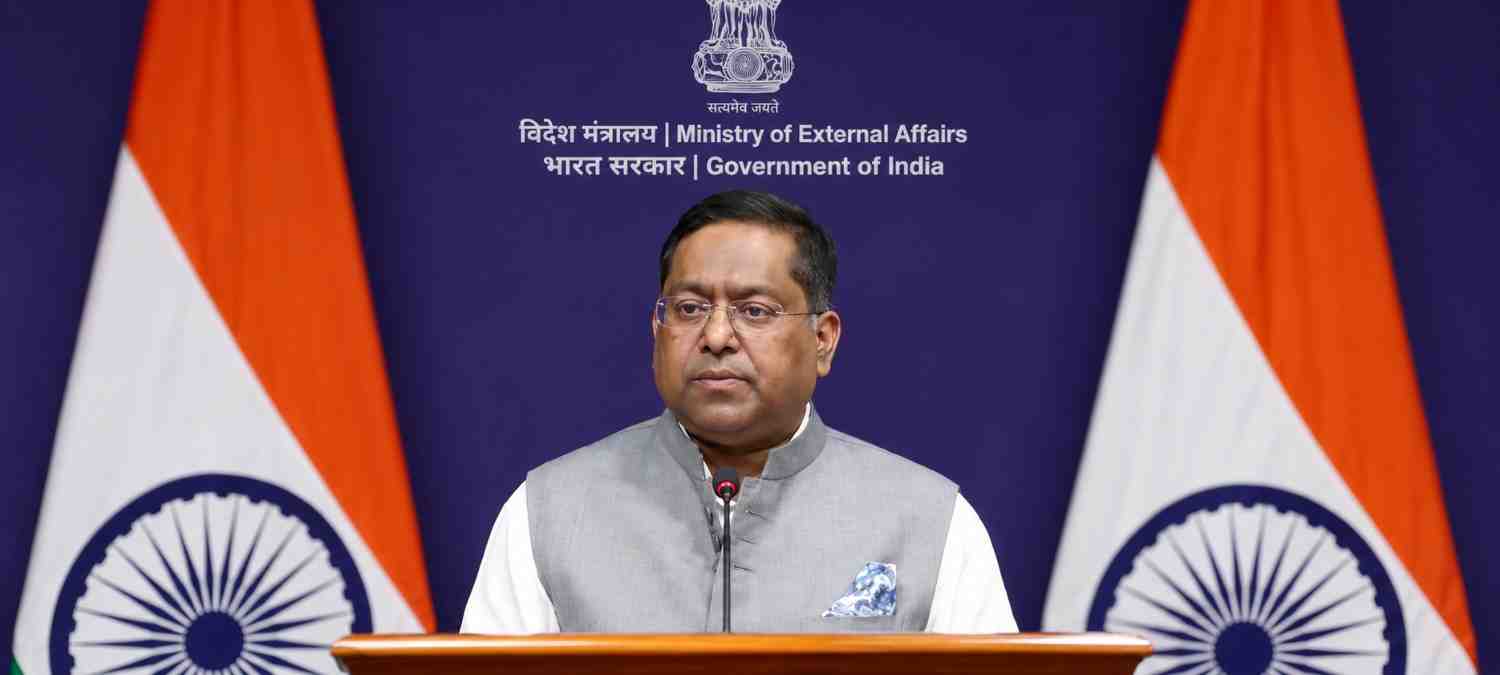
Addressing the media, Ministry of External Affairs (MEA) spokesperson Randhir Jaiswal emphasized that India’s position has not shifted since the treaty was placed in abeyance following the 2025 Pahalgam terror attack.
“Our stand remains unchanged. The Indus Waters Treaty will remain in abeyance until Pakistan credibly and irrevocably abjures its support for cross-border terrorism,” Jaiswal said.
The government maintained that terrorism and normal bilateral cooperation cannot coexist, making it clear that any future decision on the treaty would depend entirely on Pakistan’s actions against terror networks operating from its territory.
Treaty Suspension Linked to National Security
India suspended the implementation of the Indus Waters Treaty after the devastating terrorist attack in Pahalgam, Jammu and Kashmir, in April 2025, in which 26 civilians lost their lives. New Delhi described the move as part of a broader diplomatic response aimed at holding Pakistan accountable for its continued support of cross-border terrorism.
Officials argue that agreements built on mutual trust cannot function effectively when one party continues to permit or encourage activities that threaten the security of the other.
“There cannot be business as usual while terrorism continues,” government sources have consistently maintained while explaining India’s position.
Pakistan Continues to Object
Pakistan has repeatedly criticized India’s decision, describing the suspension of the treaty as contrary to international obligations. Islamabad has also sought to draw international attention to the issue, warning that any disruption in water-sharing arrangements could have serious regional consequences.
Pakistani officials have urged India to restore the treaty and have argued that water agreements should remain insulated from political and security disputes.
However, New Delhi has strongly rejected those arguments, stating that Pakistan cannot expect the benefits of bilateral agreements while continuing policies that undermine India’s national security.
Read Here: Major Defence Boost: Centre Approves ₹52,000 Crore Military Procurement Package
India Stresses Action Over Statements
The Ministry of External Affairs reiterated that the path to restoring normal engagement lies entirely with Pakistan.
Rather than rhetorical assurances, India has demanded verifiable, credible and irreversible action against terrorist groups and infrastructure operating from Pakistani territory.
According to officials, only concrete measures demonstrating a genuine commitment to ending cross-border terrorism can create conditions for reconsidering India’s current position.
“Credible action—not statements—will determine the future course,” officials indicated, underscoring India’s security-first approach.

A Historic Treaty Under Strain
Signed in 1960 with the mediation of the World Bank, the Indus Waters Treaty has long been regarded as one of the world’s most successful transboundary water-sharing agreements. Despite wars and prolonged diplomatic tensions, it survived for more than six decades.
Under the agreement, India has rights over the eastern rivers—Ravi, Beas and Sutlej—while Pakistan receives most of the waters of the western rivers—Indus, Jhelum and Chenab, with India retaining limited usage rights under specific provisions.
India’s decision to place the treaty in abeyance represents one of the most significant developments in bilateral relations since the agreement was signed.
National Security Takes Priority
New Delhi maintains that the issue extends beyond water-sharing and reflects a broader principle that terrorism cannot be separated from diplomatic and bilateral cooperation.
Government officials argue that meaningful engagement requires an environment free from cross-border violence, and until that condition is met, India’s policy will remain unchanged.
The latest statement reinforces India’s broader diplomatic position that counter-terrorism remains central to all aspects of its relationship with Pakistan.
No Immediate Change Expected
India’s latest remarks leave little doubt that there will be no immediate restoration of the Indus Waters Treaty.
By once again declaring that “our stand remains unchanged,” New Delhi has signalled that national security concerns will continue to guide its policy. Unless Pakistan demonstrates sustained and verifiable action against cross-border terrorism, the treaty is expected to remain in abeyance, keeping yet another chapter of India-Pakistan relations at an impasse.
Click here to join us on WhatsApp Channel and get all the latest news updates