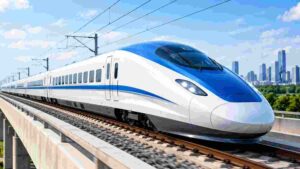
India’s ambitious high-speed rail programme has entered a crucial phase with the completion of the first body frame of the country’s indigenous bullet train. Railway Minister Ashwini Vaishnaw said the train is expected to be placed on the tracks for testing by May or June 2027, bringing India closer to developing and manufacturing high-speed trains with greater domestic capabilities.
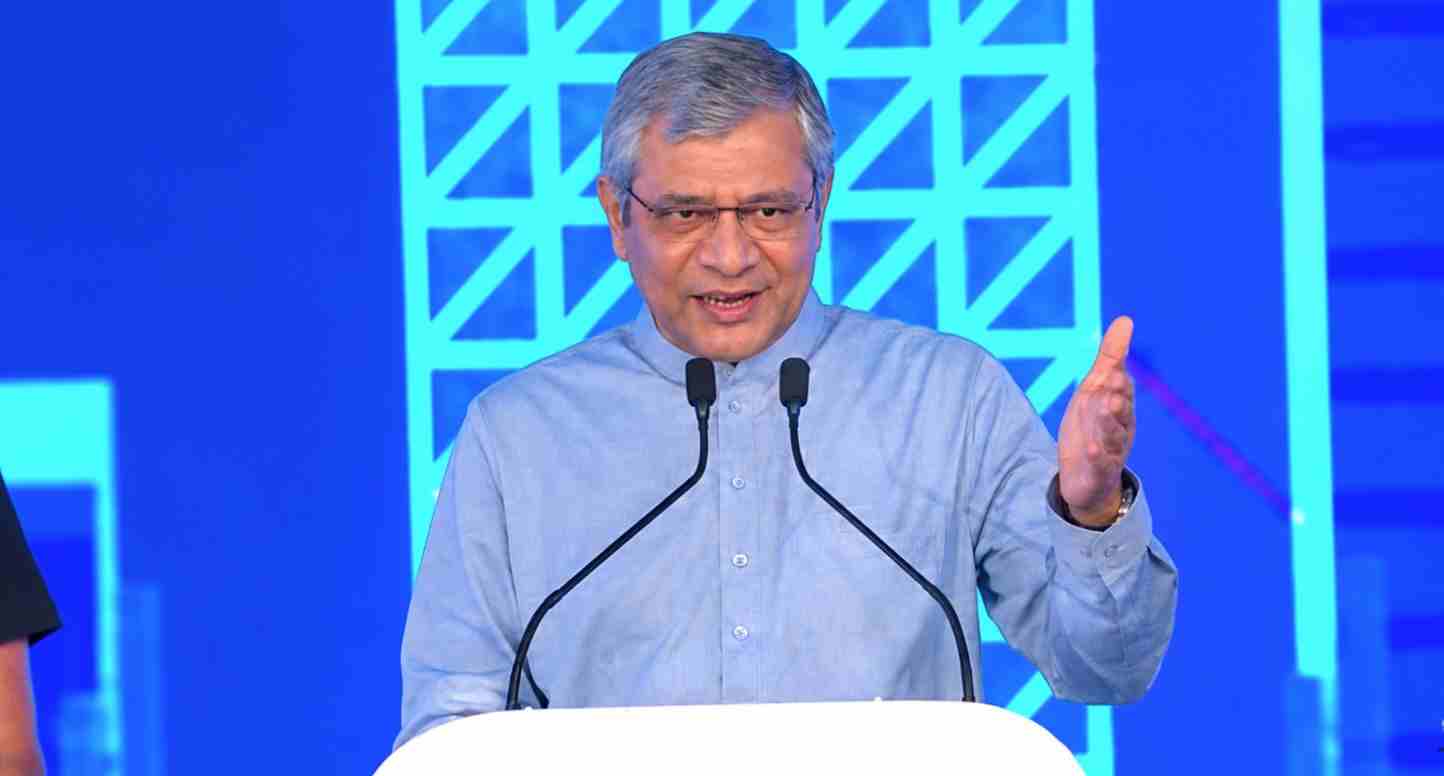
Vaishnaw made the announcement on Tuesday at the ‘NaMo for Viksit Bharat’ event in Vadodara, Gujarat, where Prime Minister Narendra Modi inaugurated and laid foundation stones for several development projects worth more than Rs 35,000 crore. The railway minister said the completed body frame had recently been sent for a structural “squeeze test”, an important stage before the train progresses to further testing.
First Indigenous Bullet Train Moves Towards Testing
According to Vaishnaw, India’s own bullet train will enter track testing around May or June next year. The testing phase is expected to continue for two to four months, after which the train could move towards its inauguration.
The minister said the train is being developed in line with the government’s vision of Atmanirbhar Bharat, with the broader objective of strengthening India’s domestic technological and manufacturing capabilities in high-speed rail.
The completion of the first body frame represents a significant step because high-speed trains require advanced engineering, stringent structural standards and extensive testing before they can be cleared for passenger operations.
Vadodara-Mumbai Journey Could Take Just 90 Minutes
Vaishnaw also highlighted the potential impact of high-speed rail on travel between Gujarat and Maharashtra. He said passengers travelling from Vadodara to Mumbai could eventually complete the journey in around one and a half hours once the high-speed rail service becomes operational.
The development is linked to the wider Mumbai-Ahmedabad High-Speed Rail Corridor, which is being constructed as India’s flagship bullet train project. The corridor is expected to transform intercity connectivity between major economic centres and introduce a new era of high-speed passenger rail travel in the country.
Surat-Vapi Section Targeted for December Completion
Construction activity on the Mumbai-Ahmedabad High-Speed Rail project is also progressing, with the Surat-Vapi section expected to be completed by December 2026, according to the Railway Minister.
The corridor will eventually connect Mumbai and Ahmedabad through Maharashtra, Gujarat and the Union Territory of Dadra and Nagar Haveli. Work on different sections is being advanced in phases, with the government targeting the gradual opening of portions of the route rather than waiting for the entire corridor to be completed.
The first operational stretch is expected to play a key role in demonstrating India’s high-speed rail capabilities before the full corridor becomes operational.
Major Push for Railway Modernisation
Vaishnaw used the Vadodara event to outline a broader transformation underway across Indian Railways. He said efforts were being made to modernise operating systems, reservation platforms and construction practices, while introducing new approaches to railway infrastructure and freight transportation.
The minister also pointed to new wagon designs, including specialised wagons intended for transporting commodities such as salt. Such developments, he said, are part of a wider effort to upgrade both passenger and freight railway systems.
Several major infrastructure achievements were also highlighted, including the Chenab Bridge and the railway connectivity project linking Mizoram with the national rail network.
280 Stations Redeveloped, 36,000 Km of Tracks Added
Vaishnaw said 280 railway stations have been redeveloped as part of the modernisation drive, while approximately 36,000 kilometres of new railway tracks have been developed.
He also said cargo trains incorporating Vande Bharat technology were being developed, reflecting efforts to expand the use of modern railway technologies beyond passenger services.
The minister argued that railway development has accelerated despite the disruption caused by the Covid-19 pandemic. He noted that after the first section of the high-speed rail project was completed in 2020, work on subsequent sections gathered momentum.
India’s indigenous bullet train initiative therefore represents more than the arrival of a faster train. It is also being positioned as a test of the country’s ability to build advanced railway technology domestically. If the scheduled trials begin in May-June 2027 and progress successfully, the project could become a defining milestone in India’s transition towards a modern, technology-driven railway network.
Click here to join our WhatsApp Channel for real-time news updates and exclusive coverage.