
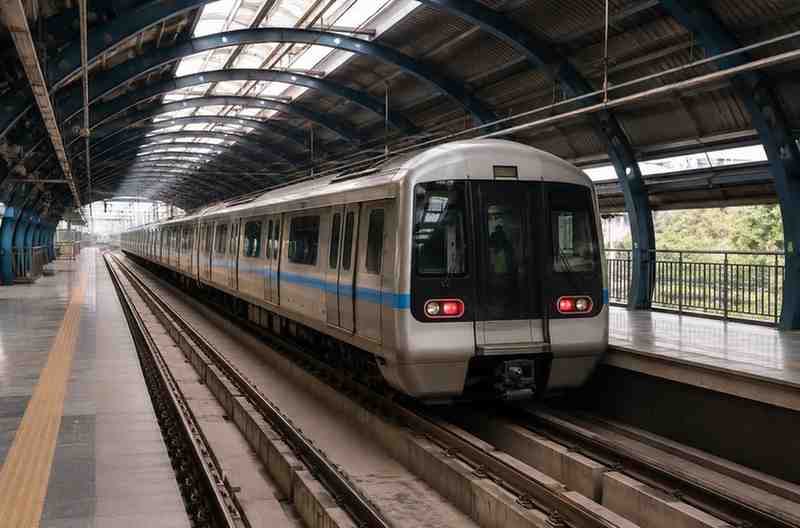
Delhi Metro commuters have been advised to prepare for possible travel disruptions as Delhi Police has requested restrictions at 57 metro stations ahead of planned protests on Saturday, October 10. The proposed measures include closing station entry and exit gates and reducing the frequency of trains passing through identified stations to prevent overcrowding and maintain public order.
According to reports, the restrictions are proposed to begin at 9 pm on Friday, October 9, and continue through October 10 until the situation returns to normal. The advisory comes amid heightened security concerns surrounding demonstrations planned at Jantar Mantar and other locations in New Delhi.
The Delhi Metro Rail Corporation (DMRC) has been asked to take appropriate steps in coordination with the police. Commuters should check official DMRC announcements before starting their journeys, as the implementation and duration of individual restrictions may depend on the prevailing security situation.
Why Are Delhi Metro Stations Facing Restrictions?
The proposed restrictions are linked to demonstrations expected in the national capital on October 10. Police authorities have expressed concern about the possibility of large crowds moving towards sensitive locations, potentially creating congestion and law-and-order challenges.
A communication from the Joint Commissioner of Police, Transport Range, reportedly requested DMRC Managing Director Vikas Kumar to consider closing entry and exit gates at the identified stations. The police also suggested reducing the frequency of trains passing through these locations as part of preventive security arrangements.
The measures are intended to help authorities manage passenger movement, limit crowd concentration around sensitive areas and respond to possible disruptions during the demonstrations.
The advisory does not necessarily mean that every listed station will remain completely inaccessible to passengers. Entry and exit restrictions, train-frequency changes and interchange arrangements may differ according to instructions issued by the authorities. Travellers should therefore rely on official updates for station-specific information.
The police advisory identifies stations across central, south, north, east and other parts of Delhi. Commuters using these stations should verify their travel arrangements before leaving home.
Central Delhi and key interchange stations:
- Janpath
- Patel Chowk
- Central Secretariat
- Lok Kalyan Marg
- Rajiv Chowk
- New Delhi
- Seva Teerth (Udyog Bhawan)
- Mandi House
- Barakhamba Road
- ITO
- Delhi Gate
- Khan Market
- R.K. Ashram Marg
- Jhandewalan
- Supreme Court
- Indraprastha
- Shivaji Stadium
South Delhi and adjoining areas: 18. INA (both Metro lines) 19. Hauz Khas 20. Jor Bagh 21. Arjangarh 22. Sarai Kale Khan-Nizamuddin 23. Lajpat Nagar 24. Jangpura 25. Ashram 26. Kalindi Kunj 27. Jasola 28. Jamia Millia Islamia 29. Okhla Vihar
Old Delhi and northern areas: 30. Chawri Bazar 31. Jama Masjid 32. Karol Bagh 33. Rajendra Place 34. Vishwavidyalaya 35. Vidhan Sabha 36. Civil Lines 37. Kashmere Gate 38. Inderlok 39. G.T.B. Nagar 40. Kanhaiya Nagar 41. Netaji Subhash Place 42. Azadpur 43. Adarsh Nagar 44. Jahangir Puri 45. Haiderpur Badli Mor 46. Majlis Park 47. Shalimar Bagh
Eastern Delhi and other northern stations: 48. Seelampur 49. Maujpur 50. Jafrabad 51. Welcome 52. Yamuna Vihar 53. Khazuri Khas 54. Shahdara 55. Rithala 56. Rohini East 57. Rohini West
The list reflects the stations named in the police advisory; it should not be interpreted as confirmation that all 57 stations have already been closed. The proposed measures and their implementation remain subject to official instructions and conditions on the ground.
Commuters Urged to Plan Their Journeys Carefully
Passengers travelling to offices, hospitals, railway stations, educational institutions and other destinations are advised to allow extra time for their journeys on October 10. Those who regularly use major interchange stations should be particularly careful when planning connections.
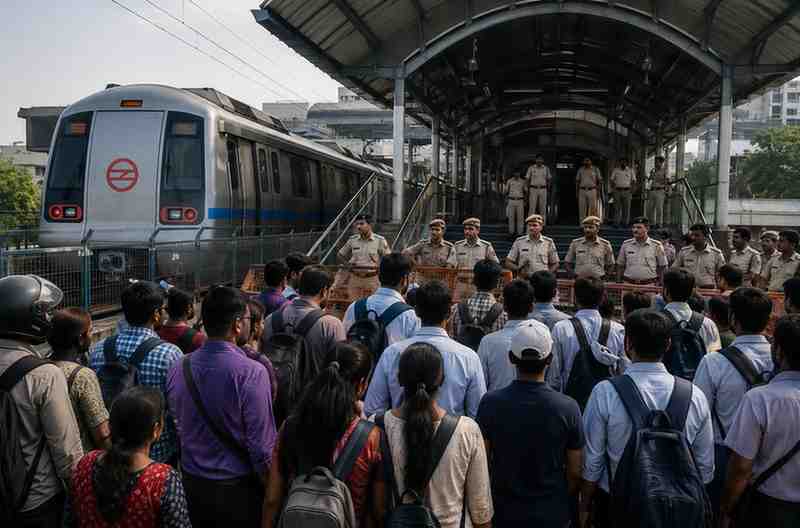
If entry and exit gates are closed at a station, passengers may need to use another station or choose an alternative transport option. However, the availability of interchange facilities and access arrangements should be confirmed through official announcements rather than assumed.
People travelling through central Delhi should also remain alert to traffic diversions and security checks around protest-sensitive locations. Road congestion may affect taxis, buses and other transport services, particularly near major roads and gathering points.
For assistance, the Economic Times report lists the following Delhi Metro Police Control Room numbers: 22183903, 8745001709 and 6828400576. Travellers should verify these contact details if needed and follow instructions issued by police personnel and Metro officials.
Security Measures Ahead of October 10 Demonstrations
The proposed Metro restrictions form part of broader preventive arrangements ahead of the planned demonstrations. Authorities are seeking to reduce the possibility of large crowds moving towards sensitive areas and to maintain public safety during the event.
Also Read | Israel To Honour Brave Indian Pilot Smit Machchhar With Top Civilian Heroism Award
The measures could affect commuters who depend on the Metro for daily travel, including passengers moving between residential neighbourhoods, business districts and central Delhi. People travelling from Noida and Gurugram should also check their intended routes and any relevant service updates before setting out.
The extent of the disruption will depend on the restrictions actually implemented, the duration of the demonstrations and the security situation throughout the day. Passengers should avoid relying on unverified social media posts or outdated station-closure lists.
What Passengers Should Do Before Travelling
Commuters should check DMRC’s official website, verified social media accounts and station announcements for the latest information. It is advisable to identify an alternative station or transport option, keep additional travel time available and follow directions from security personnel.
Passengers should also remember that a police request for restrictions is not the same as confirmation that every station on the list has been shut. The status of individual stations may change as the situation develops.
With security arrangements being strengthened ahead of October 10, staying informed will be essential for Delhi Metro passengers. Checking official updates before departure can help commuters avoid unnecessary delays and reach their destinations with fewer difficulties.
Click here to join our WhatsApp Channel for real-time news updates and exclusive coverage.