
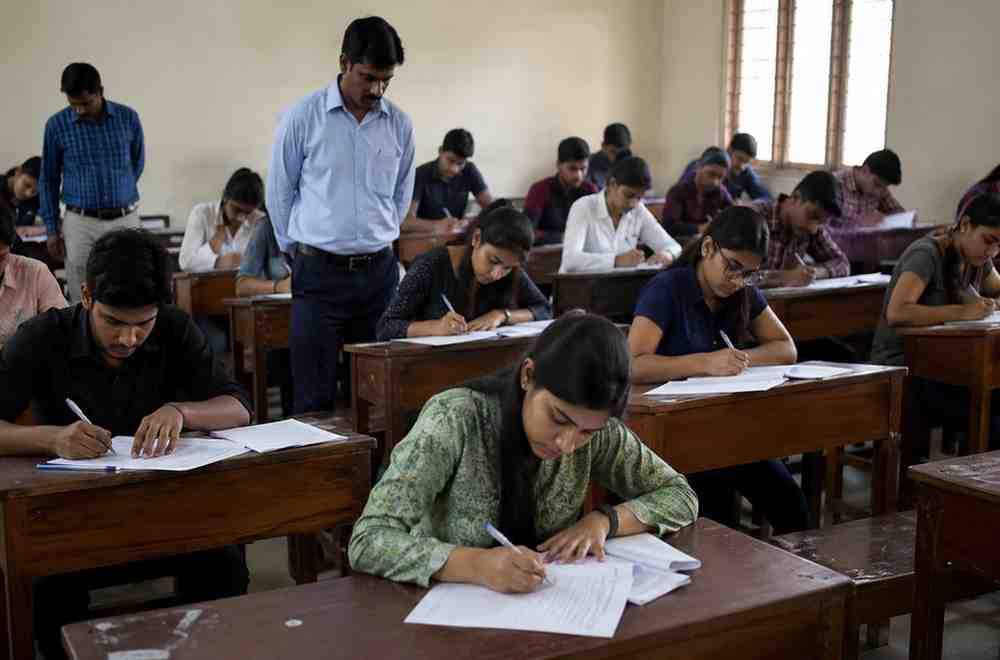
The Central government has proposed sweeping amendments to India’s anti-paper leak law, introducing significantly tougher punishments for those involved in examination fraud. The proposed Public Examinations (Prevention of Unfair Means) Amendment Bill, 2026 seeks to strengthen the existing 2024 law by increasing prison terms, imposing steeper financial penalties, and creating a faster legal mechanism to deal with organised examination scams.
The proposed legislation comes amid growing public concern over repeated paper leak incidents in recruitment and entrance examinations that have affected millions of students across the country. The government believes stronger legal deterrence is necessary to restore confidence in the integrity of public examinations.
Stricter Punishments for Offenders
One of the most significant changes proposed in the amendment is the enhancement of punishment for individuals found guilty of leaking question papers or engaging in organised examination fraud.
Under the current law, offenders can face imprisonment ranging from three to five years. The amendment proposes increasing the punishment to a minimum of five years and a maximum of ten years. Financial penalties are also set to rise substantially. While the existing law provides for fines up to ₹10 lakh for many offences, the proposed amendments introduce fines that can extend to ₹10 crore in serious organised crime cases.
The government hopes these stricter penalties will discourage organised networks that profit from paper leaks and cheating rackets.
Focus on Organised Examination Crime
Officials have stated that the amendments primarily target organised criminal groups rather than ordinary students.
The proposed law covers a wide range of illegal activities linked to examination fraud. These include leaking question papers, tampering with answer sheets or OMR sheets, creating fake admit cards, operating fraudulent examination websites, manipulating digital examination systems, impersonation, and other organised methods used to compromise public examinations.
Authorities believe such offences often involve multiple individuals working together and require stronger legal provisions to dismantle these networks.
Fast-Track Investigation and Trials
Apart from increasing punishment, the amendment also aims to speed up investigations and court proceedings.
The proposed Bill provides for time-bound investigations and the establishment of Special Fast Track Courts dedicated to paper leak and examination fraud cases. These measures are intended to ensure that cases are resolved quickly instead of remaining pending for years.
Officials argue that faster investigations and quicker judicial decisions will improve accountability and enhance public trust in the examination system.
Greater Accountability for Institutions
The amendments also seek to impose stricter responsibility on examination agencies, service providers, and institutions associated with conducting public examinations.
If organisations or service providers are found involved in examination fraud or fail to maintain adequate security standards, they could face severe financial penalties and additional legal action under the proposed law.
The government believes that accountability should extend beyond individual offenders to every organisation responsible for conducting secure and transparent examinations.
Why the Government Is Tightening the Law
India has witnessed several major paper leak controversies in recent years involving recruitment examinations and competitive entrance tests. Such incidents have forced authorities to cancel examinations, conduct re-tests, and launch criminal investigations, causing uncertainty for lakhs of candidates.
According to the government, these repeated incidents have undermined confidence in the examination process and highlighted the need for a stronger legal framework capable of tackling organised cheating syndicates.
The 2024 Public Examinations Act was India’s first dedicated central legislation against organised examination fraud. However, recent developments prompted the government to revisit the law and introduce tougher provisions to address emerging challenges.
What Happens Next
The proposed amendment has received Union Cabinet approval and has been introduced in Parliament for legislative consideration. Both Houses will debate the Bill before it can become law.
If enacted, the revised legislation would represent one of the toughest legal frameworks against examination malpractice in the country, with higher jail terms, heavier financial penalties, faster investigations, and stricter institutional accountability.
Education experts believe the law alone may not eliminate paper leaks, but combined with stronger security systems, technological safeguards, and improved monitoring, it could significantly strengthen the credibility of India’s public examination process.
The government maintains that protecting the integrity of competitive examinations is essential to ensuring that deserving candidates receive opportunities based on merit rather than manipulation or organised fraud.
Click here to join our WhatsApp Channel for real-time news updates and exclusive coverage.