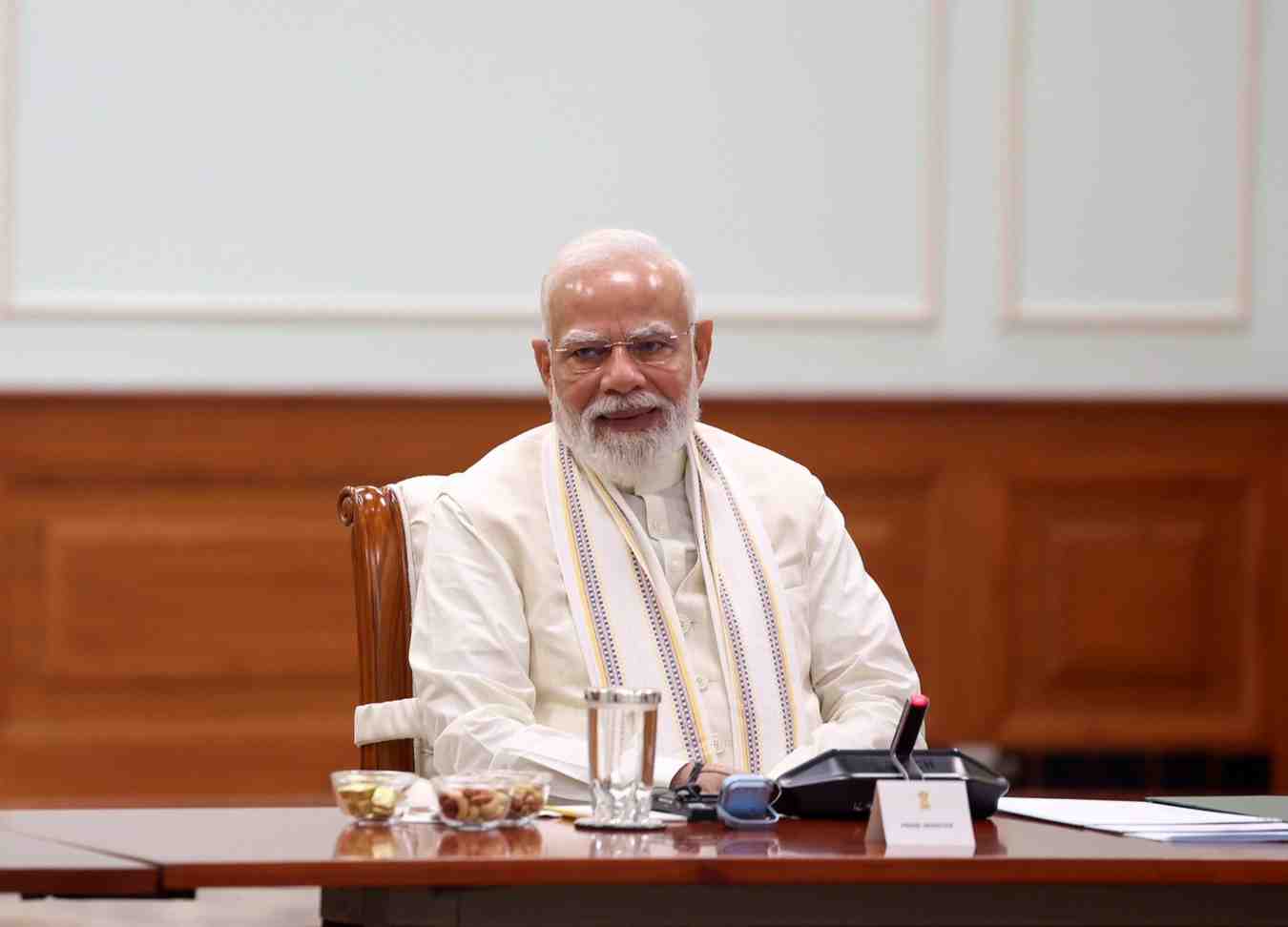
NEW DELHI: Prime Minister Shri Narendra Modi will chair the 11th Governing Council Meeting of Niti Aayog on June 11, 2026, at the Rashtrapati Bhavan Cultural Centre in New Delhi. The meeting will revolve around the theme, “Inclusive Human Development for Viksit Bharat @2047,” reflecting the government’s long-term vision of building a developed and equitable India by the centenary of Independence.
The annual Governing Council meeting is expected to bring together Chief Ministers of states, Lieutenant Governors and Administrators of Union Territories, Union Ministers, and senior officials of NITI Aayog. The gathering aims to strengthen cooperative federalism and encourage collaboration between the Centre and states on key development priorities.
According to the agenda, discussions will focus on ensuring that every Indian benefits from the country’s growth journey, regardless of age, gender, geographical location, or socio-economic background. Policymakers will deliberate on strategies to transform the vision of inclusive human development into measurable outcomes across sectors.
The meeting will examine an Inclusive Human Development Framework built around four major pillars. These include foundational human capital and future-ready skills, productive employment and entrepreneurship-driven growth, health and nutrition, and ensuring equity and dignity for all citizens. Special emphasis will be placed on expanding opportunities for entrepreneurship, improving skill development programmes, and creating sustainable employment avenues across the country.
Participants will also discuss an implementation roadmap designed to accelerate progress toward national development goals. The roadmap is expected to rely on governance reforms, digital public infrastructure, convergence of schemes, partnerships, and data-driven monitoring systems. Officials will explore mechanisms to track short-term, medium-term, and long-term outcomes to ensure accountability and measurable impact.
A major focus of the meeting will be aligning state-level development strategies with the national vision for inclusive human development. The Centre aims to encourage states and Union Territories to adopt a coordinated approach that promotes balanced and sustainable growth while addressing regional disparities.
The Governing Council will also review recommendations emerging from the 5th National Conference of Chief Secretaries, held from December 26 to 28, 2025. The conference identified five priority areas for policy attention: early childhood education, school education, skill development, higher education, and sports and extracurricular activities. These themes are expected to feature prominently in discussions as governments seek to strengthen India’s human capital base.
The meeting comes at a time when India is focusing on long-term reforms in education, employment, healthcare, and social welfare to support its ambition of becoming a developed nation by 2047. Through collaborative policymaking and stronger Centre-state coordination, the government hopes to accelerate progress on inclusive growth and ensure that development benefits reach all sections of society.
The 11th Governing Council Meeting is expected to play a significant role in shaping policy priorities and implementation strategies for the coming years as India advances toward its Viksit Bharat vision.
The 11th Governing Council Meeting signals a shift from focusing solely on economic growth to prioritizing human development outcomes. By emphasizing education, skills, healthcare, employment, and social inclusion, the government is attempting to ensure that India’s growth story translates into improved quality of life for all citizens.
The focus on measurable outcomes, digital governance, and Centre-state coordination indicates a results-oriented approach. If effectively implemented, the decisions emerging from this meeting could shape India’s development trajectory over the next two decades and become a key pillar of the Viksit Bharat 2047 roadmap.