The US President Donald J. Trump launched a sharp attack on Iran, declaring that the country’s military has been “completely defeated” and warning that Tehran would “have to pay the price” for failing to reach an agreement with Washington earlier.
In a strongly worded statement, Trump claimed that Iran’s military capabilities had been severely weakened, describing its armed forces as a “complete and total mess.” He specifically asserted that much of Iran’s Navy and Air Force no longer effectively exist and argued that the country had been decisively beaten.
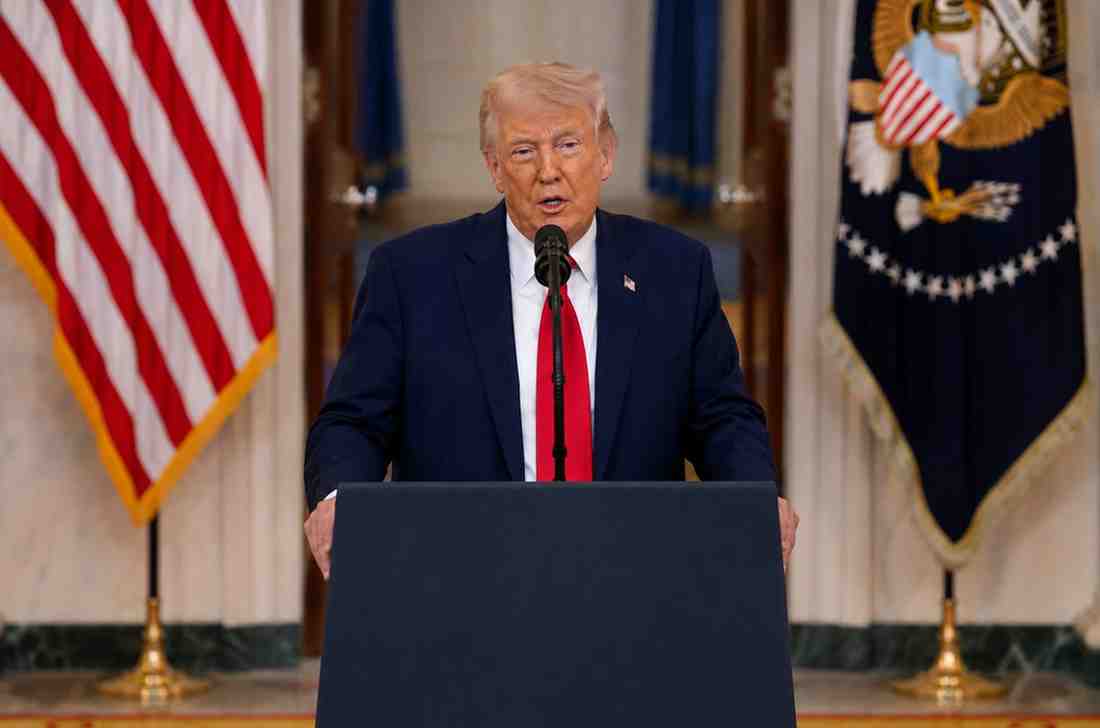
“Iran’s Military is a complete and total mess. Much of it, like their Navy and Air Force, doesn’t even exist anymore. They have been completely defeated. Iran is all talk and no action. The Bully of the Middle East is DEAD. They’ve taken too long to negotiate a deal that would have been great for them, now they will have to pay the price,” Trump said.
What Trump Meant
Trump’s remarks appear to be a direct reference to recent military confrontations involving Iran, the United States, and Israel. By describing Iran as the “Bully of the Middle East,” Trump suggested that Tehran’s regional influence and military strength have been significantly diminished.
His warning that Iran would “pay the price” indicates continued pressure on the Iranian leadership, both militarily and diplomatically. The statement also reflects Trump’s view that Iran missed an opportunity to secure favorable terms through negotiations and now faces more difficult circumstances.
The comments come at a time of heightened tensions in the region, with diplomatic efforts and military actions unfolding simultaneously.
Iran Signals Support for Diplomacy
Despite the escalating rhetoric, Iranian President Masoud Pezeshkian indicated that Tehran remains interested in pursuing negotiations.
Speaking at a ceremony in Tehran, Pezeshkian said Iran must move beyond what he described as a prolonged state of “neither war nor peace.” He revealed that Supreme Leader Ayatollah Ali Khamenei had supported the continuation of negotiations and dialogue as a way to address ongoing tensions.
The Iranian president emphasized that war was not in the country’s interest but warned that Iran would respond forcefully to any attack.
“We must get out of the ‘neither war nor peace’ policy. War is definitely not in the country’s interest, but if they attack our land and territory, we will definitely not surrender and will not back down,” Pezeshkian said.
Tehran Reviewing Future Talks
Iranian Foreign Ministry spokesperson Esmaeil Baqaei said Tehran is reassessing the future of diplomatic negotiations following recent military developments and alleged ceasefire violations.
According to Baqaei, diplomacy and military action are interconnected tools used to protect Iran’s interests and national security. He stressed that Iran’s diplomatic and military institutions are operating in coordination.
The spokesperson said any decision regarding future talks would depend on a review of the latest developments. He also argued that repeated ceasefire violations and what he described as inconsistent messages from Washington had complicated the diplomatic process.
Military Tensions Continue
The latest exchange of statements comes after the US Central Command announced strikes against Iranian targets, claiming the action was linked to the alleged downing of a US Army Apache helicopter. Iran rejected the claim and denied responsibility.
In response, Iranian forces reportedly launched drone and missile attacks against American military installations in the region, further intensifying tensions.
As diplomatic channels remain uncertain, Trump’s latest comments underscore the growing pressure on Iran while highlighting the widening gap between Washington’s hardline stance and Tehran’s effort to keep negotiations alive.
The developments have once again placed the Middle East at the center of global attention, with both military escalation and diplomatic maneuvering shaping the region’s future.