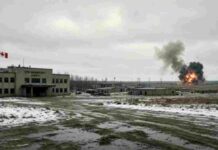
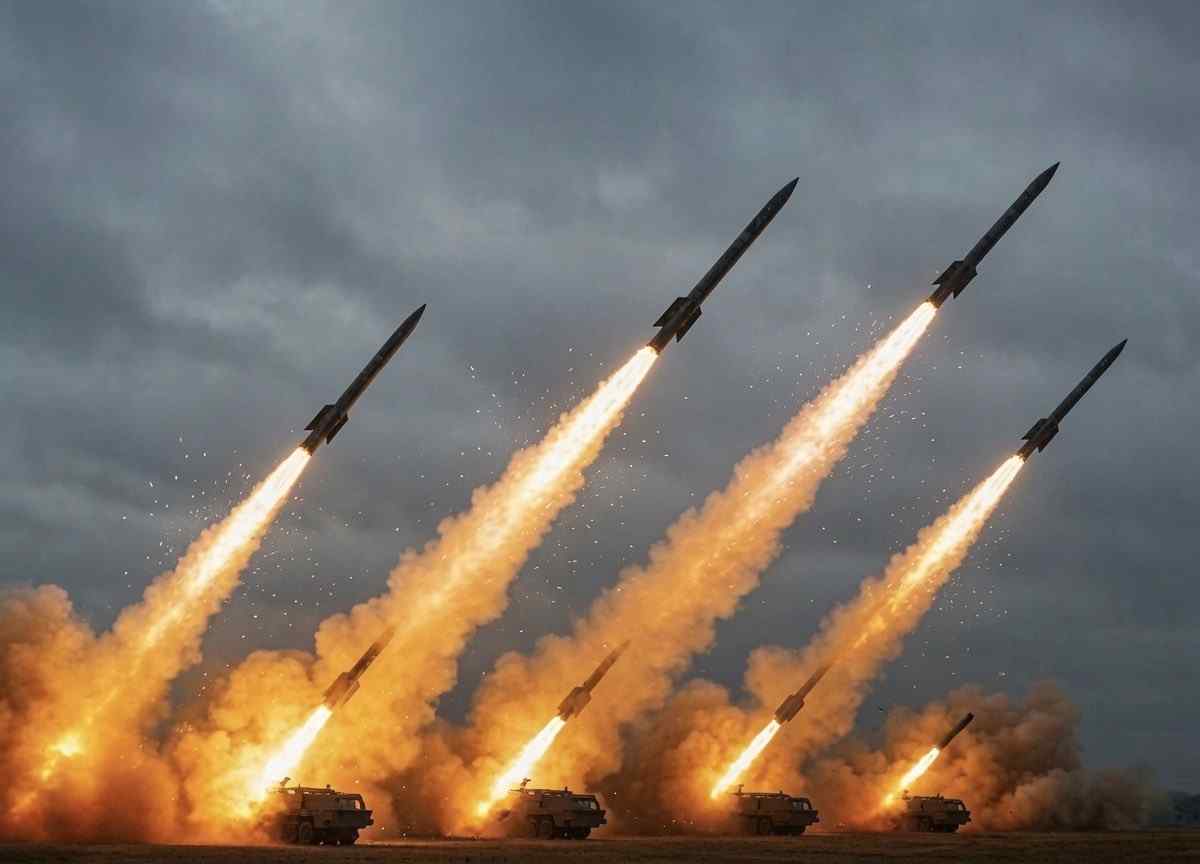
Tensions in the Middle East escalated dramatically on Wednesday as Iran launched a series of missile attacks targeting military installations hosting United States forces across the region. The strikes came in retaliation for recent US military operations against Iranian air defence systems and radar facilities following the reported downing of an American Apache helicopter near the Strait of Hormuz.
Iran’s Islamic Revolutionary Guard Corps (IRGC) announced that its Aerospace Force fired long-range solid-fuel missiles at multiple US-linked military sites, including an airbase in Jordan, the US Fifth Fleet headquarters in Bahrain, and Ali Al Salem Air Base in Kuwait.
According to the IRGC, the attack on the Jordanian base focused on critical military infrastructure. Iranian officials claimed that missiles struck four key targets, including hangars housing F-35 fighter aircraft and a major command-and-control facility. The Guards described the operation as a direct response to what Tehran called “aggressive US actions” against Iranian territory.
Iran further claimed that a total of 21 targets connected to American military operations across the region were hit during the coordinated assault. The IRGC also stated that Iranian forces had successfully downed a US MQ-9 drone operating in Iranian airspace, though independent confirmation of the claim was not immediately available.
The missile barrage triggered heightened security alerts across several Gulf nations. Kuwait’s military confirmed that its air defence systems were actively intercepting hostile aerial threats, while Bahrain issued emergency warnings urging residents to remain calm and seek shelter in designated safe locations. Bahraini authorities released multiple public alerts as the situation unfolded.
Jordan had not officially confirmed any attacks on its territory at the time of reporting. However, Iran specifically identified Al-Azraq Air Base in Jordan as one of its primary targets, claiming significant damage to military facilities used by US forces.
The latest escalation follows American airstrikes earlier in the day against Iranian military assets in Bandar Abbas, Sirik, Jask, and Qeshm Island. Washington launched the operation after reports that an Apache helicopter had been brought down while conducting patrol operations near the strategically vital Strait of Hormuz.
The US President Donald Trump, who announced the helicopter incident on social media, stated that Iran had fired on the aircraft during its patrol mission. While both pilots reportedly survived without injury, US officials vowed a response, leading to the subsequent strikes on Iranian military infrastructure.
Reacting to the American action, Iranian Foreign Minister Abbas Araghchi accused Washington of deliberately challenging Tehran’s resolve. He declared that Iran’s armed forces would respond to any attack or threat against the country and warned that no hostile action would go unanswered.
“The United States has chosen to test Iran’s determination,” Araghchi said, adding that foreign powers operating in the Persian Gulf should learn from history and understand the consequences of military intervention in the region.
The IRGC echoed the warning, stating that Iranian forces remain fully prepared to deliver what it described as a “crushing and decisive response” to any further American military action. The statement also placed responsibility for any future escalation squarely on Washington.
Iran claimed it struck multiple US military facilities across the Middle East. In Jordan, the IRGC said long-range missiles targeted Al-Azraq Air Base, hitting key military sites, including command centers and aircraft shelters.
In Bahrain, Iranian drones were reportedly directed at the headquarters of the US Fifth Fleet. Meanwhile, ballistic missiles struck Kuwait’s Ali Al Salem Air Base, damaging infrastructure and prompting US Central Command to heighten its military readiness amid growing regional tensions.
Military analysts warn that the exchange marks one of the most serious direct confrontations between Iran and the United States in recent years. With multiple countries in the Gulf region now on high alert and missile interceptions underway, concerns are growing that the conflict could expand beyond the immediate participants and further destabilize the region.
As both sides exchange threats and military strikes, the international community is closely monitoring developments amid fears of a wider regional conflict.