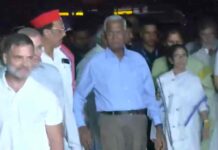

Opposition parties under the INDIA bloc are intensifying their confrontation with the Election Commission of India, with senior leaders planning a march towards the Supreme Court to raise allegations of “vote chori” and demand accountability from Chief Election Commissioner Gyanesh Kumar.
The proposed march, announced by Congress leader and Leader of the Opposition in the Lok Sabha Rahul Gandhi, is part of a broader campaign against the Special Intensive Revision (SIR) of electoral rolls. The opposition is seeking the resignation of Kumar, suspension of the revision exercise and a return to paper ballots, arguing that electoral transparency and public confidence in the democratic process must be protected.
The latest mobilisation comes amid heightened political tensions in Delhi following protests by youth activists and opposition supporters. The developments have also triggered a debate over the role of constitutional institutions, the conduct of law enforcement agencies and the appropriate legal channels for challenging election-related decisions.
Rahul Gandhi Calls for United Opposition March
Rahul Gandhi has appealed to opposition parties, young people, civil society organisations and citizens concerned about democratic rights to join the protest.
In his public appeal, Gandhi said the march would bring together people across political, social, caste and regional divisions. He said the participants intended to submit a memorandum to Chief Justice of India Surya Kant, outlining their concerns about the electoral process and calling for action on their demands.
Gandhi also criticised the handling of recent demonstrations in Delhi, alleging that young protesters had faced violence. He argued that peaceful dissent should not be met with force and presented the planned march as an effort to defend constitutional values.
The Congress leadership has described the mobilisation as a collective effort rather than an initiative limited to a single political party. The participation of opposition leaders and civil society groups is intended to demonstrate the breadth of concern surrounding the controversy.
Opposition’s Three Major Demands
The protest centres on three principal demands: an end to alleged electoral manipulation, suspension of the Special Intensive Revision of electoral rolls and the resignation of Chief Election Commissioner Gyanesh Kumar.
The opposition argues that the voter-list revision process requires greater transparency and independent scrutiny. Leaders have questioned whether the exercise could result in eligible voters being excluded and have called for safeguards to ensure that every qualified citizen retains the right to vote.
The opposition has also raised concerns about electronic voting and advocated a return to paper ballots. These demands have become part of a wider political dispute over election administration, the reliability of electoral safeguards and public confidence in the institutions responsible for conducting elections.
The allegations remain contested political claims and should not be treated as established proof of deliberate vote theft. The controversy has nevertheless increased pressure on the Election Commission to address questions about the revision process and explain the protections available to voters.
Chief Justice Surya Kant Declines Meeting Request
The proposed march has encountered a significant development even before its scheduled proceedings. Congress leaders Rahul Gandhi and party president Mallikarjun Kharge had reportedly requested an appointment with Chief Justice of India Surya Kant between 4 pm and 5 pm on October 12 to present their memorandum.

However, reports citing sources said the Chief Justice declined the requested meeting, noting that related matters were already pending before the Supreme Court. Gandhi was reportedly advised to pursue the issue through the appropriate judicial process.
The development highlights the distinction between political representations made to the judiciary and formal legal proceedings. While opposition parties can raise public concerns and seek judicial remedies, questions requiring judicial intervention must be addressed through established procedures.
The Supreme Court’s response does not, by itself, determine the merits of the opposition’s allegations. Any legal challenge will depend on the issues raised, the evidence submitted and the court’s assessment under the applicable law.
Delhi on Alert Amid Growing Political Tensions
Security arrangements and traffic restrictions have added to the significance of Monday’s planned mobilisation. Authorities prepared for possible disruption in central Delhi, while several metro stations faced temporary restrictions on entry and exit.
The heightened security follows recent demonstrations linked to the Cockroach Janata Party (CJP), whose supporters have also demanded action against the Chief Election Commissioner. Police detained protesters during earlier gatherings, prompting opposition leaders to accuse authorities of suppressing peaceful dissent.
The police response and allegations of violence have become additional points of contention between the opposition and the government. Congress leaders have criticised the handling of demonstrators, while the broader dispute continues to draw attention to the balance between maintaining public order and protecting the right to peaceful assembly.
Also Read | CJI Surya Kant: “Don’t Drag Supreme Court Into Politics” Amid Delhi Protest Row
Commuters travelling through central Delhi have been advised to anticipate delays and follow official traffic and metro updates.
Election Commission Faces Renewed Scrutiny
The controversy surrounding the Special Intensive Revision has placed the Election Commission under renewed political scrutiny. The exercise is intended to update electoral rolls, but critics have questioned how the process is implemented and whether adequate mechanisms exist to prevent eligible voters from being wrongly removed.
The Election Commission’s position and the legal framework governing electoral-roll revision remain central to the dispute. The ability of affected citizens to verify their registration, seek corrections and challenge errors is particularly important when large-scale changes are made to voter lists.
The central question is whether the revision process can demonstrate both administrative accuracy and public confidence. Transparent procedures, accessible grievance mechanisms and clear explanations of disputed deletions could help address concerns without prejudging the outcome of individual complaints.
A Crucial Test for Democratic Institutions
The INDIA bloc’s planned march marks another escalation in the political battle over electoral integrity. For Rahul Gandhi and other opposition leaders, the campaign is an opportunity to press their demands publicly and seek judicial scrutiny. For the Election Commission, the controversy reinforces the need to explain its procedures and respond to legitimate concerns through established channels.
The immediate focus will be on the opposition’s proposed march, its attempt to submit a memorandum and any subsequent legal action. The larger issue extends beyond party politics: ensuring that electoral rolls remain accurate, eligible citizens are not unfairly excluded and disputes are resolved through transparent and lawful mechanisms.
As the confrontation unfolds, the outcome will depend not only on political mobilisation but also on evidence, institutional accountability and the constitutional processes available to those challenging election-related decisions.
Click here to join our WhatsApp Channel for real-time news updates and exclusive coverage.