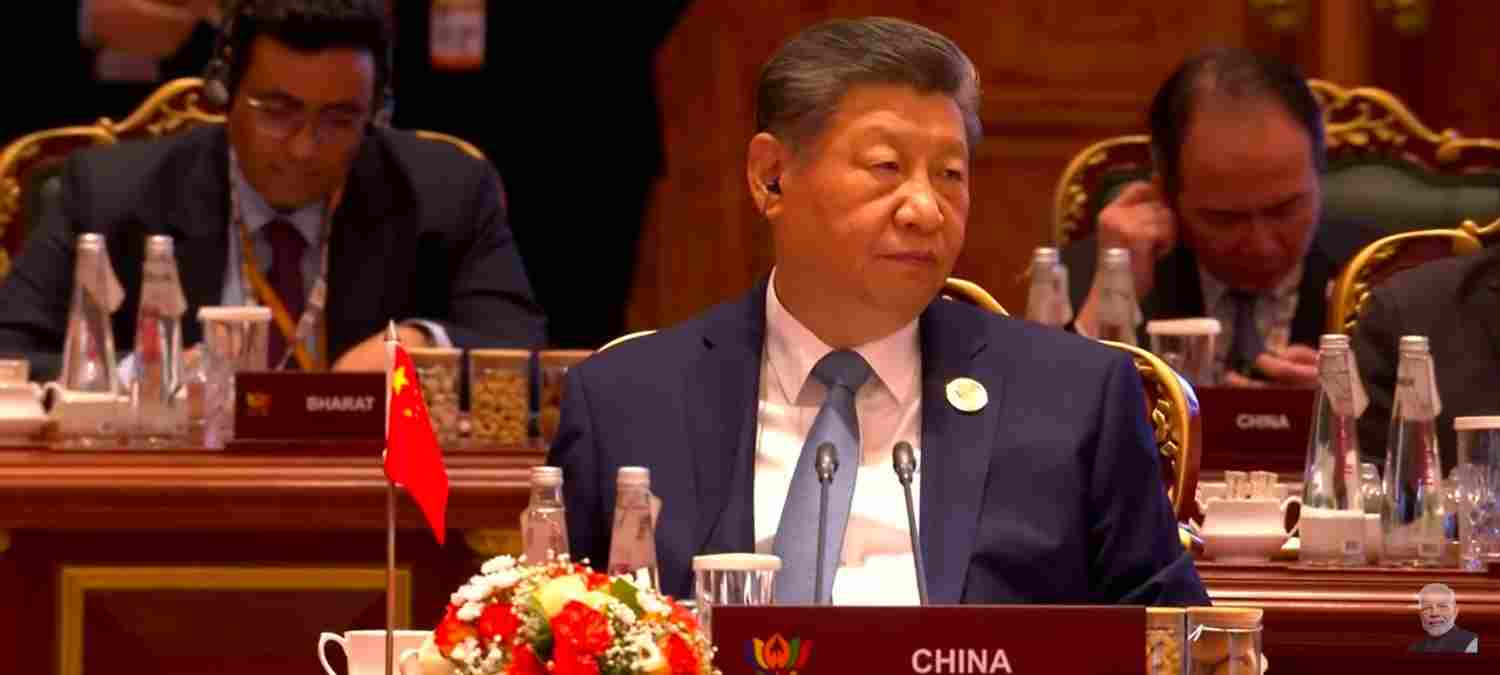
Chinese President Xi Jinping has urged BRICS nations to take a stronger and pioneering role in promoting international peace and stability, with particular emphasis on the ongoing crisis in the Middle East and Gulf region. Addressing the 18th BRICS Summit in New Delhi on Saturday, Xi said the grouping should work collectively to help restore peace and tranquillity in areas affected by conflict.
Jinping Pushes BRICS Toward a Bigger Peace Role
Xi Jinping’s remarks came as leaders of the expanded BRICS grouping gathered in New Delhi for discussions covering global security, economic cooperation, trade, technology and major geopolitical challenges. The Chinese president said BRICS countries should make a meaningful contribution to international peace and stability rather than remain limited to economic cooperation.
According to Chinese state media, Xi argued that the continuing conflict in the Middle East has inflicted serious losses on people across the region. He said the situation does not serve the common interests of the international community and called for concerted efforts to restore stability.
“BRICS countries” should firmly stand on what he described as the “right side of history” and strengthen cooperation on international peace and stability, Xi said. His appeal places the expanded grouping at the centre of a broader discussion about how emerging powers can respond to major international conflicts.
Middle East Crisis Takes Centre Stage
The Middle East and Gulf crisis has emerged as one of the most sensitive issues confronting the expanded BRICS bloc. The grouping now includes countries with differing strategic interests and relationships across the region, making consensus on geopolitical issues particularly challenging.
The 2026 BRICS Summit is taking place against a backdrop of conflicts and heightened international tensions, including instability in the Middle East. The presence of Iran and the United Arab Emirates within the expanded grouping adds further complexity because of their differing positions on regional security issues.
Against this backdrop, Xi’s call for collective action signals Beijing’s desire for BRICS to become more visible in international conflict-resolution efforts. China has also increasingly presented itself as a supporter of diplomatic approaches to major global disputes.
China Signals Readiness to Work With BRICS
Xi said China was prepared to work with other BRICS members and play its part in efforts aimed at achieving peace and tranquillity in the Middle East and Gulf region. His comments underline Beijing’s preference for collective diplomatic engagement through multilateral platforms.

The appeal also comes as BRICS seeks to expand its influence in global affairs. The bloc has grown considerably beyond its original five members, bringing together major economies and energy-producing states from Asia, Africa, the Middle East and Latin America.
The expanded membership gives BRICS greater geopolitical weight but also makes agreement on sensitive international questions more complicated. The challenge for leaders is to find common positions despite differences in national interests and foreign-policy priorities.
Modi Hosts High-Stakes BRICS Summit
India is hosting the 18th BRICS Summit in New Delhi, bringing together leaders and senior representatives from the member countries. Prime Minister Narendra Modi has positioned BRICS as a platform for cooperation among emerging and developing economies rather than an alliance directed against the West.
The summit is taking place at a critical moment for the global economy and international security. Alongside discussions on conflicts, leaders are addressing trade, investment, energy security, technology and reforms to global institutions.
India’s diplomatic balancing act is particularly significant given its relationships with Russia, Iran, China and Western countries. The summit provides New Delhi with an opportunity to encourage dialogue among countries that frequently hold contrasting positions on international issues.
Xi Also Calls for Stronger AI Cooperation
Beyond geopolitical tensions, Xi highlighted another area where BRICS countries could deepen cooperation: artificial intelligence.
“UNSC Reform Cannot Be Delayed”: PM Modi Pushes Global South To Shape World Order
The Chinese president called for stronger collaboration among member states in AI, reflecting the growing importance of emerging technologies to economic development and national competitiveness.
AI cooperation is expected to remain an important part of the broader BRICS agenda as member countries seek to strengthen technological capabilities, digital infrastructure and innovation ecosystems.
Xi’s intervention therefore linked two increasingly important dimensions of BRICS cooperation: responding to global instability and building capacity in strategic technologies.
BRICS Faces Test of Collective Influence
Xi’s call for a pioneering peace role presents BRICS with a significant test. The grouping has increasingly sought a larger voice in global governance, but its ability to influence active conflicts will depend on whether members can overcome their differences and develop workable common positions.
Recent discussions around the BRICS joint declaration have already highlighted the difficulty of reaching consensus on contentious geopolitical questions. Reuters reported that members worked to bridge differences involving Iran and the UAE while seeking agreement on language condemning unilateral war.
For China, the New Delhi summit offers an opportunity to reinforce its argument that emerging powers should play a greater role in shaping responses to international crises. For BRICS as a whole, the Middle East challenge could become a defining test of whether the expanded grouping can translate its growing economic and political weight into practical diplomatic influence.
Click here to join our WhatsApp Channel for real-time news updates and exclusive coverage.