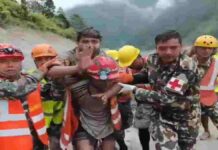
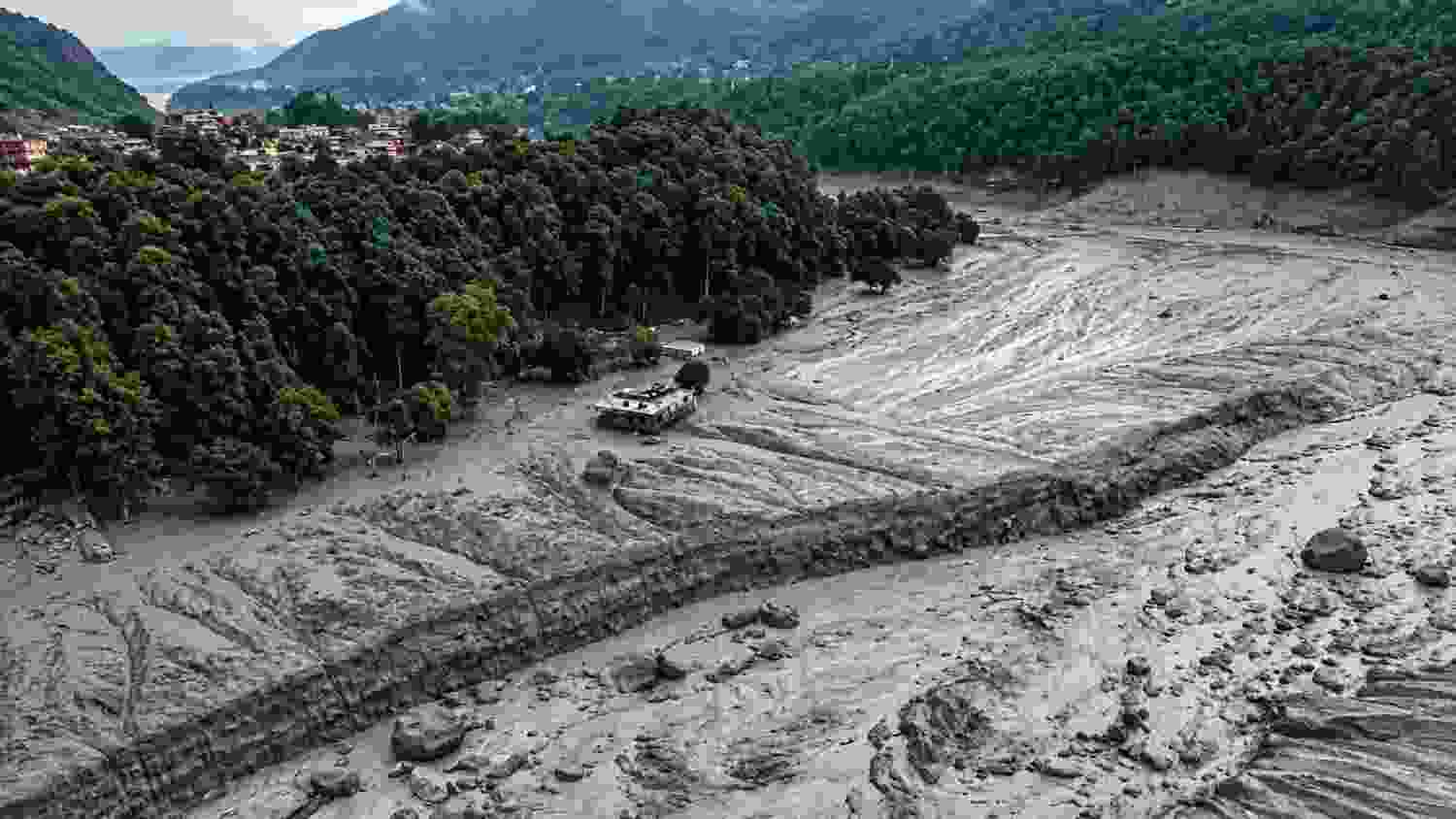
Nepal is facing one of its most devastating natural disasters in years, with the death toll from the August 26 flash floods rising to 1,344, while nearly 5,000 people remain missing. Eleven days after the catastrophe, rescue teams are continuing painstaking searches through thick mud, destroyed settlements and flooded hydropower tunnels in the hope of finding survivors.
The disaster has caused widespread destruction across several districts of Nepal and has also affected areas across the border in Tibet. According to the latest figures cited by Nepalese authorities, around 13,400 people have been rescued, while hundreds of families continue to wait for information about missing relatives.
Flash Floods Triggered by Ice-and-Rock Avalanche
The catastrophic floods struck on August 26 after an ice-and-rock avalanche near the Nepal-Tibet border triggered a massive surge of water, mud and debris. The floodwaters rushed through the Bhotekoshi River system, sweeping away homes, vehicles, roads and bridges.
Several hydropower projects were also severely damaged. The destruction has made rescue operations particularly difficult, especially at project sites where workers are believed to have been trapped underground.
The disaster has affected districts including Rasuwa, Nuwakot, Gorkha, Dhading, Tanahun and parts of the Nawalparasi region. Chitwan has reported the highest number of recovered bodies, with authorities recovering hundreds of victims from the affected areas.
Thousands Still Missing as Search Operations Continue
Nepalese security forces have intensified operations across devastated communities and hydropower facilities. Nearly 5,000 people remain unaccounted for, including 589 foreign nationals, according to figures cited from Nepal Police.
Specialized teams are searching through collapsed buildings, mountains of mud and debris and tunnels that remain dangerous because of structural damage and the possibility of further flooding.
About 900 hydropower workers are reportedly missing, with roughly 500 believed to be trapped inside tunnels at different project sites. Rescue specialists from India, China, South Korea and the United States are supporting Nepalese authorities in the difficult operation.
Dramatic Tunnel Rescues Bring a Ray of Hope
Despite the enormous scale of the disaster, several remarkable rescues have offered families and rescuers renewed hope.
Three workers have been brought out alive from hydropower tunnels since Friday. Two Nepalese workers were rescued from the Trishuli 3A hydropower project, while a Chinese national, identified as Lu Haitao, was pulled alive from a tunnel associated with the Upper Trishuli-I project.
Lu had spent about 10 days trapped inside a 225-metre-long tunnel. A joint team involving Nepalese military personnel and South Korean disaster experts rescued him before he was evacuated by helicopter. He was later reported to be in stable condition.
The rescue has strengthened hopes that others could still be alive in isolated pockets inside damaged tunnels.
An Indian tunnel-rescue team working alongside the Nepalese Army has also constructed a temporary track inside the Chilime tunnel in Rasuwa. The route is intended to allow heavy equipment to reach areas buried beneath enormous quantities of debris.
Woman Rescued Alive After 10 Days Under Debris
Another extraordinary rescue took place in Nuwakot, where 60-year-old Chandika Shrestha was found alive after being trapped beneath mud and rubble for around 10 days.
Rescuers reportedly heard her voice coming from a badly damaged four-storey house in Betrawati. The building had been buried by mud and debris, leaving only part of the upper section accessible.
Shrestha was found unconscious inside a small air pocket and was eventually brought to safety. She was provided initial medical care before being transported by helicopter for further treatment. Reports said her family had already begun mourning rituals after losing hope of finding her alive, making the rescue particularly emotional.
Identifying Victims Remains a Major Challenge
While rescue teams continue searching for survivors, authorities are facing another painful challenge: identifying the dead.
At least 85 children are among those killed, while hundreds of recovered bodies have suffered severe damage after remaining submerged in mud and water or being carried downstream.
Also Read — Satya Niketan Building Collapse: 5 Dead As PM Modi, Amit Shah Express Grief
Authorities have so far identified only a fraction of the recovered victims, leaving many families waiting for confirmation about the fate of their loved ones. In some cases, bodies have been recovered only partially, further complicating identification efforts.
Disaster Also Devastates Tibet
The destruction has not been limited to Nepal. Across the border in Tibet, Chinese authorities have reported 43 deaths and 519 missing people. Among those missing are hundreds of foreign nationals from several countries.
The combined confirmed death toll in Nepal and Tibet has therefore reached 1,387, according to figures reported by India Today.
As rescue and recovery operations enter their second week, Nepal remains gripped by grief and uncertainty. More than 21,000 army, police and armed police personnel have reportedly been deployed across affected areas, while international rescue teams continue working alongside them.
For thousands of families still waiting for news, every search operation carries the possibility of another heartbreaking discovery—or another extraordinary rescue.
Click here to join our WhatsApp Channel for real-time news updates and exclusive coverage.