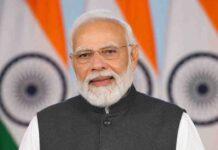

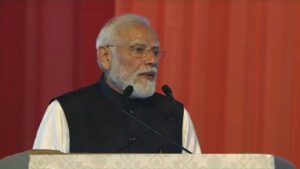
Prime Minister Narendra Modi used the 137th episode of his monthly radio programme Mann Ki Baat on August 30 to highlight grassroots initiatives, youth empowerment, women-led entrepreneurship, cleanliness, innovation, environmental conservation and the importance of supporting Indian-made products.
The address brought together a wide range of stories from across the country, showcasing how individual efforts and community participation can contribute to India’s broader development. Modi also placed particular emphasis on creating a drug-free generation and encouraging citizens to take greater pride in locally manufactured goods.
PM Modi calls for a drug-free India
One of the central themes of the 137th Mann Ki Baat was the nationwide campaign against drug abuse.
Modi said the “Nasha-mukt Yuva for Viksit Bharat” campaign was gaining momentum and stressed that its ultimate objective was to create a drug-free youth population and, consequently, a drug-free India.
The Prime Minister underlined that addiction does not affect only the individual consuming drugs. Its impact extends to families and society as a whole. He praised people working to spread awareness and support those attempting to overcome addiction.
He also appealed to young musicians, students, theatre groups and content creators to use their creativity to communicate the dangers of substance abuse. According to Modi, powerful songs, short plays, slogans and digital content in different Indian languages could help strengthen the social campaign.
Technology brings Indian history closer to people
Modi began the programme by discussing an innovative digital initiative developed by Mumbai-based Krishna Seshadri.
Seshadri, an engineer and MBA graduate with a long-standing interest in history, created a website that allows users to explore which rulers governed different parts of India during particular periods.
The Prime Minister praised the initiative for making history more accessible and engaging. The platform also includes provisions for users to submit corrections and suggestions, allowing the resource to evolve through public participation.
The discussion highlighted how technology can be used to present India’s complex historical heritage in a format that appeals particularly to younger audiences.
August becomes a month of patriotism
The Prime Minister also reflected on the patriotic significance of August, referring to National Handloom Day, the anniversary of the Quit India Movement, Partition Horrors Remembrance Day, Independence Day and National Space Day.
He highlighted the Har Ghar Tiranga campaign and noted that this year marks the 150th anniversary of Vande Mataram. Modi said more than eight crore Tiranga selfies were uploaded as part of the celebrations.
He also referred to the “Suryapath Tiranga” initiative, under which the Indian national flag was displayed across different parts of the world as the day progressed from east to west.
Women entrepreneurs gain strength through PM SVANidhi
Women-led street businesses also received significant attention during the Prime Minister’s address.
Modi highlighted the role of the PM SVANidhi scheme in helping women street vendors overcome one of their biggest challenges—access to working capital. He said women account for around 46% of the scheme’s beneficiaries, representing approximately 35 lakh women across the country.
He shared the stories of Babita Sharma from Ghaziabad and T.S. Ningamma from Bengaluru. Sharma expanded her small stall selling religious items after receiving financial support, while Ningamma used assistance to upgrade her food cart and increase supplies.
Modi said the growth of a woman’s business can have a wider impact on the entire family, including better education opportunities for children and improved household finances.
Youth-led cleanliness drives highlighted
Cleanliness was another major focus of the programme.
Modi spoke about two young men, Akash and Rohan, from Patwai in Uttar Pradesh, who began cleaning their locality after noticing the accumulation of waste. Their efforts eventually brought more young people together under the “Clean-up Patwai” initiative.
The group has cleaned four Ganga ghats and removed more than a tonne of plastic waste, besides working on ponds and other public spaces.
The Prime Minister also highlighted cleanliness efforts during the Amarnath Yatra. More than 400 metric tonnes of waste were collected and processed during the pilgrimage, while thousands of pilgrims participated in cleanliness initiatives.
From flowers to forests: local success stories
Modi showcased several examples of people turning personal interests and natural resources into sustainable livelihoods.
He spoke about Vesalu Puro from Nagaland, who transformed her interest in flowers into a commercial farming venture. After receiving scientific training, she cultivated thousands of gladiolus bulbs on a small plot, with her flowers eventually reaching markets in cities including Delhi and Mumbai.
From Odisha, Modi highlighted Maithili Bhue and other women involved in forest conservation and ecotourism in the Debrigarh region. More than 60 women are now participating in activities related to wildlife protection, grassland development, forest conservation and ecotourism.
Mission ShaktiSAT inspires girls in space technology
The Prime Minister also praised Mission ShaktiSAT, an initiative aimed at encouraging girls to pursue science, technology and innovation.
Also Read: Nepal Flood: 88 Indians Rescued, 287 Still Missing As India Expands Rescue Efforts
According to Modi, 12,000 girl students from 108 countries are receiving opportunities to learn about satellite technology. He referred to the second phase of the initiative launched at Gautam Buddha University in Greater Noida on National Space Day.
The long-term goal includes developing a satellite through the participation of female students and preparing it for lunar orbit, reflecting the growing participation of girls in India’s space and technology ambitions.
Farmers explore new opportunities with avocado cultivation
Modi also drew attention to the growing popularity of avocado cultivation among Indian farmers.
He cited examples from Andhra Pradesh, Tamil Nadu and Karnataka, where farmers have begun experimenting with avocado cultivation and, in some cases, integrating the crop with existing coffee plantations.
The Prime Minister said such diversification can create additional income opportunities for farmers and demonstrated how changing consumer demand can open new possibilities in agriculture.
PM Modi pays tribute to Uttam Kumar
The Prime Minister remembered legendary Bengali actor Uttam Kumar ahead of his birth centenary on September 3.
Modi described the actor as a versatile performer who remained deeply connected with audiences. He recalled Uttam Kumar’s association with Satyajit Ray’s Nayak and praised his determination, emotional depth and philanthropic work.
The Prime Minister said Uttam Kumar’s journey offered an important lesson about perseverance, noting that despite early setbacks, the actor continued working with dedication before achieving lasting success.
Modi urges citizens to embrace Vocal for Local
Towards the end of the programme, Modi turned his attention to the upcoming festive season and renewed his appeal for citizens to support Indian-made products.
He clarified that “Vocal for Local” should not be limited to purchasing traditional items such as earthen lamps during Diwali. Instead, he urged people to check whether the products they buy for their homes are manufactured in India.
Modi said supporting Indian products would contribute to the country’s journey towards greater self-reliance. He also called on influencers, celebrities and people from the creative industries to promote the message and encourage wider public participation.
The 137th episode of Mann Ki Baat therefore combined social awareness with stories of ordinary citizens creating meaningful change. From fighting drug addiction and promoting cleanliness to empowering women, supporting farmers, encouraging girls in space technology and backing Indian products, Modi’s message centred on the idea that collective national progress can emerge from small actions taken at the grassroots level.
Click here to join our WhatsApp Channel for real-time news updates and exclusive coverage.