A powerful 7.4-magnitude earthquake struck western Colombia on August 10, killing at least 164 people and leaving a trail of destruction across several cities, according to the latest reports. Rescue teams are continuing operations in collapsed buildings and difficult-to-reach areas as authorities warn that the death toll could rise further.
The earthquake has emerged as one of Colombia’s most devastating seismic disasters in recent decades. The country’s Geological Service described it as the strongest earthquake recorded in Colombia during the 21st century, while the US Geological Survey (USGS) estimated its depth at around 107 kilometres.
7.4-Magnitude Earthquake Leaves Colombia Reeling
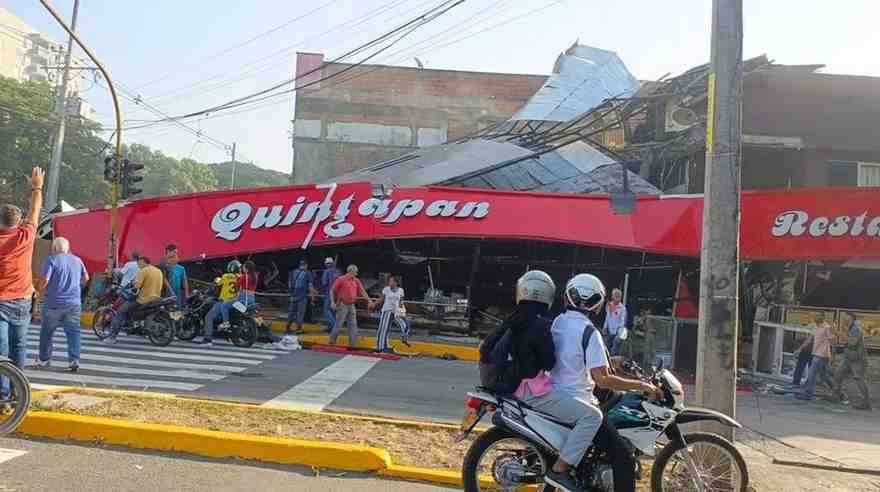
The earthquake struck western Colombia on Monday, sending powerful tremors through populated areas and triggering widespread damage. Cities including Cali, Pereira, Quibdo and Manizales reported destruction, with buildings collapsing and critical infrastructure, including hospitals, damaged.
The scale of the disaster has created major challenges for emergency responders. Rescue workers have been searching through rubble for survivors, while damaged infrastructure, communication difficulties and difficult terrain in remote parts of Choco have complicated efforts to assess the complete extent of the tragedy.
With people potentially trapped beneath collapsed structures, emergency teams have been racing against time. Authorities have also been assessing damage to homes, public buildings and essential services while coordinating rescue and relief operations.
What Caused the Deadly Colombia Earthquake?
The devastating earthquake was driven by the complex tectonic activity beneath Colombia. The country lies in one of South America’s most seismically active regions, where major tectonic plates interact and enormous geological stresses accumulate beneath the Earth’s surface.

According to the geological explanation reported by India Today, the region is influenced by the movement of the Nazca and South American plates, along with a complicated network of faults. When accumulated stress is suddenly released along these faults, the Earth’s crust can move violently, producing an earthquake.
Also Read – “Rahul Gandhi Habitually Lies”: Dharmendra Pradhan Launches Fiery Attack On Congress
The latest earthquake occurred deep underground and involved strike-slip movement. In this type of seismic movement, large blocks of Earth’s crust move sideways relative to each other.
Although the earthquake occurred at considerable depth, its exceptionally large magnitude generated strong shaking across western Colombia. The combination of the quake’s strength, its location and vulnerable structures contributed to the destruction seen across affected areas.
Aftershocks Raise Fresh Fears
The danger did not end with the main earthquake. Colombia’s Geological Service had recorded at least 21 aftershocks by Monday night, with authorities expecting additional tremors.
Aftershocks can further destabilise buildings already weakened by the initial earthquake, creating additional risks for residents and rescue workers. Emergency personnel therefore face the difficult task of searching damaged structures while remaining alert to further seismic activity.
For people who survived the initial disaster, the continuing tremors have added another layer of fear and uncertainty.
Why Is Colombia Vulnerable to Earthquakes?
Earthquakes are not unusual in Colombia because of its complex geological setting. However, earthquakes powerful enough to cause such widespread destruction and loss of life are considerably rarer.
Colombia’s history includes several devastating seismic events. One of the country’s most deadly recent earthquakes occurred on January 25, 1999, when a magnitude-6.1 earthquake struck the Coffee Region.
According to Colombia’s Geological Service records cited by India Today, 921 people were killed in Armenia alone, while 5,377 people were injured and more than 21,000 homes were damaged or destroyed. National estimates placed the overall death toll above 1,000.
The comparison highlights the potential human impact of major earthquakes in densely populated areas and underlines the importance of earthquake-resistant construction, emergency preparedness and rapid rescue capabilities.
Colombia Declares National Emergency
As the scale of the devastation became clearer, the Colombian government declared a national emergency and directed emergency teams to prioritise rescue and relief operations.
Authorities are now facing multiple challenges, including locating survivors, reaching remote communities, assessing structural damage and restoring essential services.
The rescue effort is particularly difficult in areas where roads, communication networks and buildings have been damaged. Officials must also determine which structures remain safe enough for rescue teams to enter.
Rescue Operations Continue Amid Destruction
Across the affected regions, rescue workers and local residents have been searching through debris for people who may still be alive. The operation remains fluid because reports from remote areas are still being compiled.
The rising death toll has intensified concerns that the final number of casualties could be significantly higher once rescue teams reach isolated locations and authorities complete their assessments.
The disaster has also renewed attention on Colombia’s earthquake preparedness and the country’s ability to withstand major seismic events.
For now, the national focus remains firmly on saving lives, finding survivors and providing emergency assistance. With aftershocks continuing and rescue operations still underway, Colombia remains on high alert as authorities confront the aftermath of one of the country’s most powerful earthquakes in modern history.
Click here to join our WhatsApp Channel for real-time news updates and exclusive coverage.