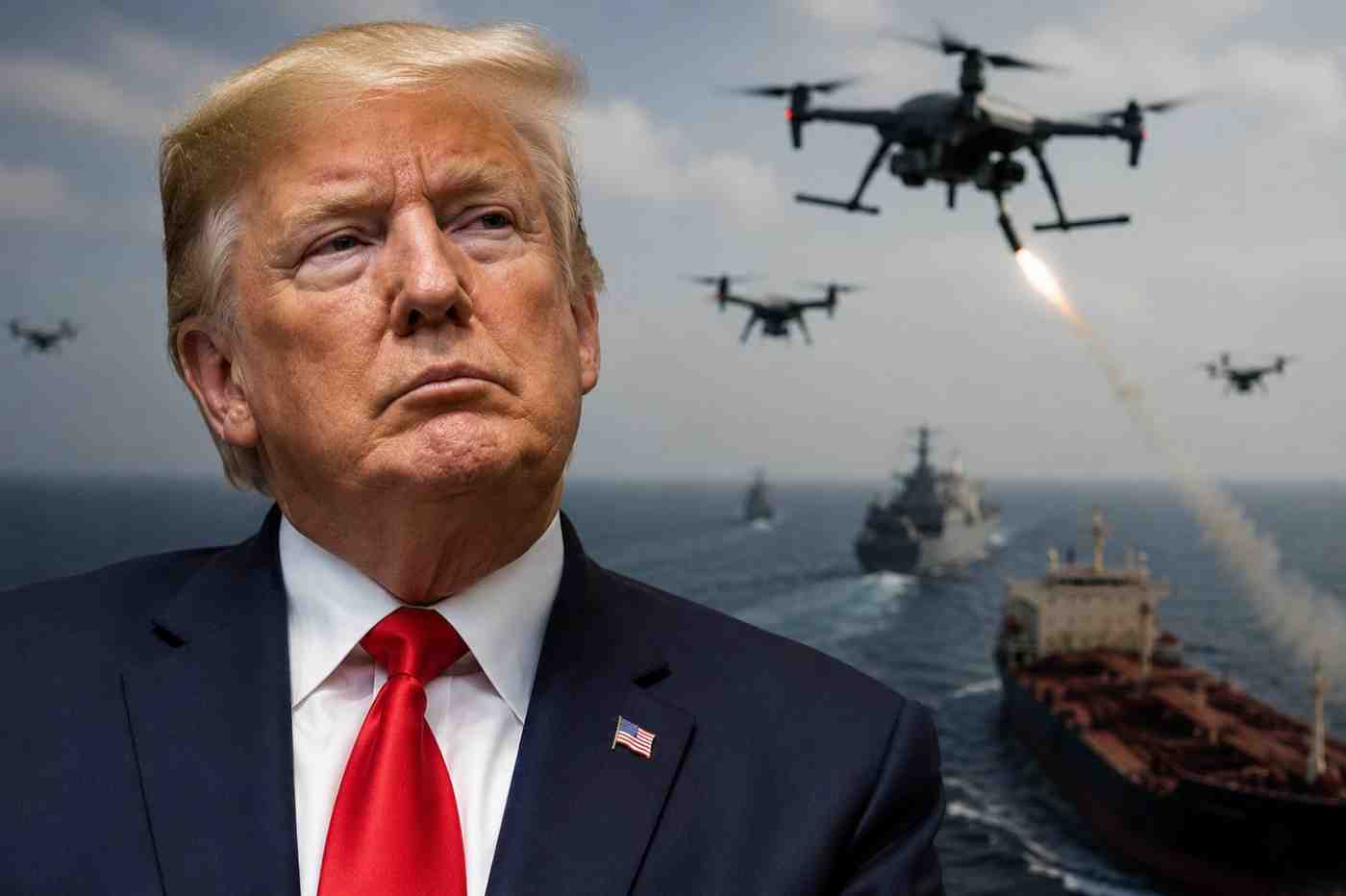
US President Donald Trump has signalled a significant shift in Washington’s approach to the ongoing confrontation with Iran, saying the United States is currently taking a more restrained path while maintaining intense economic pressure on Tehran.
In an interview with Axios, Trump described the strategy as “low-keying it” and compared the situation to a chess game. His comments suggest that Washington is, for now, reluctant to launch another major military offensive against Iran, despite continued tensions surrounding the strategically vital Strait of Hormuz.
The remarks come at a critical moment, with negotiations over the reopening of the Strait of Hormuz facing serious obstacles. The waterway remains at the centre of the wider US-Iran confrontation because of its enormous importance to international energy supplies and global shipping.
Trump Focuses On Iran’s Economic Pressure
Trump indicated that the United States believes economic pressure is increasingly weakening Iran’s ability to sustain the conflict.
According to the Axios report, Trump pointed to worsening economic conditions inside Iran and argued that the pressure being applied through sanctions and the US naval blockade is having a major impact. He suggested that Washington may be able to achieve its objectives without immediately resorting to another large-scale military campaign.
The shift represents a notable change in tone. Earlier developments in the conflict had raised concerns that the United States could resume intensive military operations if Tehran refused to meet Washington’s demands.
Trump’s latest comments, however, indicate that the White House is prepared to allow economic and diplomatic pressure to work before considering further escalation.
Strait Of Hormuz Remains Major Flashpoint
Despite Trump’s relatively restrained language, the situation around the Strait of Hormuz remains highly sensitive.
The strait is one of the world’s most important energy corridors, carrying a substantial share of global oil and liquefied natural gas shipments. Any prolonged disruption can therefore have consequences far beyond the Middle East, affecting energy prices, shipping costs and economies dependent on imported fuel.
Iran has linked the reopening of the waterway to broader political and economic demands. Tehran has reportedly called for compensation for military attacks, an end to sanctions and the release of frozen Iranian assets, while also demanding changes to the US military posture in the region.
These conditions have complicated efforts to reach an agreement.
Iran Takes Hardline Position
Iranian officials have continued to maintain a tough negotiating position, making it clear that reopening the strategic waterway will not be unconditional.
Iran’s Supreme National Security Council chief Mohammad Bagher Zolghadr has demanded major concessions from Washington, including war reparations, sanctions relief and access to frozen funds. Tehran has also rejected the idea of direct negotiations with the United States, preferring indirect communication.
At the same time, Iran has indicated that discussions involving Oman over maritime arrangements are progressing. Reuters reported that Tehran said a deal concerning new shipping lanes was nearing completion but stressed that the United States would still need to meet Iranian conditions for the waterway to fully reopen.
Oman Plays Key Diplomatic Role
Oman has emerged as an important intermediary between Washington and Tehran as both sides attempt to prevent the crisis from spiralling into another major confrontation.
Earlier reports suggested that the United States, Iran and Oman were approaching an interim arrangement designed to restore shipping through the Strait of Hormuz. However, disagreements over the terms have prevented a final breakthrough.
The diplomatic channel is particularly significant because neither Washington nor Tehran appears eager to accept an agreement that could be portrayed domestically as a major concession.
For Trump, reopening the strait could demonstrate that US pressure has produced results. For Iran, however, agreeing without securing sanctions relief and other guarantees could weaken its bargaining position.
Trump Warns Pressure Is Still Available
Although Trump is currently emphasising restraint, his comments do not mean that military options have disappeared.
US Vice President JD Vance has stressed that Washington continues to have diplomatic, economic and military tools available. The administration therefore appears to be keeping multiple options open while allowing sanctions and other economic measures to increase pressure on Tehran.
Also Read: PM Modi Hails Lovlina Borgohain’s Bold Stand Over Distorted India Map In Glasgow
This approach could give the White House additional time to negotiate without immediately committing American forces to another major offensive.
Global Markets Watch Hormuz Closely
The continuing uncertainty surrounding the waterway is being closely watched by governments, energy companies and financial markets worldwide.
Any sustained disruption to shipping through Hormuz could create fresh pressure on oil and gas supplies. The strategic importance of the route means that even limited uncertainty can affect transportation costs and energy markets.
For countries heavily dependent on Gulf energy exports, the crisis presents an additional economic risk.
A Fragile Pause In Escalation
Trump’s “low-keying” approach may represent a temporary pause rather than a permanent change in US strategy.
Washington is still demanding significant changes from Tehran, while Iran continues to insist that the reopening of the Strait of Hormuz must be accompanied by substantial concessions. With both sides maintaining firm positions, a lasting agreement remains uncertain.
For now, Trump appears willing to let economic pressure do the work rather than immediately return to large-scale military action. But with the Strait of Hormuz still at the heart of the dispute, the possibility of renewed escalation remains.
The coming days could therefore prove crucial. If Oman-mediated negotiations succeed, the crisis could move toward de-escalation and the restoration of international shipping. If talks collapse, pressure on both sides could intensify rapidly, reviving fears of a wider and potentially more damaging regional confrontation.
Click here to join our WhatsApp Channel for real-time news updates and exclusive coverage.