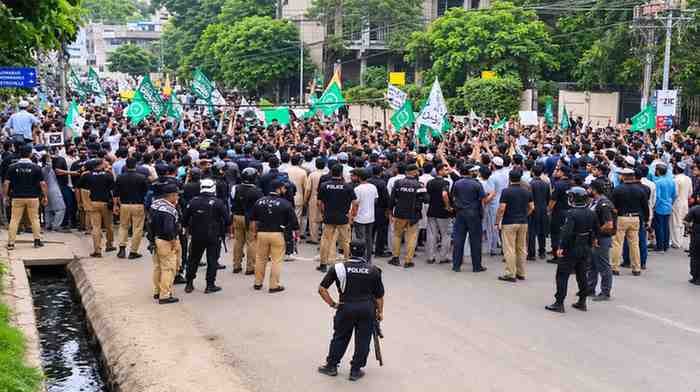
Pakistan is witnessing growing public anger over soaring fuel prices, inflation and the government’s petroleum levy, with thousands of people taking to the streets across major cities in a nationwide protest led by Jamaat-e-Islami (JI). The demonstrations have intensified pressure on Prime Minister Shehbaz Sharif’s government as households struggle with rising transportation and grocery costs.
The protests came amid mounting economic pressure on Pakistan, where the government has been attempting to manage higher energy costs, fiscal constraints and its commitments under an International Monetary Fund (IMF) programme.
Jamaat-e-Islami Leads Nationwide Protests
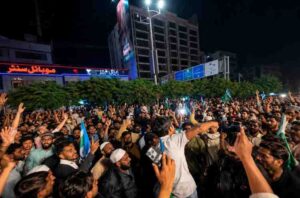
Jamaat-e-Islami called for demonstrations against the petroleum levy, expensive fuel, inflation and high electricity tariffs. Protesters staged rallies, demonstrations and sit-ins in several major cities, including Karachi, Lahore, Peshawar, Quetta, Islamabad, Rawalpindi and Abbottabad.
The protests disrupted traffic on important roads and highways, highlighting the scale of public frustration over the cost of living. Demonstrators carried slogans demanding the withdrawal of the petroleum levy and immediate relief for ordinary citizens.
JI chief Hafiz Naeemur Rehman has warned the government that the campaign could expand if authorities fail to address the protesters’ demands. He described the latest demonstrations as only the beginning of a broader movement.
The party has announced further sit-ins for Sunday outside the Punjab chief minister’s residence in Lahore and governor houses in Karachi, Peshawar and Quetta.
Hafiz Naeemur Rehman Takes Aim at Shehbaz Government
Hafiz Naeemur Rehman sharply criticised the government’s taxation policies, arguing that ordinary Pakistanis were being forced to bear the burden of economic difficulties.
He called on Prime Minister Shehbaz Sharif and his ministers to withdraw the petroleum levy, arguing that the additional charge had made fuel increasingly unaffordable.
The JI leader also rejected the government’s explanation that IMF commitments restricted its ability to reduce the levy. His remarks reflected the growing political anger surrounding Pakistan’s economic reform programme and the pressure being placed on consumers through higher taxes and energy prices.
Rehman alleged that the government had collected around 8 trillion Pakistani rupees through the petroleum levy. He accused successive administrations of failing to provide sufficient economic relief while allowing ordinary citizens to face increasing costs.
The government has not accepted these allegations as presented by the JI leadership.
Petrol Prices Reach Painful Levels
Fuel prices have become one of the most visible symbols of Pakistan’s economic strain. Petrol prices reached a record level of 459 Pakistani rupees per litre in April, while high-speed diesel rose to 520.35 rupees per litre.
The sharp increases came during a period of major volatility in international energy markets, with disruptions linked to tensions around the Strait of Hormuz contributing to higher oil prices and supply concerns.
Read Also: West Delhi Lions Roar To 5 Wicket Victory As Bowlers Crush South Delhi Superstarz
Pakistan, as a major importer of petroleum products, remains particularly vulnerable to international oil-price movements. Higher import costs can quickly translate into more expensive domestic fuel, transportation and goods.
The impact has extended well beyond petrol stations. Higher diesel and petrol prices increase transportation expenses, which can subsequently raise the cost of food, consumer products and other essential services.
IMF Programme Adds to Political Pressure
The petroleum levy has also become closely linked to Pakistan’s wider economic relationship with the IMF.
Islamabad has relied on international financial assistance to stabilise its economy, improve fiscal management and address external financing pressures. The IMF programme includes reforms aimed at strengthening Pakistan’s economic position and reducing vulnerabilities, including those associated with energy consumption and imported fuels.
However, measures designed to improve government revenues can become politically difficult when they directly affect consumers.
JI is now using the issue to challenge the government, arguing that economic reforms should not disproportionately burden poorer sections of society. The party has sought to turn dissatisfaction over fuel prices into a wider political campaign against inflation, taxation and rising utility costs.
Protests Could Intensify
The latest demonstrations indicate that Pakistan’s fuel-price crisis is becoming more than an economic issue. It is increasingly emerging as a political challenge for the government.
Rehman has warned that the protests could continue for an extended period if the government does not respond to the party’s demands. JI has also indicated that future demonstrations will focus not only on petroleum prices but also on electricity tariffs and the broader cost-of-living crisis.
The government faces a difficult balancing act. Reducing fuel-related taxes could provide immediate relief to consumers but potentially complicate efforts to raise revenue and maintain fiscal targets. At the same time, allowing fuel prices to remain high risks deepening public dissatisfaction.
Pakistan Faces Growing Economic Pressure
The protests come at a sensitive moment for Islamabad. While Pakistan is seeking to strengthen its international diplomatic position and portray itself as a constructive player in regional and global affairs, domestic economic pressures remain a major challenge.
For millions of Pakistanis, however, the immediate concern is the rising cost of everyday life. Fuel prices directly affect commuting, transportation, agriculture, logistics and the movement of essential goods.
As Jamaat-e-Islami prepares for further sit-ins, the government will face increasing pressure to provide relief without undermining its fiscal commitments. Whether Islamabad can contain the growing anger over fuel prices and inflation could become an important test of its economic and political credibility in the weeks ahead.
Click here to join our WhatsApp Channel for real-time news updates and exclusive coverage.