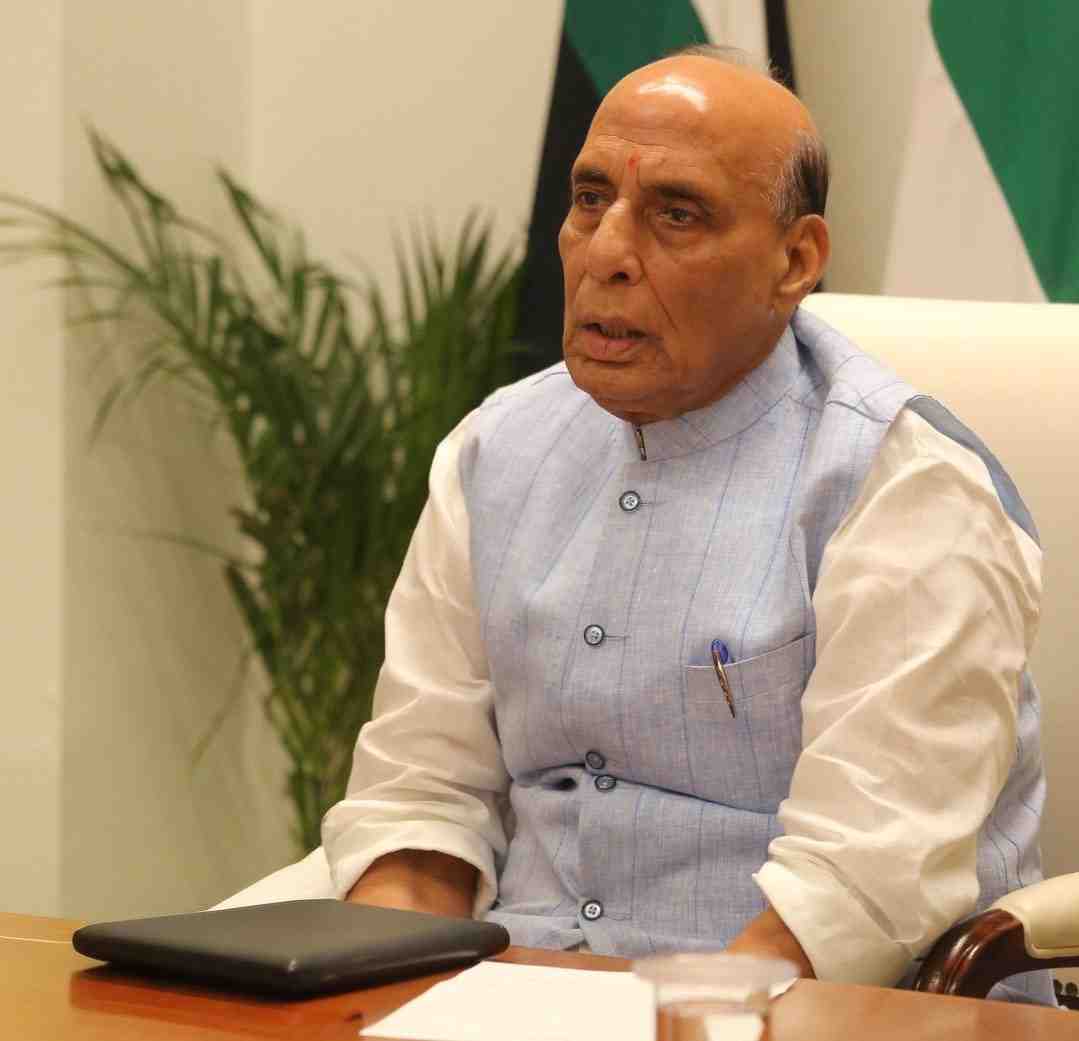
Defence Minister Rajnath Singh on July 29, 2026, virtually inaugurated the country’s first dedicated Department of Military Medicine at the Command Hospital (Central Command) in Lucknow, Uttar Pradesh. Calling it a landmark initiative, he said the department would strengthen battlefield healthcare, advance military medical research, and improve the operational preparedness of the Armed Forces for future conflicts as well as humanitarian emergencies.
The newly established department, functioning under the Directorate General of Medical Services (Army), has been created as an academic and operational centre exclusively focused on military medicine. It aims to improve combat medical support, develop indigenous medical doctrines, and prepare the Armed Forces Medical Services (AFMS) for modern warfare and disaster response.
Military Strength and Healthcare Go Hand in Hand
Addressing senior military officers and healthcare professionals during the inauguration, Rajnath Singh stressed that national development depends not only on economic and social progress but also on a capable and confident military.
“Our soldiers serve in some of the world’s most complex regions and harshest climates. They deserve the best medical support, and this department will ensure that advanced healthcare reaches them whenever they need it,” the Defence Minister said.
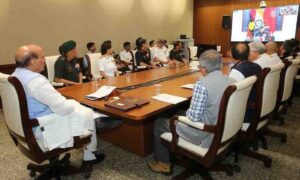
He noted that the new institution would reinforce the confidence of soldiers by ensuring they receive timely and specialised medical care in combat zones as well as during humanitarian missions.
According to Singh, military medicine plays a unique role because it studies the physical and psychological challenges faced by troops in war-like conditions, much like aerospace medicine addresses the medical needs of pilots and astronauts.
Focus Areas of the Department
The Department of Military Medicine will serve as the Armed Forces Medical Services’ primary academic and research centre for specialised military healthcare.
Its core areas of work will include military trauma and damage control, combat psychiatry, operational medicine, emergency and critical care, military medical logistics, disaster medicine, humanitarian assistance and disaster relief (HADR), as well as Chemical, Biological, Radiological, Nuclear and Explosive (CBRNe) medical response.
The department will also promote research in battlefield technologies, telemedicine, simulation-based training, prolonged field care, and digital medical decision support systems to improve treatment during military operations.
Officials believe these initiatives will help prepare medical personnel for the evolving nature of warfare, where technological advancements and unconventional threats demand highly specialised healthcare responses.
Phased Development Plan
The institution will be developed in multiple phases to ensure long-term growth.
During the initial phase, the focus will be on establishing academic programmes and strengthening research activities. In subsequent phases, specialised Centres of Excellence for HADR and CBRNe medicine will be established.
The long-term vision is to transform the department into a nationally and internationally recognised centre for military medicine that contributes to global defence healthcare standards while addressing India’s operational requirements.
Preparing for Future Security Challenges
Rajnath Singh highlighted that while conventional warfare continues to evolve, threats posed by weapons of mass destruction and rapidly advancing technologies cannot be ignored.
“The department will become a hub of research and innovation, equipping the nation to respond effectively to emerging military and technological challenges,” he stated.
He added that the institution would help formulate medical protocols specifically designed for soldiers operating in extreme climates, high-altitude regions, deserts, dense forests, and other demanding operational environments.
The Defence Minister also underlined India’s growing global responsibilities, pointing out that the country remains one of the largest contributors to United Nations peacekeeping missions while regularly participating in humanitarian assistance and disaster relief operations across the world.
According to him, specialised expertise developed through the department will significantly improve disaster response capabilities, field hospital deployment, epidemic control, and mass casualty management.
Boost for Military Medical Education and Research
The department has also been envisioned as a centre for advanced education and professional training.
It will introduce structured academic programmes in military and operational medicine while supporting postgraduate education in combat medicine, trauma care, and combat surgery.
The institution is expected to encourage indigenous research tailored to India’s unique operational conditions and defence requirements.
Also Read: India Unveils Stronger Border Security Plan To Crush Cross-Border Narcotics Network
Rajnath Singh expressed confidence that young doctors joining the Army Medical Corps would greatly benefit from specialised training in battlefield nursing, advanced trauma life support, and operational healthcare.
“This department will create a new career pathway for young medical professionals. Super-specialisation in military medicine will strengthen India’s intellectual capital and elevate our position in global medical research,” he said.
Technology and Preventive Healthcare at the Core
The Defence Minister also emphasised that preventive healthcare should be treated as the first layer of national defence.
He advocated building a comprehensive health monitoring system capable of identifying medical risks before they become serious through disease surveillance, vaccination, nutrition, sanitation, occupational health, physical fitness, and regular medical screening.
Highlighting the role of modern technology, Singh said artificial intelligence, wearable devices, predictive analytics, and advanced diagnostic tools could significantly improve real-time health monitoring of soldiers and enable early intervention.
Such technology-driven healthcare systems, he said, would directly contribute to combat readiness and strengthen national security.
A Major Milestone for India’s Defence Healthcare
The inauguration ceremony was attended by senior military leadership, including Chief of the Army Staff General Dhiraj Seth, Defence Secretary Rajesh Kumar Singh, Vice Chief of the Army Staff Lieutenant General Sandeep Jain, DG AFMS Surgeon Vice Admiral Arti Sarin, and several other senior defence and medical officials.
The establishment of the Department of Military Medicine aligns with the government’s broader vision of strengthening indigenous defence capabilities and complements the proposed Global Military Medicine Centre under the Raksha Strategy Vision 2026–30.
As India modernises its Armed Forces Medical Services, the new department is expected to become a cornerstone of military healthcare by combining education, research, innovation, and operational expertise. With a focus on advanced battlefield medicine and technology-driven healthcare, it represents a significant step toward enhancing India’s preparedness for future defence, security, and humanitarian challenges.
Click here to join our WhatsApp Channel for real-time news updates and exclusive coverage.