
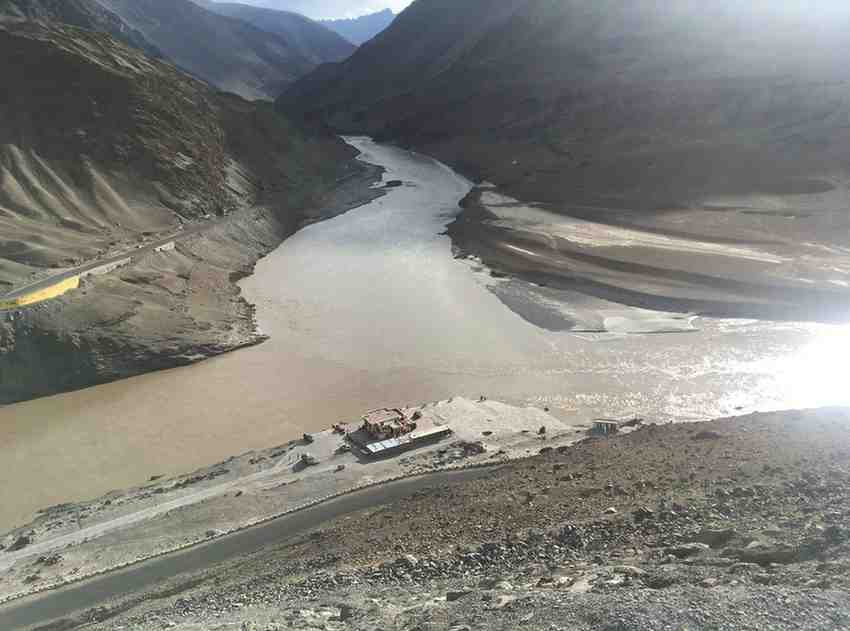
Pakistan has approached Canada seeking diplomatic support to revive dialogue on the Indus Waters Treaty (IWT), but Ottawa has not issued any public response to the request, according to reports. The development comes amid growing tensions between India and Pakistan over the decades-old water-sharing agreement, with Islamabad attempting to draw greater international attention to the issue.
Pakistan Turns to Canada
Pakistan’s Deputy Prime Minister and Foreign Minister Ishaq Dar reportedly urged Canada to play a constructive role in encouraging discussions on the Indus Waters Treaty. Islamabad has argued that the treaty remains critical for regional stability and food security, while expressing concerns over what it describes as the “weaponisation of water.”
The appeal reflects Pakistan’s broader diplomatic effort to engage friendly nations and international partners following India’s decision to suspend the treaty’s implementation. However, Canadian authorities have not publicly commented on the request, leaving Islamabad without an official response so far.
India Maintains Its Position
India has repeatedly stated that the treaty, signed in 1960, cannot function in its existing form due to changing realities, including security concerns and repeated cross-border terrorism. New Delhi maintains that Pakistan has failed to create conditions necessary for the normal functioning of bilateral agreements.
The Indian government has argued that any review of its current position depends on Pakistan taking credible and irreversible action against terrorism. Officials have also stressed that the treaty requires comprehensive renegotiation to address present-day challenges, including climate change, technological advancements and increasing water demands.
Background of the Indus Waters Treaty
The Indus Waters Treaty was signed in 1960 between India and Pakistan with the World Bank acting as a facilitator. Under the agreement, India received control over the eastern rivers—Ravi, Beas and Sutlej—while Pakistan was allocated the waters of the western rivers—Indus, Jhelum and Chenab—with limited usage rights granted to India.
For decades, the treaty was considered one of the world’s most successful transboundary water-sharing agreements, surviving wars and prolonged diplomatic tensions between the two neighbours.
Rising Diplomatic Tensions
Relations between India and Pakistan have remained strained since India placed the treaty in abeyance following heightened security concerns after terrorist incidents linked to Pakistan-based groups. Since then, both countries have exchanged strong statements over water management and treaty obligations.
Pakistan has consistently maintained that the treaty cannot be altered unilaterally and has sought international support to restore its implementation. India, on the other hand, insists that the agreement must reflect present-day geopolitical and security realities before normal cooperation can resume.
Canada Yet to Take a Public Position
Although Pakistan has reached out to Canada, there has been no official statement from Ottawa indicating whether it intends to mediate or engage on the matter. Canada has traditionally supported peaceful dialogue and adherence to international agreements, but it has not announced any initiative regarding the Indus Waters Treaty.
Also Read: ‘Future Of Youth Is Our Priority’: PM Modi Calls NEET Paper Leak National Issue
Analysts believe Canada may prefer to avoid direct involvement unless both India and Pakistan seek third-party facilitation, especially given the sensitive nature of bilateral issues between the two South Asian neighbours.
India Rejects External Pressure
Indian officials have indicated that the issue remains a bilateral matter and have rejected attempts to internationalise the dispute. Government representatives have reiterated that India’s decisions are guided by national security considerations and that meaningful progress depends on Pakistan addressing India’s long-standing concerns over cross-border terrorism.
New Delhi has also maintained that existing mechanisms under the treaty have become ineffective due to Pakistan’s approach to negotiations and its unwillingness to engage on broader security issues.
Strategic Importance of Water
The Indus river system is vital for agriculture, drinking water and power generation in both India and Pakistan. Any prolonged uncertainty surrounding the treaty has significant implications for millions of people dependent on the basin.
Experts have noted that climate change, erratic rainfall and rising water demand have added further pressure on the existing framework, increasing calls for a modernised agreement capable of addressing emerging challenges while ensuring equitable water management.
What Lies Ahead
With Canada remaining silent and India showing no indication of reversing its current position, Pakistan’s diplomatic outreach is unlikely to produce immediate results. The future of the Indus Waters Treaty appears to depend largely on broader India-Pakistan relations and whether both countries can return to meaningful dialogue.
For now, the treaty remains at the centre of one of South Asia’s most sensitive diplomatic disputes, with water security continuing to influence regional politics and bilateral relations.
Click here to join our WhatsApp Channel for real-time news updates and exclusive coverage.