
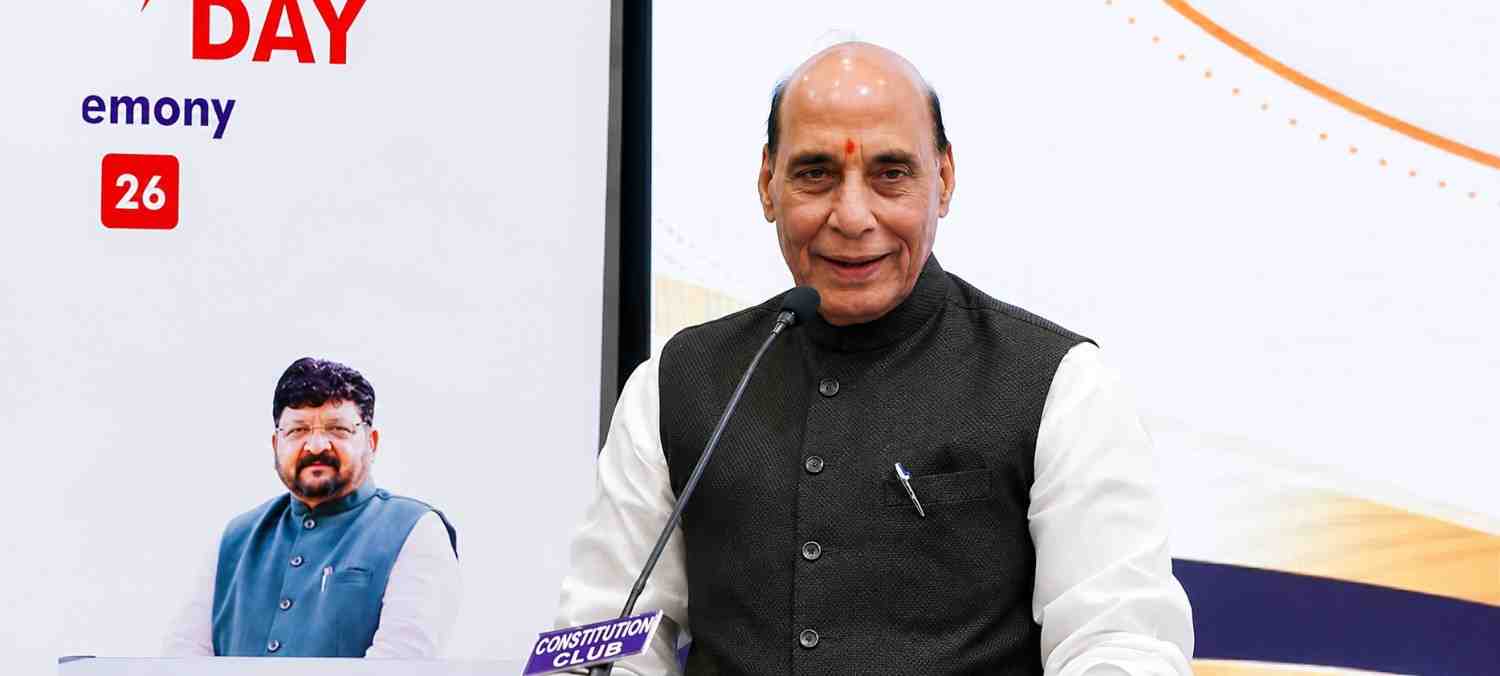
NEW DELHI: Defence Minister Rajnath Singh on Saturday asserted that India has adopted a decisive and uncompromising approach towards terrorism, declaring that the country’s “zero tolerance” policy is backed by action rather than rhetoric. Addressing an event in New Delhi, he said India possesses the capability to strike terrorists not only at its borders but also wherever they operate, citing the success of Operation Sindoor as evidence of the country’s growing military preparedness and technological strength.
Speaking before defence industry representatives, officials and stakeholders, Singh said Operation Sindoor reflected the exceptional courage of the Indian Armed Forces and demonstrated the country’s readiness to respond firmly to terrorist threats. He described the operation as a milestone in India’s defence preparedness and credited the transformation of the defence sector over the past twelve years for making such operations possible.
Operation Sindoor Demonstrated India’s Military Readiness
Rajnath Singh said Operation Sindoor highlighted the professionalism and bravery of the Indian Armed Forces while reinforcing India’s commitment to eliminating terrorism. According to him, the operation was a reminder that India’s security doctrine is driven by decisive action rather than symbolic statements.

He stressed that the government’s policy of zero tolerance towards terrorism has become a defining feature of India’s national security strategy. Singh stated that India has developed the capability to respond effectively to threats and, when necessary, take action against terrorists beyond its immediate borders.
The Defence Minister said the success of the operation reflected years of investment in defence modernisation, indigenous capability and military preparedness.
Indigenous Defence Systems Played Crucial Role
Highlighting India’s growing self-reliance in defence production, Singh said several indigenously developed weapons and technologies were effectively deployed during Operation Sindoor. He mentioned advanced platforms such as the Akash Teer air defence system, the Akash missile system and the BrahMos supersonic cruise missile among the technologies that strengthened India’s operational capabilities.
He said the operation demonstrated the confidence that the government has placed in India’s domestic defence industry. According to Singh, the achievements were the result of sustained policy reforms aimed at strengthening indigenous manufacturing and reducing dependence on imported military equipment.
Push for Defence Self-Reliance Continues
The Defence Minister reiterated that self-reliance remains one of the government’s highest priorities. He noted that multiple Positive Indigenisation Lists have already been issued by the armed forces and defence public sector undertakings to encourage the domestic production of military equipment.
He announced that another Positive Indigenisation List would be notified soon to further promote indigenous manufacturing and accelerate the country’s journey towards defence self-sufficiency.
Singh emphasised that India’s defence transformation represents a shift from dependence on foreign suppliers to becoming a nation capable of designing, manufacturing and exporting advanced military systems.
Defence Production and Exports Reach Record Levels
Rajnath Singh highlighted the significant growth achieved by India’s defence manufacturing sector in recent years. He said annual defence production touched nearly Rs 1.78 lakh crore during the financial year 2025-26, compared to around Rs 40,000 crore in 2014.
He also pointed to the rapid rise in defence exports, which have increased from Rs 686 crore in 2013-14 to over Rs 38,000 crore. The government has set an ambitious target of crossing Rs 2 lakh crore in defence production this year and reaching Rs 3 lakh crore by 2029.
The Defence Minister also expressed confidence that defence exports would touch Rs 50,000 crore by 2029, saying the current pace of growth makes the target achievable.
Focus on Domestic Manufacturing
According to Singh, the government has fundamentally changed India’s approach to defence procurement by prioritising indigenous production over imports.
He said the country has developed a strong defence industrial ecosystem capable of meeting domestic military requirements while also serving international markets. The emphasis on local manufacturing has not only strengthened national security but also created opportunities for Indian companies to participate in global defence supply chains.
Read Also: TMC MP Abhishek Banerjee-Linked Office Faces Bulldozer Action In West Bengal
He added that procurement policies now encourage Indian industries through mechanisms such as “Buy Indian – Indigenously Designed, Developed and Manufactured,” ensuring that a significant portion of defence spending benefits domestic manufacturers.
Start-ups and MSMEs Driving Innovation
Rajnath Singh said innovation has become a major pillar of India’s defence strategy. He highlighted initiatives such as Innovations for Defence Excellence (iDEX), iDEX Prime and the ADITI scheme, which are encouraging start-ups and MSMEs to develop cutting-edge defence technologies.
He said hundreds of start-ups are currently working on artificial intelligence, drones, cybersecurity, robotics, quantum technology and other advanced defence solutions. The Defence Minister noted that the number of defence start-ups has grown dramatically over the past few years, reflecting the success of government-backed innovation programmes.
He added that procurement orders worth thousands of crores have already been approved for start-ups and MSMEs, giving young innovators a larger role in strengthening India’s defence capabilities.
Defence Corridors Strengthening Manufacturing
The Defence Minister also highlighted the progress made through the defence industrial corridors established in Uttar Pradesh and Tamil Nadu.
He said proposed investments in the two corridors have reached around Rs 70,000 crore, with nearly Rs 10,000 crore already invested. These projects have boosted defence manufacturing, encouraged private sector participation and generated employment opportunities for skilled youth.
According to Singh, the Uttar Pradesh Defence Industrial Corridor has emerged as one of the strongest examples of the success of the Atmanirbhar Bharat initiative.
India Emerging as a Global Defence Partner
Rajnath Singh said India is steadily evolving from being a defence importer into a trusted global defence partner. He credited Prime Minister Narendra Modi’s leadership and long-term policy reforms for enhancing India’s international standing.
He also referred to the Prime Minister’s recent visits to Indonesia, Australia and New Zealand, stating that these engagements strengthened India’s strategic, economic and defence partnerships across the Indo-Pacific region.
Concluding his address, Singh said the government’s long-term objective is to build a strong, secure and self-reliant India by 2047. He expressed confidence that India’s armed forces, scientists, industries, start-ups and youth would collectively help establish the country as a modern defence power with global influence while ensuring national security through indigenous capabilities.
Click here to join our WhatsApp Channel for real-time news updates and exclusive coverage.