
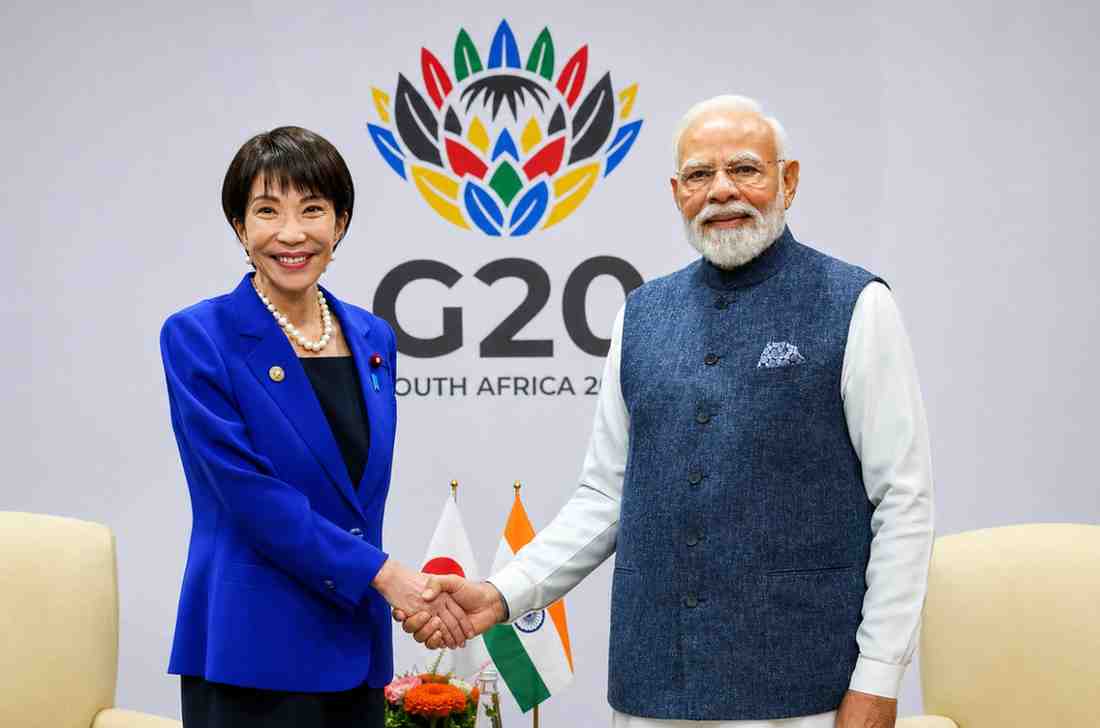
India and Japan Prepare for Another Milestone in Bilateral Relations
India and Japan are set to deepen their longstanding partnership as Japanese Prime Minister Sanae Takaichi to visit India from July 1 to July 3. The visit is anticipated to build on the momentum generated through sustained high-level engagements between the leadership of both countries and further strengthen cooperation across strategic, economic and technological sectors.
The relationship between New Delhi and Tokyo has evolved significantly over the past decade, transforming into one of the Indo-Pacific’s most comprehensive strategic partnerships. From defence and infrastructure to innovation and cultural diplomacy, both nations have steadily expanded collaboration while sharing a common vision for a free, open and inclusive Indo-Pacific.
Regular High-Level Dialogues Driving Strategic Cooperation
The growing partnership has been reinforced through frequent meetings between Prime Minister Narendra Modi and Prime Minister Sanae Takaichi, along with regular ministerial engagements. One of the major milestones highlighted is the 18th Foreign Ministers’ Strategic Dialogue, where leaders reviewed regional developments and explored new avenues for defence, economic security and diplomatic cooperation.
The two countries have also institutionalised the Economic Security Dialogue, reflecting their shared commitment to strengthening resilient supply chains, protecting critical technologies and addressing emerging geopolitical challenges through coordinated policymaking.
These mechanisms have enabled India and Japan to maintain close strategic coordination while expanding cooperation on regional and global issues.
Economic Partnership Continues to Reach New Heights
Economic ties remain one of the strongest pillars of the India-Japan relationship. Bilateral trade has continued to grow steadily, crossing USD 27 billion during 2025-26, reflecting increasing commercial engagement between the two economies.
Japan continues to rank among India’s leading investors, with nearly 1,500 Japanese companies operating across the country. Major Japanese brands, including Maruti Suzuki, Toyota, Sony and Uniqlo, have established a strong presence in India, contributing to manufacturing, employment generation, technology transfer and industrial development.
The two governments are also encouraging greater investment in semiconductor manufacturing, green technologies, digital infrastructure and advanced manufacturing under India’s expanding industrial ecosystem.
Infrastructure Cooperation Shapes India’s Growth Story
Infrastructure development has emerged as another hallmark of India-Japan cooperation. Japanese financial and technical support has played a significant role in several landmark projects across India.
The partnership extends to high-speed rail development, metro rail systems, freight corridors and urban infrastructure aimed at improving connectivity and promoting sustainable growth. These initiatives demonstrate Japan’s long-term commitment to India’s infrastructure transformation while strengthening economic integration between the two countries.
Defence and Maritime Security Gain Greater Importance
Security cooperation has steadily expanded as both nations respond to evolving challenges in the Indo-Pacific. The partnership is guided by the Joint Declaration on Security Cooperation, which continues to strengthen defence exchanges and strategic coordination.
India and Japan have increased cooperation through joint military exercises, defence dialogues and maritime engagements. Japan’s continued participation in Exercise Malabar reflects growing interoperability among friendly Indo-Pacific partners.
The video also highlights the presence of vessels from the Japan Maritime Self-Defense Force, underscoring the increasing importance of naval cooperation, maritime domain awareness and freedom of navigation in regional waters.
Science, Space and Emerging Technologies Drive Future Collaboration
Innovation has become a defining feature of India-Japan relations. Scientific institutions from both countries are expanding cooperation in frontier technologies, clean energy and advanced research.
The partnership between ISRO and JAXA on the LUPEX (Lunar Polar Exploration) mission represents one of the most ambitious space collaborations between the two countries. Scientists are working together to advance lunar exploration while strengthening cooperation in space science and technology.
Academic institutions and research organisations are also collaborating through programmes supported by the Japan Science and Technology Agency (JST), promoting joint research, innovation and technological development.
People-to-People Ties Continue to Deepen
The India-Japan relationship extends beyond governments to include education, skill development and cultural exchange. Thousands of Indian professionals and technical interns have found opportunities in Japan, while educational partnerships continue to grow.
Both countries are implementing an action plan launched during the 2025 Annual Summit that seeks to facilitate 500,000 people-to-people exchanges, further strengthening mutual understanding through tourism, education, business and cultural interactions.
Centuries-old Buddhist links remain an enduring symbol of friendship between the two nations. The iconic Great Buddha and traditional Japanese cultural symbols featured in the video reflect a shared heritage that continues to inspire modern diplomatic relations.
Upcoming Visit Expected to Open a New Chapter
Prime Minister Sanae Takaichi’s 3 day visit is likely to provide fresh momentum to an already robust partnership. Discussions are expected to cover defence cooperation, economic resilience, digital innovation, supply chain diversification, clean energy, artificial intelligence, semiconductor manufacturing and regional security.
With expanding economic engagement, stronger strategic coordination and deep cultural connections, India and Japan are entering a new phase of cooperation. The forthcoming high-level visit is expected to reaffirm the commitment of both democracies to building a stable, prosperous and secure Indo-Pacific while creating new opportunities for collaboration in the years ahead.