
Relations between India and Pakistan have once again come under strain after Pakistan’s Climate Change Minister, Musadik Malik, issued a strongly worded warning over the future of the Indus Waters Treaty. Referring to Pakistan’s water rights, Malik said that any attempt to seize or block the country’s share of water would be resisted, using the phrase, “will cut off those hands,” to emphasize Islamabad’s firm position.
The remarks come amid an ongoing diplomatic dispute following India’s decision to keep the Indus Waters Treaty in abeyance after the April 2025 terror attack in Pahalgam, Jammu and Kashmir. New Delhi has maintained that the treaty will remain suspended until Pakistan takes credible and irreversible action against cross-border terrorism.
Speaking on the issue, Malik described water as a matter of national security and survival for Pakistan. He asserted that the country would not allow anyone to interfere with its rightful share of river waters, stressing that Pakistan would defend its interests through every available means.
The minister’s statement reflects growing concern in Islamabad over India’s recent policy decisions regarding the treaty and the broader implications for Pakistan’s agricultural and economic stability.
Treaty at the Centre of Fresh Tensions
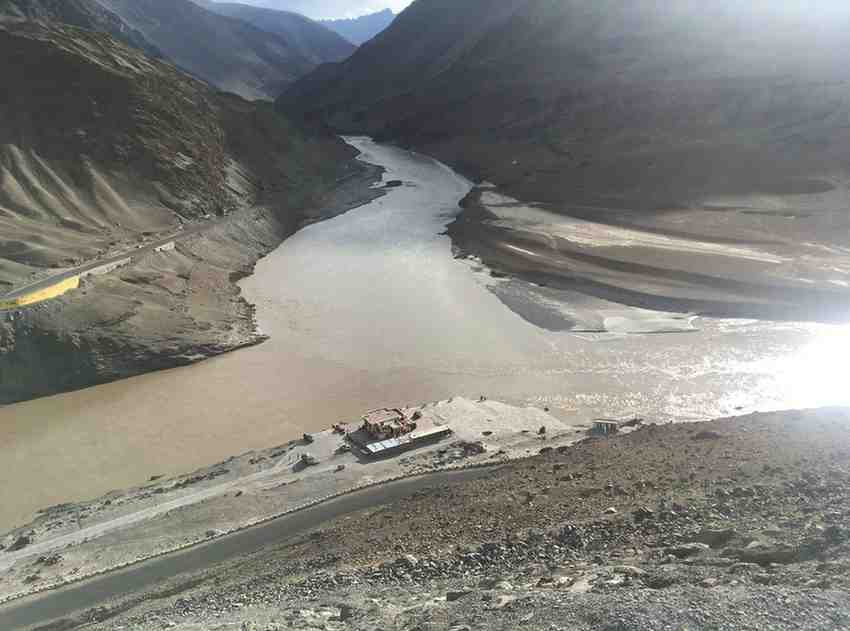
Signed in 1960 with the World Bank acting as a mediator, the Indus Waters Treaty has governed the sharing of the Indus river system between India and Pakistan for more than six decades. Despite wars and prolonged political hostility, the agreement largely remained operational until recent developments significantly altered the situation.
Following the deadly Pahalgam terror attack, India announced that it was placing the treaty in abeyance, citing national security concerns. The move marked one of the most significant shifts in bilateral relations in recent years.
India’s Position Remains Unchanged
The Indian government has consistently maintained that its decision is linked to Pakistan’s alleged support for cross-border terrorism. Officials have stated that there can be no normal cooperation until Islamabad takes effective measures against terrorist infrastructure operating from its territory.
India has also indicated that it intends to maximize the utilization of the water resources allocated to it under existing legal provisions while safeguarding national interests.
Pakistan Raises Diplomatic Concerns
Pakistan has repeatedly voiced concern over India’s decision and has argued that the treaty cannot be unilaterally suspended. Officials in Islamabad maintain that millions of people depend on the Indus river system for drinking water, irrigation, and agriculture.
The latest comments from Malik add to a series of strong statements by Pakistani leaders, who have described water security as a non-negotiable national priority.
Water Security and Regional Stability
The Indus river system remains the backbone of Pakistan’s agricultural economy, supplying water to vast farming regions and supporting food production across the country. Experts note that climate change, rising demand, and declining water availability have made the issue even more sensitive.
Analysts believe the dispute over the treaty is no longer confined to water management alone but has become closely linked with broader political and security tensions between the two neighboring countries.
Future of the Treaty Remains Uncertain
With both India and Pakistan maintaining firm public positions, there is little indication of an early resolution. While Pakistan continues to call for the restoration of the treaty’s implementation, India has reiterated that any future engagement will depend on concrete action against terrorism.
As diplomatic exchanges continue, the Indus Waters Treaty—once regarded as a symbol of cooperation between the two nations—faces one of the most challenging periods in its history, with its future remaining uncertain amid rising regional tensions.
India’s decision to keep the Indus Waters Treaty in abeyance reflects its position that sustained cross-border terrorism cannot coexist with normal bilateral cooperation. New Delhi argues that national security must take precedence over routine agreements until credible action is taken against terror networks.