The unprecedented heatwave engulfing large parts of Europe is not merely a regional weather crisis—it is a stark reminder of how interconnected Earth’s climate has become. Countries including Spain, France, Italy, Greece, Portugal, and parts of the Balkans have experienced exceptionally high temperatures, with several regions recording values above 40°C.
Scientists attribute the growing intensity and frequency of these heatwaves to rising greenhouse gas emissions, warmer oceans, and changing atmospheric circulation caused by global climate change.
Although Europe, India, and Antarctica are separated by thousands of kilometres, the atmosphere and oceans operate as one interconnected system. A heatwave in Europe does not directly trigger extreme weather in India or rapid melting in Antarctica.
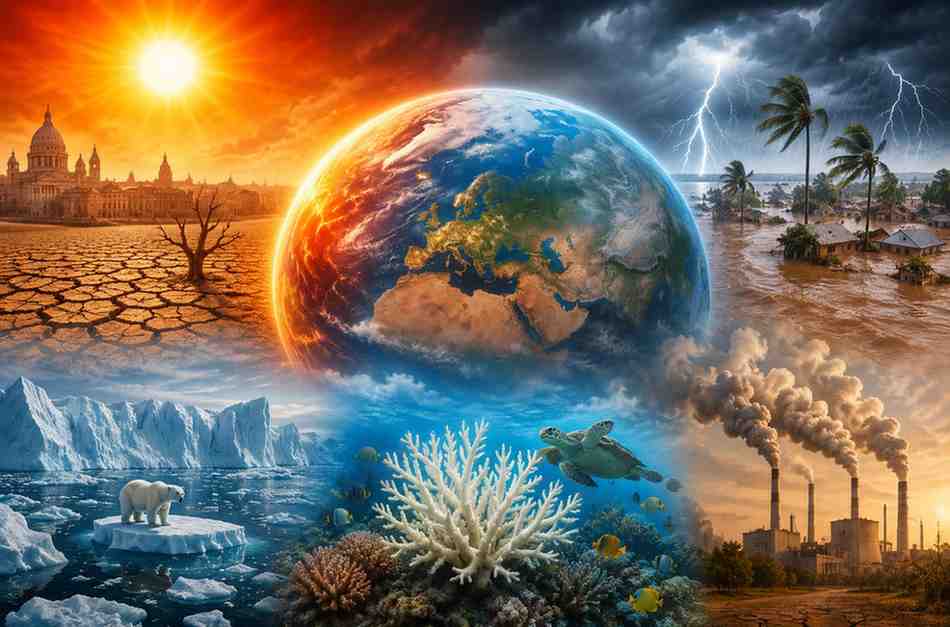
However, it reflects the same global warming trends that are altering weather patterns, increasing ocean temperatures, accelerating ice loss, and disrupting ecosystems across the planet. These events are warnings of what the future may hold if global temperatures continue to rise.
Implications for India
India is among the countries most vulnerable to climate change because of its large population, dependence on agriculture, and long coastline. Rising global temperatures increase the probability of severe and prolonged heatwaves across northern, central, and western India. Higher temperatures also mean warmer nights, making it more difficult for people, crops, and livestock to recover from daytime heat.
Climate change may also alter the behaviour of the Indian monsoon. While the total seasonal rainfall may not decrease dramatically, rainfall is increasingly becoming uneven. Heavy downpours within a short period can cause devastating floods, landslides, and urban flooding, while long dry spells between rain events can damage crops and reduce groundwater recharge. This combination threatens India’s food security and rural economy.
The Himalayan glaciers, which feed major rivers such as the Ganga, Brahmaputra, and Indus, are retreating due to rising temperatures. Initially, glacier melt may increase river flow and flood risks. However, continued glacier loss could eventually reduce freshwater availability for millions of people across South Asia.
Heat stress will also place additional pressure on India’s electricity demand, healthcare system, and water resources. Cities may experience worsening urban heat island effects, while farmers could struggle with declining crop yields due to prolonged exposure to extreme temperatures.
Why Antarctica Is Also at Risk
Although Antarctica remains one of the coldest places on Earth, it is warming faster than many scientists once expected. The Southern Ocean surrounding Antarctica is absorbing increasing amounts of heat generated by greenhouse gas emissions.
Warmer ocean water melts Antarctic ice shelves from beneath, weakening the natural barriers that slow glaciers flowing into the sea. Once these ice shelves collapse, glaciers can accelerate towards the ocean, contributing significantly to global sea-level rise.
The West Antarctic Ice Sheet remains one of the greatest concerns for climate scientists. Continued warming may push parts of this massive ice sheet beyond a tipping point where melting becomes increasingly difficult to reverse. While this process would unfold over decades or centuries, its consequences would affect coastal cities worldwide.
Europe’s heatwave is not directly melting Antarctic ice. Instead, both events represent different outcomes of the same warming climate driven by human activities.
Impact on Oceans and Marine Life
One of the greatest victims of rising global temperatures is the world’s oceans. Oceans absorb over 90 percent of the excess heat trapped by greenhouse gases, making marine ecosystems highly vulnerable to climate change.
As ocean temperatures rise, dissolved oxygen levels decrease, making it harder for many fish and marine organisms to survive. Warm water also disrupts breeding cycles, feeding behaviour, and migration routes for numerous species.
Coral reefs are particularly sensitive. Even small increases in sea temperature can trigger coral bleaching, where corals expel the algae that provide them with nutrients and colour. If high temperatures persist, entire reef ecosystems may die, affecting thousands of marine species that depend on coral habitats.
Fish populations may migrate towards cooler waters, forcing fishing communities to travel farther offshore and threatening food security in many coastal nations. Species unable to adapt quickly enough could experience significant population declines.
Marine mammals such as whales, dolphins, and seals may also face increasing challenges as changing ocean temperatures alter the availability of their prey. Penguin populations in Antarctica could decline if warming reduces sea ice and disrupts the abundance of krill, one of their primary food sources.
Sea turtles are another vulnerable species. Rising beach temperatures can alter hatchling sex ratios because turtle gender is determined by sand temperature during egg incubation. Continued warming may produce disproportionately more females, affecting future breeding populations.
Warmer waters also encourage harmful algal blooms, which produce toxins capable of killing fish, shellfish, seabirds, and marine mammals while reducing water quality.
Environmental Changes That Could Become More Common
If current warming trends continue over the coming years, the world could experience increasingly severe environmental disruptions.
Heatwaves may become longer, hotter, and more frequent across Europe, India, North America, and parts of Asia. Wildfires are likely to intensify as forests become drier and more vulnerable to ignition.
Heavy rainfall events could become more destructive, leading to flash floods, river flooding, and landslides, while prolonged droughts may reduce freshwater availability and agricultural productivity.
Sea levels will continue rising as glaciers and polar ice sheets lose mass, threatening coastal cities, ports, islands, and low-lying agricultural land. Saltwater intrusion into freshwater aquifers could further reduce drinking water supplies.
Ocean ecosystems may undergo major transformations as warming, acidification, and declining oxygen levels reduce marine biodiversity. Coral reefs, fisheries, and coastal ecosystems could experience long-term damage that affects millions of people dependent on marine resources.
The spread of insects such as mosquitoes into previously cooler regions may increase the risk of diseases including dengue, malaria, and chikungunya.
Loss of biodiversity on land and in water may accelerate as many species struggle to adapt to rapidly changing climatic conditions. Pollinators, birds, mammals, insects, amphibians, and marine organisms may all face increasing survival challenges.
Need for Global Action
The European heatwave serves as another powerful reminder that climate change is no longer a distant concern. The atmosphere, oceans, glaciers, forests, and ecosystems are interconnected, meaning environmental changes in one region often reflect larger global shifts.
Reducing greenhouse gas emissions, expanding renewable energy, protecting forests, restoring wetlands, improving water conservation, and strengthening climate-resilient infrastructure remain essential steps to slow global warming. International cooperation will be equally important because climate change does not recognise national borders.
The coming decade is expected to be critical. Without substantial reductions in emissions and stronger adaptation measures, extreme weather events, glacier loss, rising sea levels, and ecosystem disruption could become increasingly common. The European heatwave is therefore not just a regional emergency—it is a global warning that the Earth’s climate system is entering an era of greater uncertainty, where the impacts will be felt from India’s agricultural fields to Antarctica’s frozen landscapes and throughout the world’s oceans.
Responsibilities to Reduce the Impact of Climate Change
The recent European heatwave is another reminder that climate change is accelerating. While some impacts are already unavoidable, scientists agree that decisive action can still prevent far worse outcomes. Governments, industries, and individuals all have a role to play.
Rapidly Reduce Greenhouse Gas Emissions
Countries need to reduce their dependence on coal, oil, and natural gas by expanding renewable energy sources such as solar, wind, and hydropower. Cleaner energy is the most effective long-term solution for limiting global warming.
Protect and Restore Forests
Forests absorb carbon dioxide and help regulate the climate. Preventing deforestation and restoring degraded forests and wetlands can significantly reduce atmospheric carbon while protecting biodiversity.
Conserve Water
With heatwaves and irregular rainfall becoming more common, water conservation is essential. Rainwater harvesting, efficient irrigation, wastewater recycling, and responsible household water use can reduce future shortages.
Build Climate-Resilient Cities
Cities should increase green spaces, plant more trees, use reflective building materials, improve drainage systems, and expand public transport. These measures reduce urban heat and help manage extreme rainfall.
Protect Oceans
Reducing plastic pollution, preventing overfishing, and establishing more marine protected areas can help marine ecosystems recover and better withstand warming oceans.
Promote Sustainable Agriculture
Farmers can adopt climate-resilient crops, efficient irrigation methods, and sustainable farming practices that reduce emissions while maintaining food production.
Strengthen Early Warning Systems
Improved weather forecasting and disaster preparedness can save lives during heatwaves, floods, cyclones, and wildfires. Governments should invest in emergency response systems and public awareness campaigns.