
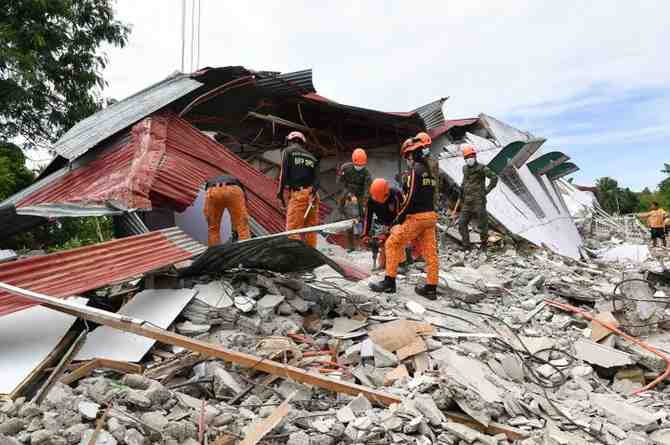
A powerful earthquake measuring 6.4 on the Richter scale struck the southern Philippine island of Mindanao on Friday, sending tremors across several parts of the region and raising fresh concerns in a country that frequently experiences seismic activity. According to initial assessments by international seismic agencies, the earthquake occurred at a depth of around 29 kilometres, making it a relatively shallow quake capable of producing noticeable ground shaking.
Authorities said there were no immediate reports of casualties, major injuries, or widespread structural damage in the aftermath of the earthquake. Emergency response teams and local disaster management officials immediately began assessing affected areas to determine whether the tremor had caused any significant impact on buildings, roads, and public infrastructure.
Earthquake Felt Across Mindanao
Residents across several parts of Mindanao, the Philippines’ second-largest island, reported feeling strong shaking that prompted many people to rush outdoors as a precaution. Office workers, shoppers, and residents temporarily evacuated buildings until authorities confirmed there was no immediate threat of further danger.
While the tremor caused panic among local communities, officials urged residents to remain calm and stay alert for possible aftershocks, which are common following earthquakes of this magnitude.
No Tsunami Warning Issued
Seismological agencies confirmed that the earthquake did not trigger a tsunami warning, providing relief to coastal communities. Experts explained that although the earthquake was strong, its characteristics did not indicate conditions likely to generate dangerous sea waves.
Authorities nevertheless advised people living in vulnerable coastal areas to continue monitoring official updates and avoid spreading unverified information on social media.
Authorities Begin Damage Assessment
Provincial governments and disaster response agencies deployed inspection teams to evaluate public buildings, bridges, schools, hospitals, and transport infrastructure. Engineers are conducting structural assessments to ensure that facilities remain safe for public use.
Officials stated that emergency operations centres remain on alert and are prepared to respond quickly should aftershocks cause additional damage or create new emergencies.
Philippines Lies Along the Pacific Ring of Fire
The Philippines is among the world’s most earthquake-prone countries because it is located on the Pacific Ring of Fire, a region where several major tectonic plates meet. This geological setting results in frequent earthquakes and volcanic eruptions throughout the archipelago.
Thousands of minor earthquakes occur in the country every year, although only a small number cause significant destruction. Strong tremors, however, often serve as reminders of the need for preparedness and resilient infrastructure.
Region Still Recovering From Earlier Powerful Quake
The latest earthquake comes just weeks after a devastating 7.8-magnitude earthquake struck southern Mindanao earlier this month, causing extensive damage, multiple fatalities, and injuries across several provinces. Recovery and reconstruction efforts have continued since that disaster, making residents particularly sensitive to fresh seismic activity.
The recurrence of strong earthquakes has reinforced calls from disaster experts for improved building standards, enhanced emergency response capabilities, and greater public awareness about earthquake preparedness.
Preparedness Remains Crucial
Disaster management officials reminded citizens to keep emergency kits ready, identify safe evacuation areas, and follow official advisories during and after earthquakes. Residents were also advised to inspect their homes for structural damage before re-entering buildings if they experienced strong shaking.
Experts note that while earthquakes cannot be predicted, preparedness measures can significantly reduce risks and save lives during future seismic events.
Monitoring Continues
Seismological agencies continue to monitor the affected region for aftershocks and any changes in seismic activity. Local authorities have assured residents that updates will be issued promptly if new developments emerge.
For now, the absence of immediate reports of casualties or major destruction has provided some reassurance, although officials remain vigilant as inspections continue across Mindanao.
As authorities continue monitoring the situation, residents have been urged to remain vigilant and follow official advisories. Damage assessments are ongoing, while emergency agencies stay prepared to respond swiftly to any aftershocks or emerging risks.