
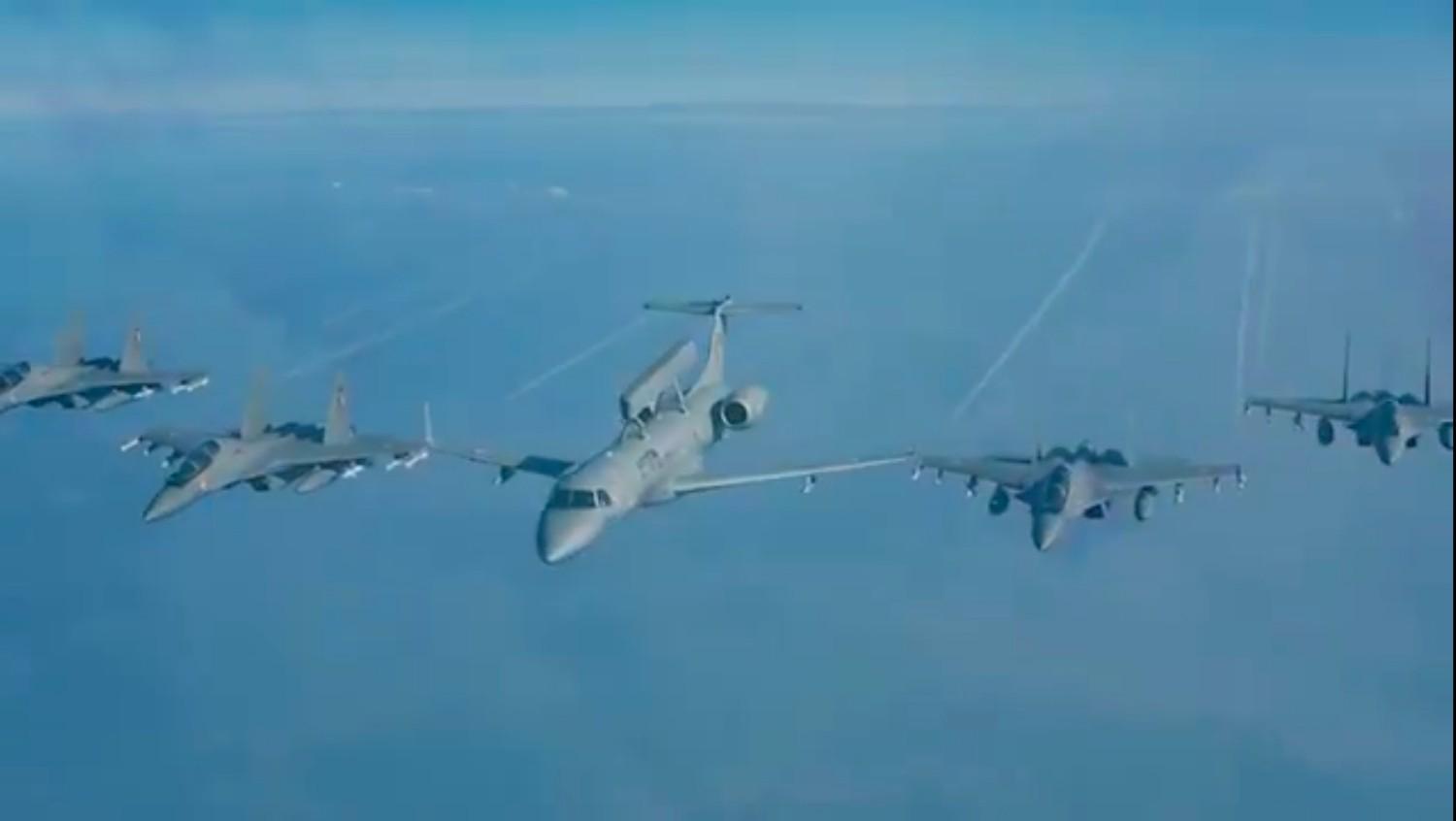
NEW DELHI: India’s indigenous airborne surveillance capabilities are set to receive a major boost as the Defence Research and Development Organisation (DRDO) is expected to secure Final Operational Clearance (FOC) for its Netra Airborne Early Warning and Control (AEW&C) system on June 25. The milestone will mark the successful completion of a long-development programme aimed at strengthening the Indian Air Force’s ability to monitor and respond to aerial threats.
The Netra AEW&C system has been developed by DRDO in collaboration with the Indian Air Force and several domestic defence laboratories. Mounted on Embraer EMB-145 aircraft, the platform serves as an “eye in the sky,” providing real-time surveillance, target tracking, identification and command-and-control capabilities during military operations.
The system is equipped with an Active Electronically Scanned Array (AESA) radar, electronic support measures, communication support systems and secure data links. These technologies enable the aircraft to detect and track airborne and surface targets over long distances while simultaneously sharing critical information with fighter jets, ground stations and other defence assets.
The Netra programme represents one of India’s most significant achievements in indigenous defence technology. The aircraft provides around 240-degree radar coverage and has been designed to enhance situational awareness during both peacetime surveillance missions and combat operations. The platform also supports air-to-air refuelling, allowing it to remain operational for extended durations when required.
The Indian Air Force currently operates three Netra AEW&C aircraft. These systems have already demonstrated their operational value and have been deployed in several important missions. Defence experts note that obtaining Final Operational Clearance will certify that the platform has met all operational requirements laid down by the Air Force and is fully combat-ready for deployment in high-intensity conflict scenarios.
The clearance is expected to strengthen India’s air defence network at a time when the country is investing heavily in advanced surveillance and network-centric warfare capabilities. AEW&C aircraft play a critical role in modern warfare by extending radar coverage beyond ground-based systems and providing commanders with a comprehensive picture of the battlespace.
The achievement is also expected to pave the way for future indigenous airborne warning platforms, including upgraded Netra variants and larger airborne early warning systems currently under development. These projects are aimed at improving radar coverage, endurance and operational effectiveness to meet evolving security challenges.
With the anticipated operational clearance later this month, the Netra programme is set to become a key pillar of India’s air surveillance architecture and a significant step forward in the country’s push for self-reliance in advanced defence technologies.
The expected Final Operational Clearance (FOC) for the Netra AEW&C system marks a major milestone in India’s journey towards defence self-reliance. Developed indigenously by DRDO, the airborne surveillance platform reduces dependence on foreign early-warning systems while enhancing the Indian Air Force’s ability to detect, track and respond to aerial threats in real time.
Netra functions as a force multiplier by extending radar coverage far beyond ground-based systems. In modern warfare, where information dominance is critical, the ability to monitor hostile aircraft, missiles and other airborne activities from long distances provides a decisive operational advantage. The system strengthens India’s air defence network by improving situational awareness, command-and-control capabilities and coordination between multiple military assets.
The clearance also reflects the growing maturity of India’s indigenous defence technology ecosystem. Successful operational validation demonstrates that domestic research and manufacturing capabilities can deliver complex strategic platforms that meet military requirements. This achievement is expected to boost confidence in future indigenous projects, including advanced airborne warning systems and next-generation surveillance aircraft.
From a strategic perspective, Netra’s induction comes at a time when regional security challenges are becoming increasingly complex. Enhanced airborne surveillance capabilities will improve India’s preparedness along its borders and maritime zones while supporting network-centric warfare operations. The platform’s operational readiness will contribute significantly to deterrence, rapid response and battlefield management.
Overall, the Netra programme represents not only a technological success but also a strategic asset that strengthens India’s defence preparedness and reinforces the country’s long-term vision of achieving self-reliance in critical military technologies.