
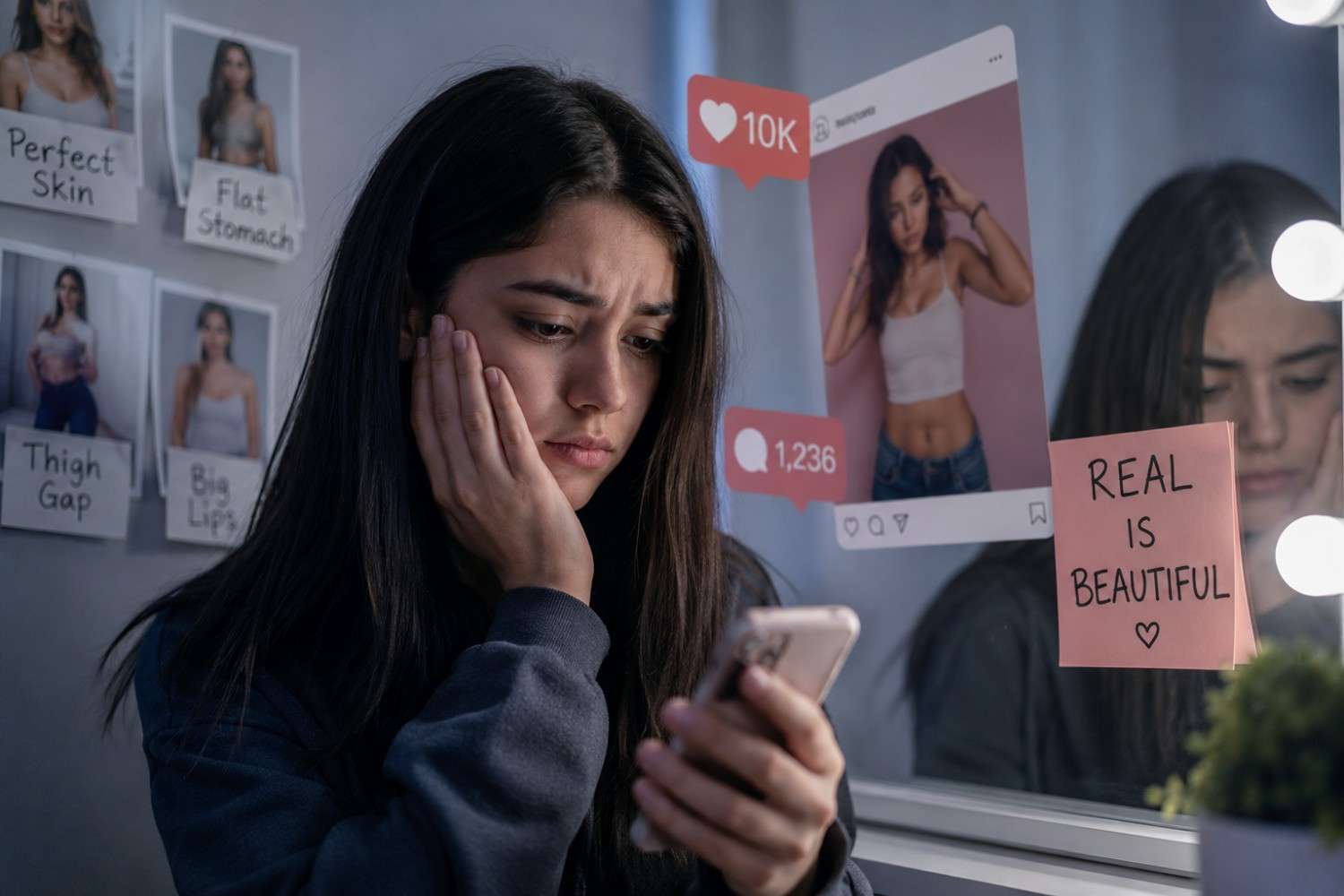
Instagram Is Influencing More Than Just Beauty Trends
Instagram has become an inseparable part of modern life. Millions of people open the app every day to check updates, share memories, and connect with friends. However, scientists are now warning that excessive exposure to Instagram may be affecting something much deeper than our screen habits—it may be changing how we see ourselves.
A recent study has revealed that long-term Instagram use could alter the brain’s perception of body image. Experts suggest that constantly viewing edited and filtered images may gradually blur the line between reality and digitally enhanced appearances.
This growing concern highlights how social media is no longer just an entertainment platform but a powerful influence on mental and emotional well-being.
What Did The New Study Discover?
Researchers published their findings in the journal Computers in Human Behaviour. The study suggests that heavy Instagram users may struggle to distinguish their own facial features from those of others.
The findings showed that prolonged exposure to filtered faces can create confusion in self-recognition. In simple terms, people may begin comparing themselves so often that their brains start adapting to unrealistic standards.
The effect appeared stronger among individuals who spent long hours scrolling through social media every day.
Although researchers did not establish a direct cause-and-effect relationship, they observed a significant association that deserves further scientific investigation.
How Does Instagram Affect The Brain?
Instagram operates through an image-based algorithm that constantly delivers visual content.
Our brains naturally absorb and process what we repeatedly see. When users are continuously exposed to perfect-looking faces, flawless skin, and edited body shapes, these images begin influencing their internal perception.
Over time, the brain may start accepting these unrealistic standards as normal.
This repeated exposure can blur the boundaries between authentic identity and digitally altered appearances.
Experts believe this phenomenon may gradually weaken an individual’s connection with their natural self-image.
Why Are Filters Becoming A Serious Concern?
Filters have become one of Instagram’s most popular features. They can instantly smooth skin, reshape facial features, brighten eyes, and create a near-perfect appearance.
While these tools may seem harmless, repeated use can create unrealistic expectations.
Many users begin comparing their unfiltered appearance to their enhanced digital version. This often results in dissatisfaction with their natural face and body.
The problem intensifies because social validation comes into play. Likes, comments, and shares reward edited images, encouraging people to continue presenting a version of themselves that does not exist in reality.
Over time, this cycle can become difficult to break.
Mental Health Risks Cannot Be Ignored
Experts warn that distorted body image can trigger several mental health challenges.
Some of the major risks include:
- Depression
- Anxiety disorders
- Low self-esteem
- Eating disorders
- Social withdrawal
Young people are especially vulnerable because their identities are still developing.
Constant comparison with unrealistic beauty standards can make individuals feel inadequate, even when there is nothing wrong with their appearance.
Mental health professionals now consider excessive social media exposure a growing public health concern.
Understanding The Concept Of ‘Digital Erosion Of Identity’
Researchers have proposed a new idea called “digital erosion of identity.”
This concept suggests that excessive digital exposure slowly weakens a person’s sense of ownership over their own appearance.
Heavy users may begin feeling disconnected from their natural bodies and increasingly dependent on online validation.
In severe cases, individuals may feel more comfortable with their filtered images than with their real selves.
Experts say this could become an early warning sign that social media is negatively affecting personal identity.
Who Is Most At Risk?
Certain groups appear more vulnerable than others.
The study identifies three major categories:
Adolescents
Teenagers often associate social status with social media popularity. This can make them more susceptible to unrealistic beauty standards.
Heavy Social Media Users
People who spend several hours daily on Instagram may be more likely to experience body image disturbances.
Individuals With Existing Mental Health Challenges
Those with low self-esteem, anxiety, or emotional insecurities may experience worsening symptoms.
Early awareness can help prevent long-term consequences.
What The Study Does Not Claim
Despite its alarming findings, researchers caution against overinterpreting the results.
The study does not prove that Instagram directly causes body image disorders.
Instead, it highlights a strong relationship between prolonged exposure and altered self-perception.
Scientists are calling for additional research to understand the long-term effects and identify effective solutions.
How Can You Protect Your Body Image?
Experts recommend building healthier digital habits to maintain emotional well-being.
Here are some practical steps:
Limit Daily Screen Time
Taking regular breaks reduces mental fatigue and prevents dopamine overload.
Avoid Excessive Filter Usage
Use filters sparingly and avoid becoming dependent on digitally enhanced appearances.
Follow Authentic Creators
Choose accounts that celebrate diversity, natural beauty, and realistic lifestyles.
Practise Digital Detox
Spend dedicated periods away from social media every week.
Focus On Offline Activities
Exercise, reading, hobbies, and face-to-face interactions help strengthen self-confidence.
A Wake-Up Call For The Digital Generation
Instagram has transformed how people communicate and express themselves, but experts believe it may also be reshaping how people recognise their own identities.
The latest findings serve as a reminder that technology should support life, not
As social media continues to evolve, awareness and moderation will become essential tools for protecting mental health.
The goal is not to abandon Instagram entirely but to use it responsibly.
After all, no filter should have the power to determine how we feel about ourselves in the real world.