
India has strongly challenged a report by United Nations Special Rapporteur Gina Romero concerning youth participation, freedom of peaceful assembly and alleged retaliation against young people, describing its claims as unverified and questioning the credibility of the evidence cited.
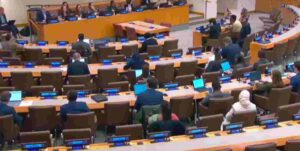
Speaking during an interactive dialogue at the United Nations General Assembly’s Third Committee, Anuj Swarup, First Secretary at India’s Permanent Mission to the UN, rejected allegations that young Indians faced retaliation or stigmatisation for discussing mental health and gender justice.
India argued that the report relied on anonymous submissions without providing sufficient verification to support its broad conclusions about the country’s youth population. The government maintained that such allegations should not be presented as established facts without rigorous scrutiny.
The strong diplomatic response has brought renewed attention to the debate over youth activism, freedom of expression, human rights reporting and the responsibilities of international institutions.
India Questions Credibility of UN Report
Addressing the committee during the 81st session of the UN General Assembly, Swarup criticised the evidentiary basis of Romero’s report, particularly its statement that young people in India had reported retaliation or stigmatisation when discussing mental health or gender justice.
According to India, the report cited unnamed submissions in a footnote, raising questions about the reliability and verification of the information used to support the allegation.
Swarup argued that broad conclusions about a country with one of the world’s largest youth populations should not rest on anonymous and unverified claims.
He described the allegations as “hearsay, dressed up as a UN report” and said India rejected them outright.
The Indian diplomat also questioned whether such reporting practices met the standards of fairness, accuracy and impartiality expected from United Nations mandate holders.
India’s objection centred on the distinction between allegations submitted by individuals and claims that have been independently verified. New Delhi maintained that international assessments should establish the credibility of their sources before drawing conclusions about a country’s political and social environment.
India Defends Constitutional Rights and Democratic Institutions
During his statement, Swarup emphasised that the Indian Constitution guarantees freedom of speech and expression, along with the rights to peaceful assembly and association, under Article 19.
He said these freedoms were supported by an independent judiciary, a free press and the National Human Rights Commission.
India presented these constitutional protections as central to its democratic framework, arguing that the country’s political system provides avenues for citizens, including young people, to express concerns, organise movements and engage with public authorities.
The government also challenged the report’s broader assessment of the space available for youth participation in public life.
Swarup argued that the existence of youth-led political movements, public demonstrations and direct engagement between young citizens and senior leaders demonstrated that young people continued to participate actively in India’s democratic processes.
He urged the Special Rapporteur to exercise greater care in evaluating information and avoid making sweeping generalisations based on submissions that India considers insufficiently verified.
‘Cockroach Janata Party’ Reference Draws India’s Objection
Another point raised by the Indian delegation concerned Romero’s reference to a satirical political movement created by young Indians, known as the Cockroach Janata Party.
India questioned the apparent contradiction between citing the movement and portraying the country’s civic environment as restrictive for young people.
Swarup argued that the ability of young citizens to create a satirical political platform, criticise the government and participate in public demonstrations illustrated the presence of political expression.
He also referred to instances of engagement between young protesters and senior government representatives, presenting them as examples of dialogue within the democratic system.
The Indian delegation further cited remarks by the UN High Commissioner for Human Rights at the Human Rights Council concerning the importance of engaging with young leaders in the context of a youth-led movement in India.
India suggested that such developments deserved consideration when assessing the extent of civic participation and political expression available to young people.
Government Cites Response to Student Protests
Swarup also referred to protests by students over alleged irregularities in public examinations, arguing that the government’s response demonstrated the role of public engagement in addressing youth concerns.
Also Read | Trump Waives Russia Oil Sanctions, Averting 100% Tariff Threat On India
According to the Indian diplomat, the government engaged with students following the protests, after which Parliament amended the Public Examinations Act. He said the measures included stronger penalties for examination paper leaks, changes to examination procedures and the establishment of fast-track courts in states to deal with examination fraud.
India cited these developments as evidence that student concerns could lead to policy discussions and institutional responses.
The government’s argument was that youth participation should be assessed not only through reports of grievances but also through the mechanisms available to raise concerns and seek corrective action.
Swarup also highlighted the Viksit Bharat Young Leaders Dialogue, which he said involved more than five million young people in discussions about national priorities during the year.
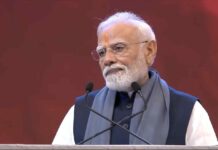
He pointed to engagement between young citizens, Prime Minister Narendra Modi and other senior government leaders as another example of youth participation in public affairs.
Dispute Highlights Wider Debate on Youth Rights
The exchange at the United Nations highlights the continuing debate over how international human rights assessments should evaluate claims concerning freedom of expression, peaceful protest and civic participation.
India’s response focused on the need for verifiable evidence, balanced reporting and careful treatment of allegations involving large populations. The government maintained that constitutional safeguards and examples of public engagement should form part of any assessment of youth freedoms in the country.
At the same time, allegations concerning retaliation or stigmatisation raise questions that require evidence-based examination rather than assumptions on either side. The reliability of submissions, the circumstances in which alleged incidents occurred and the availability of independent corroboration are important considerations when assessing such claims.
The exchange also underlines the tension that can arise between national governments and independent UN experts when reports address sensitive domestic issues.
India has firmly rejected Romero’s characterisation of the situation, while the central issue remains the importance of transparent methodology and credible evidence in international human rights reporting.
The Indian delegation called for greater rigour and fairness in future assessments, reiterating that the rights of young people and the country’s democratic institutions should be evaluated through substantiated information rather than unverified allegations.
Click here to join our WhatsApp Channel for real-time news updates and exclusive coverage.