
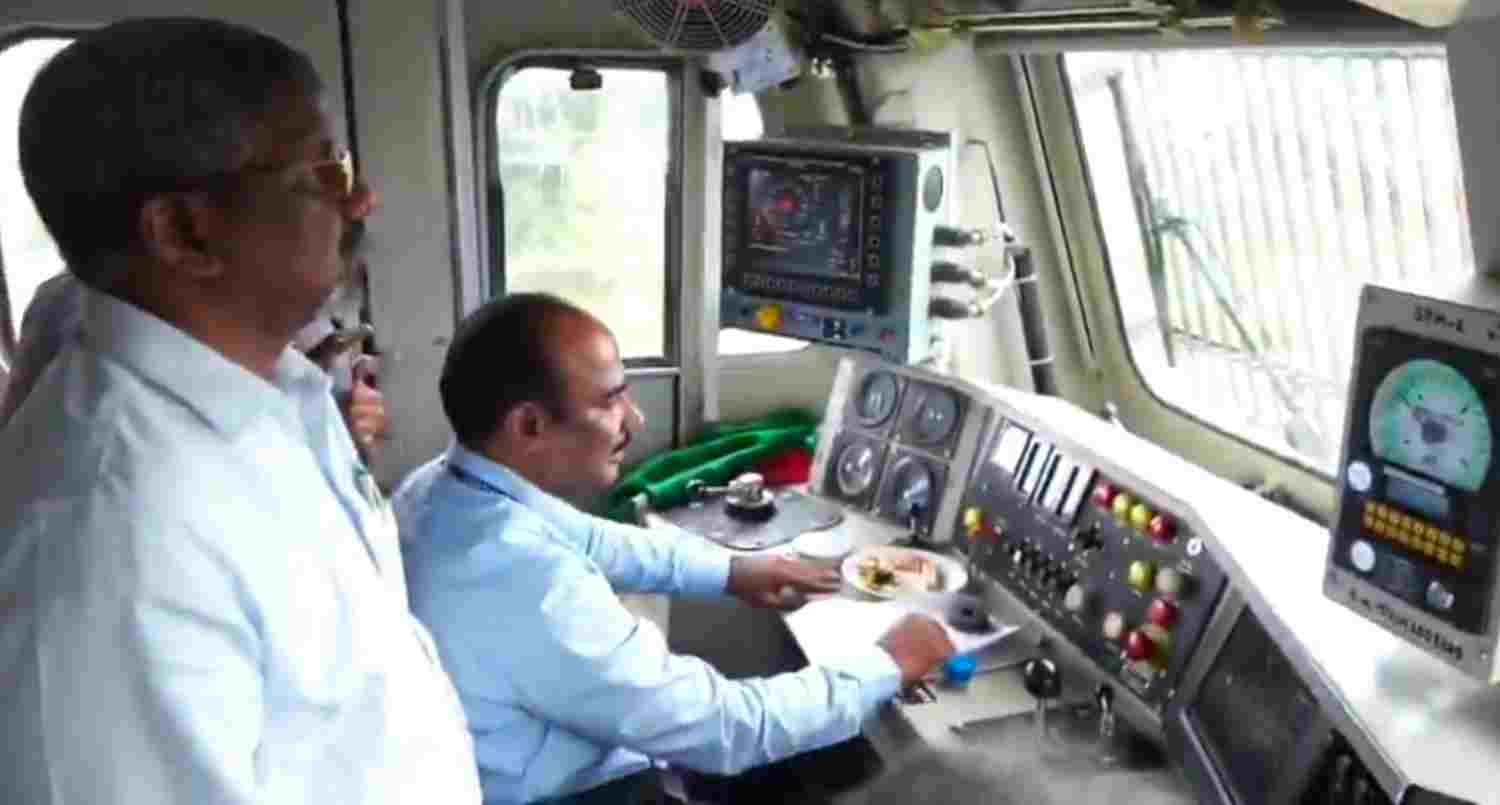
Indian Railways has taken another significant step towards strengthening train safety with the commissioning of KAVACH Version 4.0 on 108 Route Kilometres of the Malkajgiri–Kamareddi section in Hyderabad Division of South Central Railway (SCR).
The upgrade marks the transition from KAVACH Version 3.2 to the latest Version 4.0 on the section and represents an important advancement in the deployment of India’s indigenous Automatic Train Protection (ATP) technology.
KAVACH 4.0 incorporates technological improvements developed from operational experience with earlier versions of the system. On South Central Railway, KAVACH Version 3.2 had already been deployed across 1,465 Route Kilometres, providing valuable operational experience for the development and refinement of the upgraded system.
KAVACH 4.0 brings advanced safety technology to Indian Railways
KAVACH is an indigenously developed Automatic Train Protection system designed to provide an additional layer of safety during train operations. It assists locomotive pilots in maintaining prescribed speed limits and can automatically apply brakes when required if the locomotive pilot fails to respond appropriately.
The system is designed to help prevent Signal Passing at Danger (SPAD), manage train speeds in critical situations and reduce the possibility of collisions. It also supports safer train movement during challenging weather conditions by providing additional protection through automated train-control functions.
The Ministry of Railways describes KAVACH as a highly technology-intensive safety system requiring the highest level of safety certification, Safety Integrity Level-4 (SIL-4). KAVACH was adopted as the National Automatic Train Protection system in July 2020.
Improved location accuracy strengthens train monitoring
One of the major improvements introduced in KAVACH 4.0 is enhanced location accuracy. More precise train positioning enables the system to determine a train’s location more reliably and supports improved monitoring of train movement.

The upgraded system also provides improved information about signal aspects in larger railway yards. This is particularly important in complex operational environments where multiple tracks, signals and train movements require accurate and timely information.
These improvements are intended to strengthen situational awareness and enable safer decision-making during train operations.
Optical fibre communication improves system connectivity
KAVACH 4.0 also introduces a station-to-station KAVACH interface through Optical Fibre Cable (OFC).
The OFC-based communication architecture is designed to provide reliable connectivity between railway stations and the train protection system. Better communication infrastructure is an important component of large-scale KAVACH deployment because the technology depends on the exchange of information between trackside, station and locomotive equipment.
The latest version also provides a direct interface with existing Electronic Interlocking Systems. This allows KAVACH to integrate more effectively with existing railway signalling infrastructure, supporting a more comprehensive train protection environment.
The Ministry of Railways has identified these improvements as key features supporting the planned large-scale deployment of KAVACH 4.0 across the Indian Railways network.
KAVACH requires extensive railway infrastructure
The deployment of KAVACH involves considerably more than installing equipment inside locomotives. A complete technological ecosystem has to be developed along the railway route to enable the system to function reliably.
This includes the installation of Station KAVACH at stations and block sections, RFID tags along the track, telecommunications towers, optical fibre cable and locomotive-based KAVACH equipment.
The system therefore requires coordinated implementation of signalling, telecommunications, trackside and onboard technologies.
Also Read | PM Modi Marks 8 Years of Ayushman Bharat as 60 Crore Indians Gain ₹5 Lakh Health Cover
Indian Railways has been progressively expanding KAVACH infrastructure across high-density and other identified routes. Official railway data shows continuing investment in optical fibre networks, trackside equipment, station data centres and locomotive equipment to support the wider rollout.
Experience with KAVACH 3.2 supports Version 4.0 development
The development of KAVACH 4.0 has been driven partly by experience accumulated from the deployment of Version 3.2. Following deployment across 1,465 Route Kilometres on South Central Railway, further improvements were incorporated into the system.
The revised KAVACH 4.0 specification was approved by the Research Designs and Standards Organisation (RDSO) in July 2024. The system was subsequently tested and progressively commissioned on multiple sections of the Indian Railways network.
Indigenous technology set for wider railway safety deployment
The commissioning of KAVACH 4.0 on the Malkajgiri–Kamareddi section adds another important milestone to India’s effort to modernise train protection and signalling systems through indigenous technology.
With improved positioning, enhanced signal information, OFC-based station communication and integration with electronic interlocking, KAVACH 4.0 is designed to address the varied operational requirements of India’s extensive railway network.
As Indian Railways continues expanding the system across identified routes, KAVACH 4.0 is emerging as a key component of the country’s technology-driven approach to improving train safety, operational reliability and modern railway signalling.
Click here to join our WhatsApp Channel for real-time news updates and exclusive coverage.