
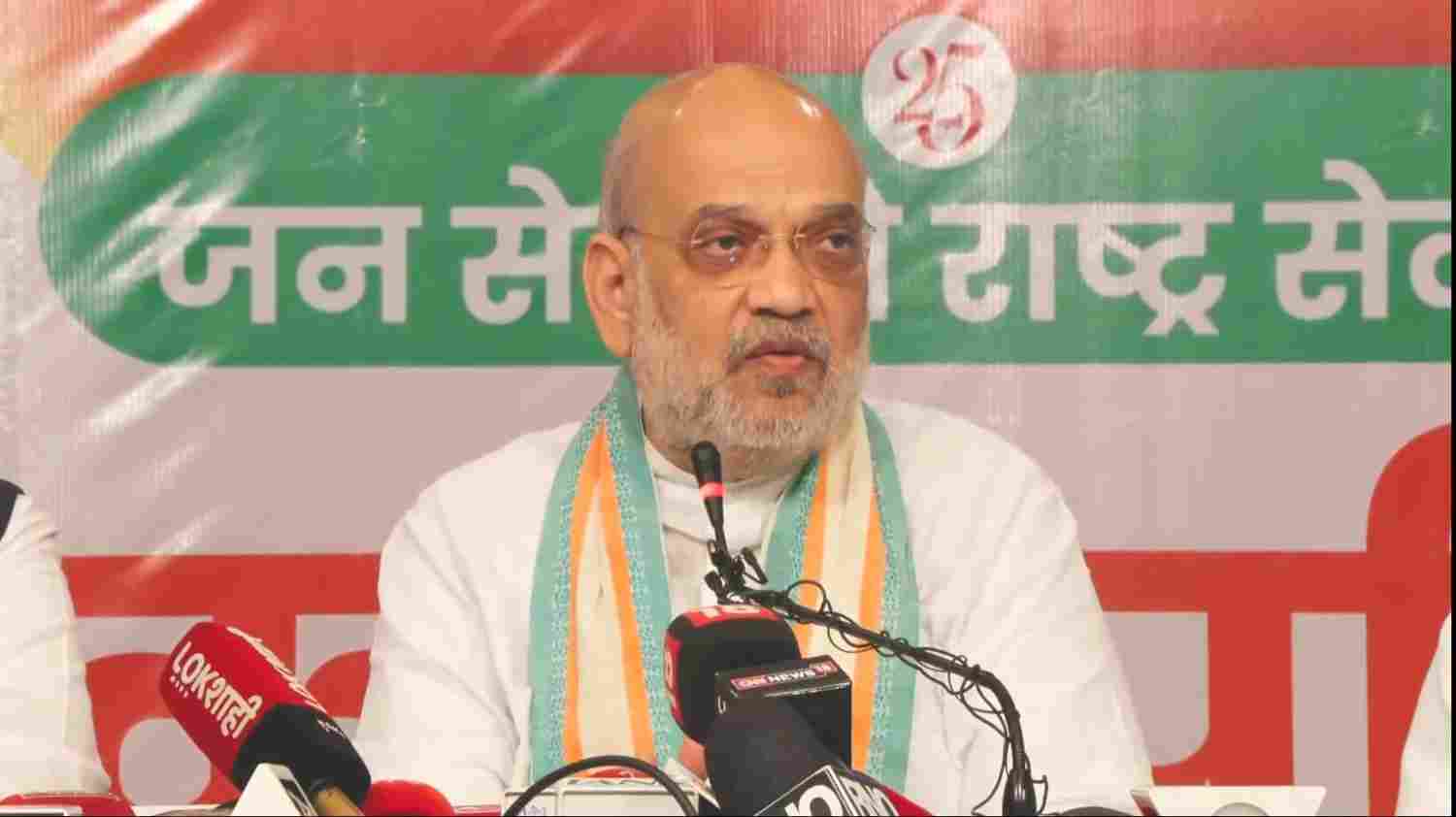
Union Home Minister Amit Shah has announced an ambitious deadline for the implementation of the Uniform Civil Code (UCC) across all 21 states governed by the BJP-led National Democratic Alliance (NDA), saying the measure will be implemented before 2029.
Shah made the announcement during a press conference in Mumbai on Sunday, September 13, 2026. His statement puts the UCC among the major legislative priorities expected to shape the political and governance agenda of NDA-ruled states in the coming years.
Amit Shah’s 2029 UCC Target
Speaking to reporters, Shah expressed confidence that the Uniform Civil Code would be introduced in all 21 NDA-governed states before 2029. He noted that the code has already been introduced in several states and indicated that the government intends to extend the initiative across the remaining NDA-ruled states.
The announcement represents a clear timeline for one of the BJP’s long-standing policy commitments. The Uniform Civil Code seeks to establish a common framework of personal laws governing areas such as marriage, divorce, inheritance and adoption, irrespective of religious affiliation.
Shah’s declaration also signals that state governments under the NDA are likely to take greater legislative steps on the issue before the 2029 deadline.
UCC Already Introduced in Several States
The Home Minister pointed to the progress already made on the UCC in states governed by the BJP. Uttarakhand became the first state in independent India to implement a Uniform Civil Code, while Gujarat passed its UCC Bill in March 2026.
Following the passage of the Gujarat legislation, Shah had described the move as part of the party’s long-standing commitment to ensuring a uniform law for citizens. The Ministry of Home Affairs also said at the time that state governments under Prime Minister Narendra Modi’s leadership were moving forward in this direction.

The developments in Uttarakhand and Gujarat have therefore emerged as important reference points for the wider UCC rollout.
What the Uniform Civil Code Means
The UCC is intended to create a common set of personal laws for citizens, replacing the existing system in which different religious communities may be governed by separate personal-law frameworks in areas of family and civil matters.
Issues associated with personal law include marriage, divorce, inheritance, adoption and maintenance. The proposed uniform framework has remained one of India’s most debated legal and political questions for decades.
Supporters of the UCC argue that a common legal framework can promote equality and simplify civil laws. Critics, however, have raised concerns about religious freedom, cultural practices and the impact of uniform provisions on different communities. Its implementation therefore involves significant legal, legislative and social considerations.
Part of Wider Governance Agenda
Shah’s latest announcement came alongside broader remarks on the government’s record on national security and long-standing internal challenges.
Also Read — BRICS 2026: Xi Jinping Unveils 5 Powerful Initiatives To Strengthen Unite Global South
According to India Today, the Home Minister highlighted measures including surgical strikes, air strikes and Operation Sindoor, describing them as evidence of a zero-tolerance approach towards terrorism. He also referred to issues such as Article 370, Naxalism and developments in the Northeast, which he described as major internal security challenges faced by the country.
By linking the UCC with the government’s wider governance and security agenda, Shah presented the proposed nationwide state-level rollout as part of a broader effort to address issues that the BJP has identified as long-standing priorities.
Political and Legal Significance
The 2029 timeline could make the UCC a prominent issue in the political discourse leading up to the next general election. With 21 NDA-ruled states identified as the target jurisdictions, implementation would require individual state governments to undertake the necessary legislative and administrative processes.
BRICS Gives Major Boost To Traditional Medicine With Landmark TCIM Working Group Push
The exact shape and timing of legislation could vary from one state to another, depending on local legal frameworks, legislative procedures and consultations.
The announcement nevertheless provides the clearest timeline yet for the NDA’s state-level UCC ambition. If implemented across all 21 states before 2029, it would represent a major expansion of a policy that has already moved from political debate to legislation and implementation in selected states.
For the BJP-led NDA, Shah’s statement reinforces the message that the Uniform Civil Code remains a central policy objective. For India’s political and legal landscape, the proposed expansion is likely to generate sustained debate over equality before law, personal freedoms, constitutional safeguards and the relationship between common civil legislation and India’s diverse social traditions.
Click here to join our WhatsApp Channel for real-time news updates and exclusive coverage.