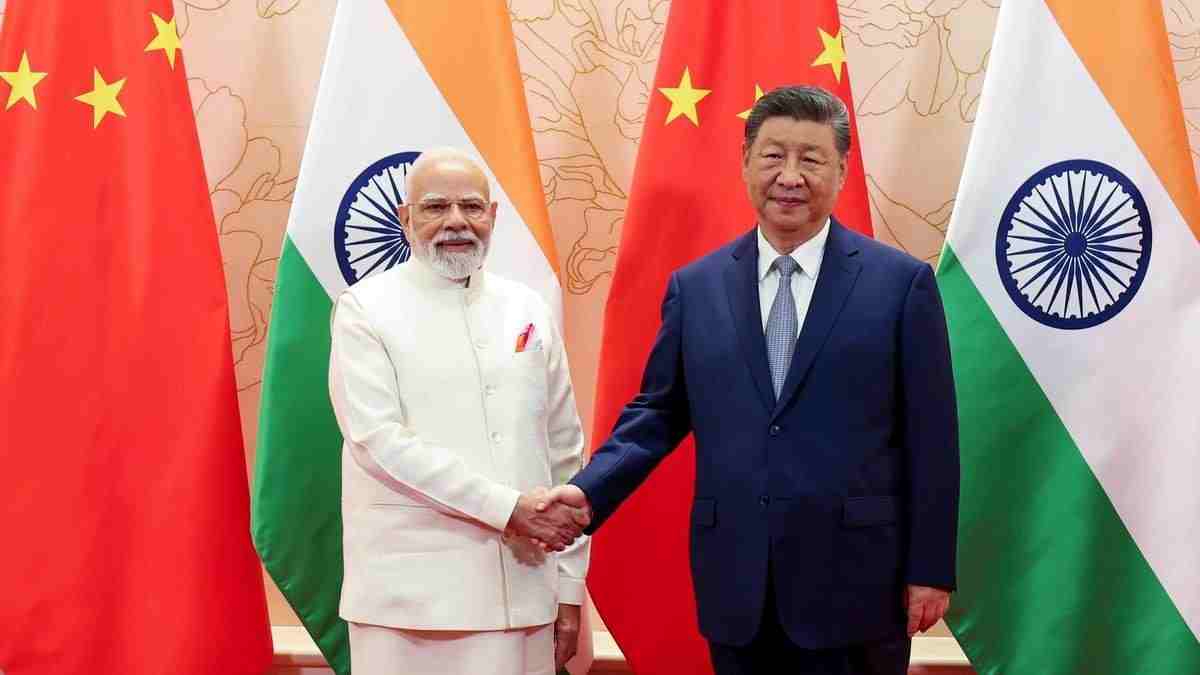
The Chinese President Xi Jinping’s return to India for the 18th BRICS Summit has opened a significant diplomatic window for New Delhi and Beijing to rebuild relations after years of tension, with China signalling its readiness to strengthen communication, expand cooperation and manage bilateral differences.
Xi is visiting India for the first time in nearly seven years and is expected to meet Prime Minister Narendra Modi on the sidelines of the BRICS summit in New Delhi. Beijing has described the engagement as an opportunity to implement the strategic understanding reached by the two leaders and place bilateral relations on a longer-term footing.
China Calls for Strategic Handling of Differences
Ahead of Xi’s arrival, Chinese Foreign Ministry spokesperson Mao Ning said Beijing would work with New Delhi to approach bilateral relations from a strategic and long-term perspective.
China has called for stronger communication, enhanced cooperation and the “proper” management of differences while describing India and China as neighbours that should work toward mutual success. The statement represents an important diplomatic signal as both sides attempt to stabilise ties following years of military and political friction.
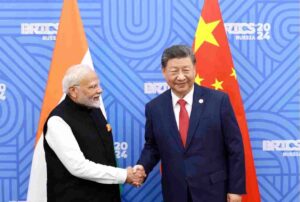
The proposed Modi-Xi meeting will also mark the third consecutive year in which the two leaders have met, following their engagements in Kazan and Tianjin.
Border Dispute Remains the Biggest Challenge
Despite the latest diplomatic momentum, the India-China relationship continues to face serious obstacles, with the unresolved Himalayan boundary dispute remaining at the centre of strategic concerns.
Relations deteriorated sharply after the deadly 2020 confrontation in eastern Ladakh. The crisis resulted in the deaths of 20 Indian and four Chinese soldiers and triggered a prolonged military standoff along the disputed frontier. The confrontation also led India to tighten scrutiny of Chinese investments and technology while introducing restrictions affecting Chinese applications and businesses.
However, diplomatic and military-level engagement has gradually increased. National Security Adviser Ajit Doval and Chinese Foreign Minister Wang Yi held extensive discussions in Beijing in August, focusing on the boundary question, maintaining peace and tranquillity and improving the broader relationship.
During the 25th round of Special Representatives’ talks, India and China reached an eight-point consensus and agreed to pursue discussions on an “Early and Substantial Harvest” concerning boundary delimitation and border management.
These developments have created cautious expectations around the Modi-Xi engagement, although substantial differences remain.
Economic Interests Push Both Sides Toward Engagement
Economic relations provide another powerful reason for India and China to maintain dialogue.
Also Read — Modi-Putin Embrace: BRICS 2026 And New Logic Of Strategic Autonomy
China continues to be a major source of goods and industrial supplies for India, even as New Delhi seeks to reduce excessive dependence on Chinese manufacturing and technology. Bilateral commerce has remained substantial despite political tensions, demonstrating the depth of economic interdependence between the two countries.
At the same time, business relations remain constrained by regulatory scrutiny, investment restrictions, visa difficulties and concerns over technology and critical infrastructure.
Recent efforts to ease some restrictions and revive commercial engagement suggest that both sides recognise the economic costs of prolonged confrontation. Yet the return of Chinese companies and investment is likely to remain gradual, particularly in sectors considered strategically sensitive by India.
BRICS Creates Wider Diplomatic Opportunity
Xi’s visit also carries significance beyond the bilateral relationship. India is hosting the 18th BRICS Summit in New Delhi as the grouping seeks to strengthen cooperation among emerging economies amid conflicts, trade tensions and uncertainty in the global economic system.
China has described BRICS as an important platform for solidarity and cooperation among emerging markets and developing countries. Beijing has also stressed dialogue and negotiation as mechanisms for addressing international disputes.
“Remove Trade Barriers, Expand Opportunities”: PM Modi’s Strong BRICS Business Push
For New Delhi, the summit provides an opportunity to demonstrate that BRICS can remain a platform for practical cooperation rather than becoming exclusively aligned with any single geopolitical camp. India’s approach is closely connected to its broader policy of strategic autonomy and its effort to maintain productive relationships with competing global powers.
Modi-Xi Meeting Faces a Delicate Test
The central question surrounding the Modi-Xi engagement is whether diplomatic momentum can translate into measurable progress.
A successful meeting could help reinforce border stability, improve political communication and create space for progress on trade, investment, visas and business relations. But expectations of a complete reset would be premature.
India is likely to remain focused on border security, territorial sovereignty and strategic resilience, while China has strong economic and geopolitical interests in maintaining stable relations with one of Asia’s largest economies.
The two countries therefore face a complicated balance between cooperation and competition. Their shared interests in economic growth, regional stability and multilateral platforms can encourage engagement, but unresolved security concerns continue to impose limits.
Xi’s return to India consequently represents more than a ceremonial BRICS visit. It is a high-stakes test of whether New Delhi and Beijing can move from cautious stabilisation toward a more predictable relationship while protecting their respective strategic interests.
Click here to join our WhatsApp Channel for real-time news updates and exclusive coverage.