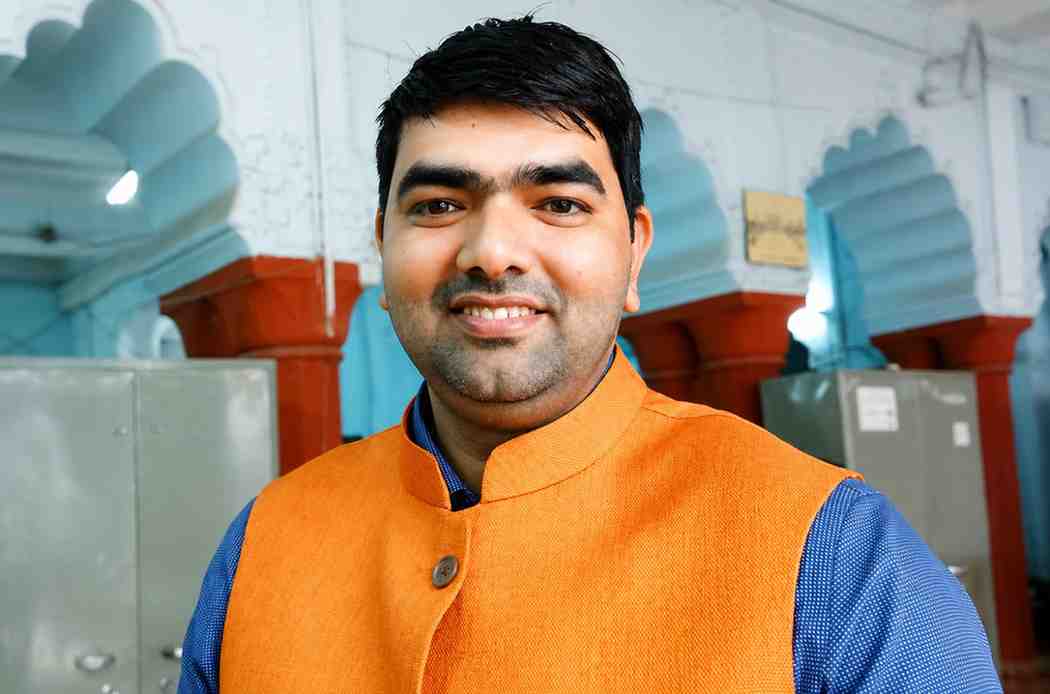
India’s economic resilience will depend increasingly on self-reliance, domestic consumption and a stronger Swadeshi movement as global uncertainties threaten to slow growth, Dr Dipendra Chahar, General Secretary of the Bharatiya Mazdoor Sangh (BMS), Delhi Pradesh, has said.
In a detailed statement on the economic challenges facing the country, Chahar argued that while the government, Reserve Bank of India and foreign investors have important roles to play, the real strength of the Indian economy lies with its workers, consumers and domestic enterprises.
He said the projected moderation in economic growth, combined with geopolitical tensions, elevated crude oil prices, a weaker rupee and inflationary pressures, makes reducing dependence on external markets increasingly important.
Global shocks expose India’s external dependence
According to Chahar, the current economic uncertainty cannot be attributed to a single factor. Global tariff disputes, conflicts in the Middle East, fluctuations in crude oil prices and international financial movements can all affect India’s economy.
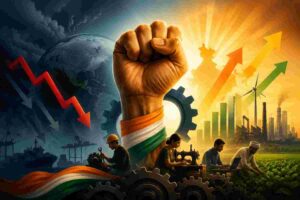
He argued that India’s dependence on imported energy and electronic goods leaves the domestic economy vulnerable to external disruptions.
“Swadeshi” in this context, he explained, should not be interpreted simply as opposition to foreign products. Instead, it should mean giving greater preference to Indian-made goods and strengthening domestic production capabilities.
Chahar invoked the philosophy of former BMS leader Dattopant Thengadi, saying that Swadeshi should be viewed not merely as an economic policy but as an expression of national self-respect.
Domestic purchases can strengthen jobs and incomes
Chahar presented domestic consumption as a direct way of retaining economic value within the country.
He said that when consumers purchase locally manufactured clothing, goods and services, money circulates through farmers, factory workers, artisans, retailers and other sections of the domestic economy. This, he argued, creates a wider employment multiplier than spending on imported products.
He also urged citizens to be cautious about discretionary purchases that increase India’s foreign-exchange requirements, particularly during periods of currency weakness and elevated commodity prices.
According to him, strengthening domestic demand can simultaneously support Indian businesses, protect employment and reduce pressure arising from external economic shocks.
Focus should shift from “hot money” to sustainable capital
The BMS leader also highlighted the vulnerability associated with short-term foreign portfolio investments, which can move rapidly in response to geopolitical and financial developments.
He advocated a greater focus on stable, long-term sources of capital, including contributions from the Indian diaspora.
However, Chahar argued that domestic savings and consumption should be considered an equally important source of economic strength. He described increased spending on Indian-made products as a form of a “Swadeshi Bond”, through which citizens can help retain wealth within the domestic economy.
Workers need skills and entrepreneurship
Chahar said slower economic growth could create additional pressure on employment, wages and recruitment, particularly for workers in vulnerable and informal sectors.
He stressed the need to move beyond the traditional approach of merely seeking employment and encouraged workers to become entrepreneurs and job creators.
He cited credit support for micro and small businesses as an opportunity for skilled workers to establish enterprises in areas such as welding, electric-vehicle services, air-conditioner repair and tailoring.
According to Chahar, even a small enterprise operated by a skilled worker can create additional employment, making entrepreneurship an important component of economic self-reliance.
BMS issues five-point appeal to citizens
Chahar outlined five priorities for workers and ordinary citizens. First, he called for greater preference for Indian products, including locally made clothing, footwear and traditional goods.
Second, he urged families to develop a disciplined savings culture and maintain emergency funds while keeping their social-security records updated.
Third, he stressed the importance of acquiring practical skills, arguing that vocational capabilities can significantly improve workers’ earning potential.
Fourth, he appealed to citizens not to react to unverified economic rumours, particularly those circulating through social media and messaging platforms.
Fifth, he called for greater respect for workers such as domestic staff, drivers, plumbers and other service providers, saying their purchasing power is an important component of domestic economic activity.
“Crisis should become an opportunity”
Concluding his appeal, Chahar said government measures, monetary policy, infrastructure projects and investment initiatives can support the economy, but long-term resilience ultimately requires stronger participation from citizens.
He maintained that external shocks may trigger economic difficulties, but the ability to withstand them depends on domestic strength.
Calling for a “self-reliant India” and “Swadeshi India”, Chahar urged citizens to turn the challenge of slower growth into an opportunity to promote savings, skills, entrepreneurship and indigenous production.
His message, he said, is rooted in the BMS philosophy of empowering workers and strengthening the nation through economic self-reliance.“Jai Bharat, Jai Mazdoor,” he concluded.
Click here to join our WhatsApp Channel for real-time news updates and exclusive coverage.