Union Minister of State (Independent Charge), Ministry of Ayush, and Minister of State for Health and Family Welfare, Prataprao Jadhav, has stressed the growing importance of Yoga and Naturopathy in strengthening preventive healthcare and promoting healthier lifestyles across India.
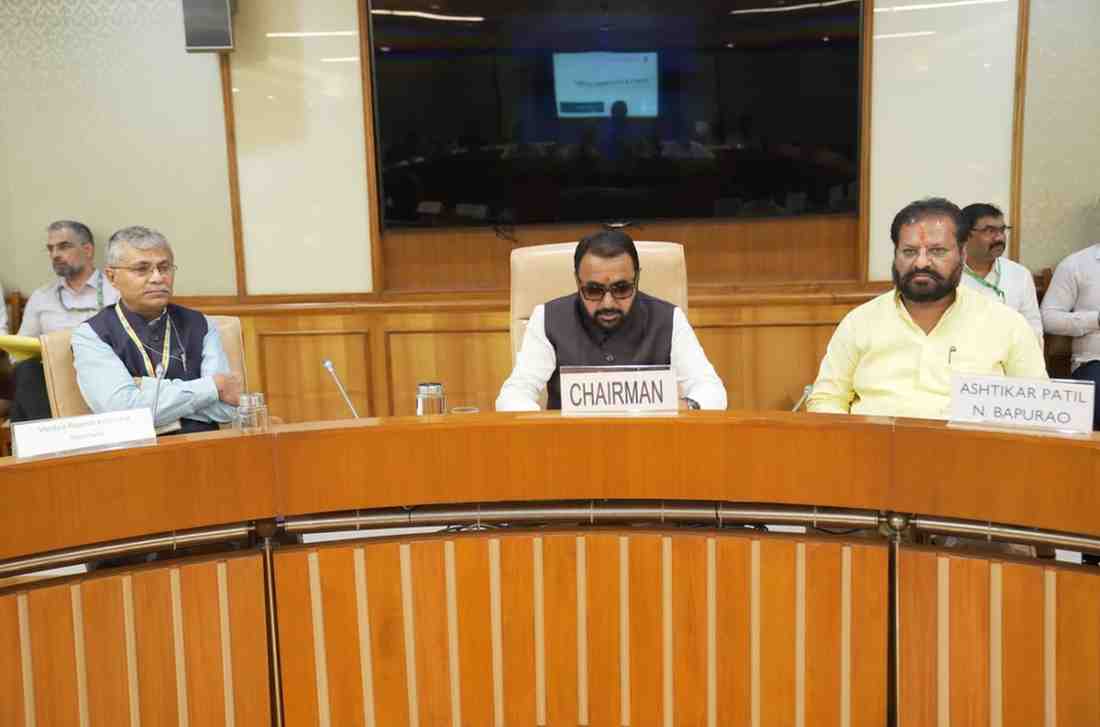
Chairing the Fifth Meeting of the Parliamentary Consultative Committee of the Ministry of Ayush in New Delhi, Jadhav said India’s traditional systems of wellness have an important role to play in addressing the health challenges associated with modern lifestyles.
“Tradition is our strength, science is its evidence, and quality is our priority,” Jadhav said, underlining the government’s emphasis on combining India’s traditional knowledge with scientific research, evidence-based practices and professional quality standards.
Yoga and Naturopathy Gain Importance in Preventive Healthcare
The meeting focused on Yoga and Naturopathy and examined their growing relevance in preventive healthcare, healthy lifestyles, rehabilitation and holistic well-being.
Jadhav said Yoga and Naturopathy occupy a distinctive position in India’s rich knowledge tradition. According to him, both systems offer holistic and largely drug-free approaches that focus on health promotion and overall well-being.
While Yoga can contribute to physical, mental and emotional wellness, Naturopathy places emphasis on nutrition, lifestyle modification, natural therapies and the body’s inherent capacity for healing.

The Minister highlighted the need to move beyond a healthcare approach that primarily focuses on treating diseases. With lifestyle-related disorders, stress and mental health challenges increasing, prevention and health promotion have become increasingly important.
He said Yoga and Naturopathy can complement modern healthcare by encouraging healthier lifestyles, improving physical activity and supporting rehabilitation and wellness.
Rising Lifestyle Diseases Put Focus on Prevention
The growing burden of non-communicable diseases has emerged as a major healthcare challenge. Sedentary lifestyles, stress, unhealthy dietary patterns and insufficient physical activity can contribute to a range of long-term health concerns.
Against this backdrop, Jadhav emphasised the importance of preventive healthcare and lifestyle modification.
He said Yoga and Naturopathy could support several areas, including healthy ageing, rehabilitation, mental health, stress management, pain management, maternal and child health and general wellness.
The Minister also highlighted the importance of preparing India for an ageing population. As the number of elderly citizens rises, maintaining mobility, physical activity, mental well-being, independence and quality of life will become increasingly significant.
Also Read – Delhi Pink Smart Card: BMS Seeks Free Bus Travel For Migrant Women
Jadhav said Yoga and Naturopathy can contribute to healthy and active ageing by supporting physical and mental wellness and encouraging healthier daily routines.
Government Strengthens Yoga and Naturopathy Institutions
The Ministry of Ayush is strengthening the institutional framework supporting Yoga and Naturopathy through several organisations and regulatory bodies.
These include the Morarji Desai National Institute of Yoga (MDNIY), Yoga Certification Board (YCB), National Institute of Naturopathy (NIN), Central Council for Research in Yoga and Naturopathy (CCRYN) and the Naturopathy Registration Board (NRB).
Jadhav highlighted the contribution of these institutions in education, professional training, certification, research, healthcare, quality assurance and standardisation.
He also described the establishment of the Naturopathy Registration Board as an important step towards strengthening professional registration and improving quality standards within the field.
The government’s approach, he indicated, is aimed at ensuring that traditional wellness systems expand alongside appropriate standards of education, research and professional practice.
Research and Scientific Evidence to Drive Expansion
A detailed presentation was made by Alarmelmangai D., Joint Secretary, Ministry of Ayush, outlining the institutional, educational, research and outreach ecosystem surrounding Yoga and Naturopathy.
The presentation highlighted 22 CCRYN units across the country, more than 100 universities offering Yoga courses, over 5,000 Yoga centres, 113 accredited institutions and 29 accredited Personnel Certification Bodies.
India’s expanding research ecosystem was also discussed, with more than 10,500 peer-reviewed, PubMed-indexed publications cited as part of the country’s growing evidence base.
The Ministry also highlighted initiatives involving research collaborations, digital outreach, wellness tourism and employment generation.
The emphasis on scientific evidence reflects the government’s broader objective of ensuring that traditional healthcare systems are supported by credible research and appropriate quality mechanisms.
Parliamentary Panel Seeks Stronger Regulatory Framework
Members of the Parliamentary Consultative Committee and expert participants also discussed the need for stronger and more unified regulatory mechanisms for education in Yoga and Naturopathy.
Members unanimously agreed on the importance of establishing a unified regulatory mechanism for education in both fields, aimed at improving consistency in training, professional standards and educational quality.
The meeting was attended by several Members of Parliament from both Lok Sabha and Rajya Sabha, along with permanent special invitees, senior officials and experts associated with Yoga and Naturopathy.
Vaidya Rajesh Kotecha, Secretary, Ministry of Ayush, Dr. Mukhtar Ahmad Qasmi, Advisor (Unani), Ministry of Ayush, and other senior officials and stakeholders were also present.
Seven Priorities for the Future of Yoga and Naturopathy
The Ministry identified seven key priority areas for strengthening the two systems in the coming years.
These include strengthening education and institutional infrastructure; promoting scientific research and evidence generation; improving Yoga certification and professional standards; enhancing registration and quality assurance in Naturopathy; expanding community-level access to preventive wellness services; promoting Yoga and Naturopathy through wellness tourism and medical value travel; and taking India’s traditional practices to the global stage with scientific evidence and quality standards.
The deliberations ultimately reaffirmed the importance of cooperation among Parliament, the Ministry of Ayush, researchers, experts and other stakeholders.
The government’s vision is to make Yoga and Naturopathy more accessible, evidence-based and professionally regulated while positioning them as important components of preventive healthcare.
Jadhav’s message that “Tradition is our strength, science is its evidence, and quality is our priority” encapsulates the proposed approach: preserving India’s traditional health knowledge while strengthening it through research, regulation, quality assurance and modern scientific validation.
The initiative is being positioned within the broader vision of a Healthy India and Viksit Bharat–2047, with greater emphasis on prevention, wellness, healthy ageing and sustainable healthcare practices.
Click here to join our WhatsApp Channel for real-time news updates and exclusive coverage.