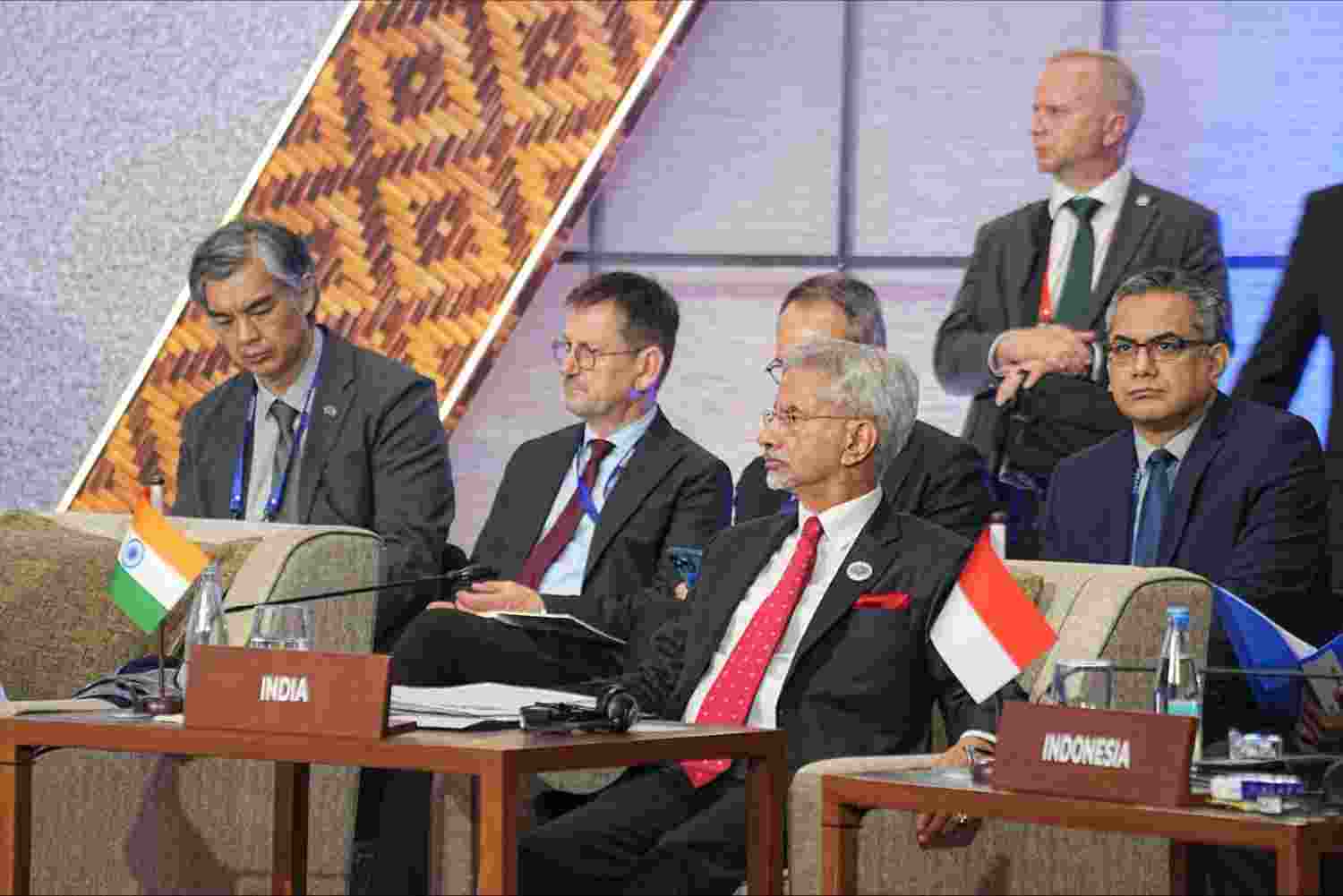
External Affairs Minister Dr. S. Jaishankar on Thursday reaffirmed India’s commitment to a free, open, secure and inclusive Indo-Pacific while calling for zero tolerance towards terrorism during his address at the 33rd ASEAN Regional Forum (ARF) Ministerial Meeting in Manila, Philippines.
Speaking before ministers and representatives from across the Asia-Pacific region, Jaishankar highlighted India’s growing role in regional security, disaster response, maritime cooperation and emerging technologies. He also stressed the need for collective efforts to address geopolitical tensions, strengthen international law and safeguard maritime commerce.
India Backs Stronger ASEAN-Led Security Cooperation
Addressing the gathering, Jaishankar described the ASEAN Regional Forum as an important platform for discussing political and security issues in the Indo-Pacific, particularly at a time when the region faces multiple strategic and security challenges.
He welcomed the adoption of the Manila Plan of Action, stating that its five guiding pillars closely align with India’s own Indo-Pacific vision. According to him, cooperation, dialogue and adherence to international law remain essential for ensuring peace and stability across the region.
India reiterated its support for ASEAN centrality and underlined the importance of strengthening regional partnerships to address both traditional and emerging security concerns.
Disaster Relief Remains a Major Pillar of India’s Regional Engagement
Highlighting India’s humanitarian initiatives, Jaishankar said New Delhi continues to promote a collaborative approach to disaster risk reduction and emergency response.
He noted that India actively shares best practices, develops common Standard Operating Procedures (SOPs) and participates in both real-time and tabletop exercises with partner nations to improve preparedness during natural disasters.
The minister also highlighted India’s support for the Coalition for Disaster Resilient Infrastructure (CDRI), describing it as an important global initiative for building resilient infrastructure capable of withstanding climate-related disasters.
India has consistently deployed field hospitals, search-and-rescue teams, relief materials and medical supplies whenever friendly nations have faced humanitarian crises.
Jaishankar pointed out that India recently supported rehabilitation efforts following cyclones in Sri Lanka, the Philippines and Jamaica, while also extending assistance after earthquakes in Myanmar, Venezuela and Afghanistan. These efforts, he said, reflect India’s commitment to being a dependable first responder in the region and beyond.
Strong Message Against Terrorism
One of the key themes of Jaishankar’s address was counter-terrorism. He declared that there must be zero tolerance for terrorism and emphasised that acts of terror should inevitably carry consequences.
The External Affairs Minister said the international community should work together to choke the financial resources that sustain terrorist organisations. Cutting off terror financing, he argued, remains one of the most effective ways to weaken extremist networks.
Jaishankar also highlighted India’s role as co-chair of the Experts’ Working Group (EWG) on Counter-Terrorism under the ASEAN Defence Ministers’ Meeting Plus (ADMM+) framework alongside Malaysia. In this capacity, India is leading the preparation of a comprehensive compendium of best practices aimed at strengthening regional counter-terrorism cooperation.
Maritime Security and Safe Sea Lanes
Jaishankar underscored the strategic importance of maritime security in the Indo-Pacific, noting that secure sea lanes are vital for global trade and economic stability.
He highlighted India’s Information Fusion Centre and the Indo-Pacific Maritime Domain Awareness initiative as key mechanisms that improve information sharing and maritime coordination among partner countries.
The minister said Indian naval deployments stretching from the North Arabian Sea to the Western Pacific continue to contribute significantly to combating piracy, human trafficking, narcotics smuggling and other transnational maritime crimes.
Also Read: Murshidabad Pool Car Tragedy: CM Suvendu Meets Bereaved Families, Assures Government Jobs
He also stressed that attacks on commercial shipping and civilian infrastructure are unacceptable and reaffirmed that international waterways must remain open, safe and free from disruption.
Focus on Non-Proliferation, AI and Cybersecurity
Beyond conventional security challenges, Jaishankar urged the international community to remain vigilant against efforts that undermine global non-proliferation and disarmament frameworks.
He also highlighted the growing importance of artificial intelligence and cybersecurity, advocating a responsible, transparent and human-centric approach to AI development.
According to him, countries must deepen cooperation to tackle cybercrime, protect critical infrastructure and establish norms for the responsible use of emerging technologies.
India believes that technological innovation should strengthen human welfare while ensuring that security risks associated with AI and cyberspace are effectively addressed through international collaboration.
South China Sea and International Law
On the South China Sea, Jaishankar reaffirmed India’s consistent position supporting freedom of navigation and adherence to international law.
He expressed hope for the early conclusion of a substantive, effective and legally binding Code of Conduct (CoC) that is fully compliant with the United Nations Convention on the Law of the Sea (UNCLOS) 1982.
He emphasised that any future agreement should protect the legitimate rights and interests of all users of international waterways while contributing to regional peace and stability.
India Reaffirms Indo-Pacific Commitment
Jaishankar’s address reflected India’s broader vision of an Indo-Pacific based on cooperation, resilience and respect for international law. By focusing on disaster response, maritime security, counter-terrorism, emerging technologies and multilateral cooperation, India reaffirmed its intention to remain an active and responsible partner in shaping regional security architecture.
The minister’s remarks also underscored New Delhi’s continued support for ASEAN-led mechanisms as essential platforms for dialogue and practical cooperation amid an increasingly complex global security environment.
Click here to join our WhatsApp Channel for real-time news updates and exclusive coverage.