
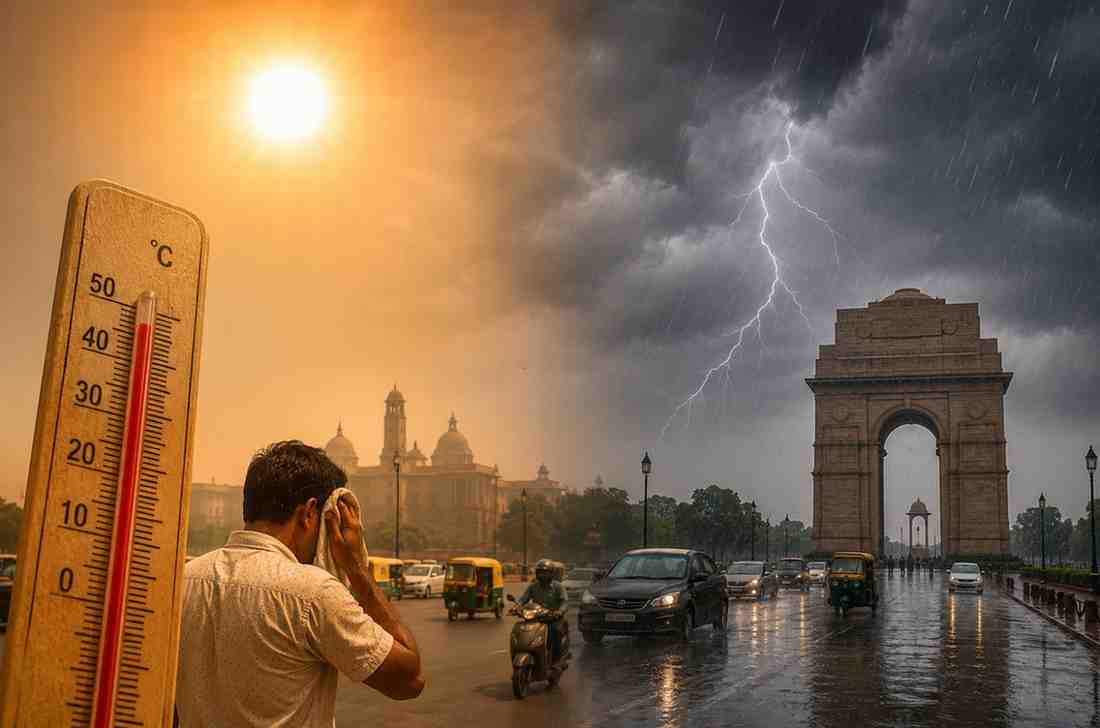
NEW DELHI: Delhi witnessed one of its most uncomfortable weather days of the season as the “real feel” or heat index touched a scorching 51.3°C, making outdoor conditions extremely challenging despite the actual air temperature being significantly lower. High humidity combined with intense heat created dangerous levels of discomfort across the national capital, while the India Meteorological Department (IMD) has forecast rain and thunderstorms beginning Monday, raising hopes of relief.
Extreme Humidity Pushes Heat Index to Dangerous Levels
Although the recorded maximum temperature remained around the low-40s Celsius, the combination of moisture in the atmosphere and weak winds dramatically increased the perceived temperature. The heat index, commonly known as the “real feel” temperature, reflects how hot conditions actually feel to the human body by factoring in humidity along with air temperature.
Meteorologists explained that elevated humidity prevents sweat from evaporating efficiently, reducing the body’s natural cooling process and making people experience far greater heat stress than the thermometer suggests.
Residents Face Difficult Outdoor Conditions
The sweltering weather affected daily life across Delhi, with many residents limiting outdoor activities during peak afternoon hours. Streets remained comparatively less crowded as people sought shelter indoors to avoid prolonged exposure to the oppressive conditions.
Health experts have repeatedly advised vulnerable groups—including children, senior citizens and those with existing medical conditions—to remain hydrated and minimise direct exposure to extreme heat, especially during the hottest part of the day.
Delayed Monsoon Adds to Heat Discomfort
The delayed arrival of the southwest monsoon over Delhi has contributed significantly to the prolonged spell of humid and uncomfortable weather. While moisture-laden winds have increased humidity levels, the absence of widespread rainfall has prevented any meaningful drop in temperatures.
Weather experts note that such conditions often produce a much higher heat index, making the atmosphere feel considerably hotter than the actual recorded temperature.
Rain and Thunderstorms Likely From Monday
The India Meteorological Department has predicted a change in weather beginning Monday, with light to moderate rainfall, thunderstorms and gusty winds expected across Delhi and the National Capital Region.
The department has also issued a yellow alert for several days, warning residents of possible lightning, strong surface winds and brief but intense spells of rain. Wind speeds may reach 30–50 kmph, with stronger gusts during thunderstorms.
Relief Expected but Caution Still Advised
The anticipated rainfall is expected to lower daytime temperatures and improve overall comfort levels. However, meteorologists caution that humidity may remain high immediately after rainfall, meaning conditions could still feel warm even as actual temperatures decline.
Authorities have urged residents to remain alert for sudden weather changes, including thunderstorms, lightning and strong winds that could temporarily disrupt traffic and outdoor activities.
Understanding the ‘Real Feel’ Temperature
Unlike the standard air temperature recorded by weather stations, the heat index measures how hot conditions feel to the human body by combining air temperature with relative humidity. When humidity is high, sweat evaporates more slowly, reducing the body’s ability to cool itself naturally.
This explains why Delhi’s actual temperature of around 41°C translated into a perceived temperature exceeding 51°C, making it one of the season’s most oppressive weather events.
Safety Measures for Residents
Officials continue to advise people to:
- Stay hydrated by drinking plenty of water throughout the day.
- Avoid prolonged outdoor exposure during afternoon hours.
- Wear light, loose-fitting clothing.
- Seek shade or air-conditioned spaces whenever possible.
- Watch for symptoms of heat exhaustion or heatstroke, including dizziness, nausea and excessive fatigue.
- Remain cautious during thunderstorms and avoid standing under trees or near electric poles during lightning activity.
The expected arrival of rain from Monday is likely to provide much-needed respite after several days of oppressive heat, although weather officials continue to monitor the progress of the southwest monsoon over northern India.