Private School Teachers in North India: Silent Crisis Behind India’s Classrooms
Every morning, thousands of private school teachers across North India enter classrooms carrying lesson plans, examination papers, and the responsibility of shaping the nation’s future. Yet behind the smiles they wear in front of students lies a painful reality that rarely reaches public attention.
While many private schools charge substantial tuition fees from parents, a significant number of teachers report receiving salaries that barely meet the cost of basic living. In several cases reported by teachers’ associations, media reports, and public forums, monthly salaries for fresh or contractual teachers range between ₹10,000 and ₹25,000, with only a small percentage of reputed institutions paying salaries comparable to government schools.
A Profession Built on Dedication but Paid Below Dignity
Teaching is not simply delivering lectures. A private school teacher often performs multiple responsibilities beyond classroom instruction, including:
- Preparing lesson plans.
- Conducting assessments and examinations.
- Checking notebooks and answer sheets.
- Maintaining student records.
- Attending meetings with parents.
- Organising school events.
- Supervising assemblies and extracurricular activities.
- Completing administrative and clerical work.
Many teachers report working 8–10 hours inside school and spending an additional 2–4 hours at home preparing lessons and evaluating student work. Despite these responsibilities, compensation frequently remains far below what professionals with similar qualifications earn in other sectors.
Reported Salary Concerns
Teachers across North India have consistently highlighted several concerns:
- Monthly salaries as low as ₹10,000–₹12,000 in some schools.
- Annual increments of only ₹500–₹1,000 despite increasing responsibilities.
- Salary deductions for minor delays or unavoidable leave.
- Contractual employment with little job security.
- Pressure to remain available beyond official working hours.
- Excessive teaching periods without adequate planning time.
- Heavy non-teaching administrative duties.
Some teachers have also publicly alleged illegal salary manipulation practices in which higher salaries are shown on paper while employees are allegedly asked to return part of the amount in cash. Such allegations, if proven, would violate labour laws, taxation rules, and ethical employment standards. These practices require thorough investigation by the concerned authorities.
The Human Cost
Low salaries do not affect only teachers.
Financial stress contributes to anxiety, burnout, declining morale, and professional dissatisfaction. Many talented educators leave the profession altogether, while others remain because alternative employment opportunities are limited.
Ultimately, students also suffer when experienced teachers leave schools due to poor working conditions.
What Should a Fair Salary Look Like?
Although there is no single nationwide salary structure for private school teachers, education experts argue that salaries should reflect qualifications, experience, workload, and regional living costs.
A reasonable monthly salary benchmark in North India could be:
| Qualification & Experience | Suggested Fair Monthly Salary |
|---|---|
| Graduate + B.Ed (Fresher) | ₹30,000–₹40,000 |
| TGT (2–5 years) | ₹40,000–₹55,000 |
| Experienced TGT | ₹50,000–₹70,000 |
| PGT | ₹60,000–₹90,000 |
| Senior Faculty/Coordinators | ₹80,000–₹1,20,000 |
These figures represent reasonable professional benchmarks based on qualifications, responsibilities, and living costs rather than legal minimums.
The Need for Reform
Education cannot improve unless teachers receive dignity alongside responsibility.
The following reforms deserve urgent consideration:
- Transparent salary structures linked to qualifications and experience.
- Timely payment of salaries through verified banking channels.
- Strict action against illegal salary recovery or financial manipulation.
- Protection for teachers who report labour violations.
- Annual salary revisions linked to inflation.
- Regulation of excessive workloads and non-teaching duties.
- Independent grievance redressal mechanisms in every state.
- Regular inspections by education and labour authorities.
An Appeal to Policymakers
Teachers are not merely employees; they are nation builders.
If India aspires to become a global knowledge leader, investment in teachers must become a national priority. Fair salaries, professional respect, secure employment, and transparent employment practices are essential for maintaining educational standards.
Parents, school managements, policymakers, and society must recognise that quality education begins with teachers who are treated with fairness and dignity.
The future of millions of students depends upon the well-being of those standing before the blackboard every single day.
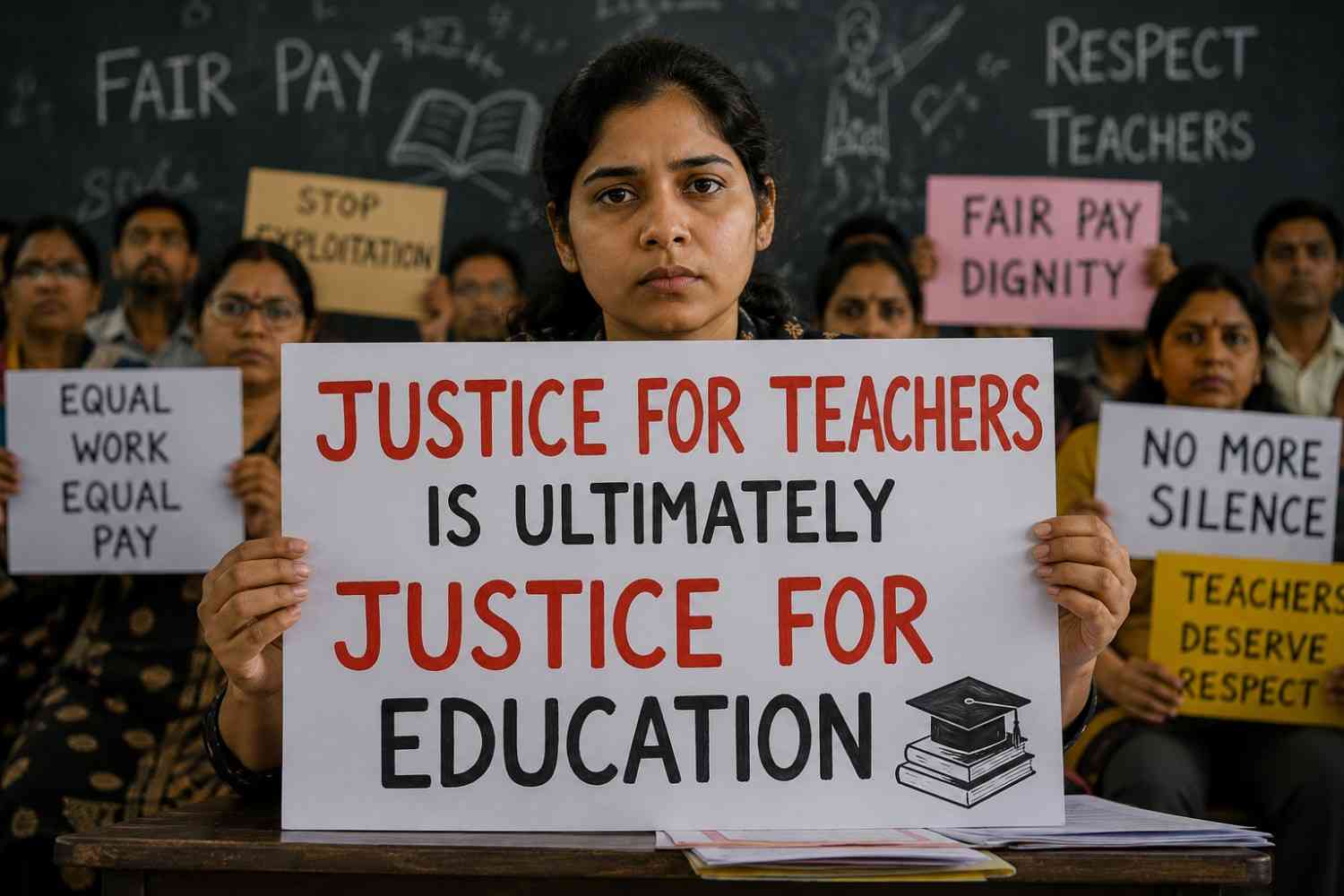
Justice for teachers is ultimately justice for education.