
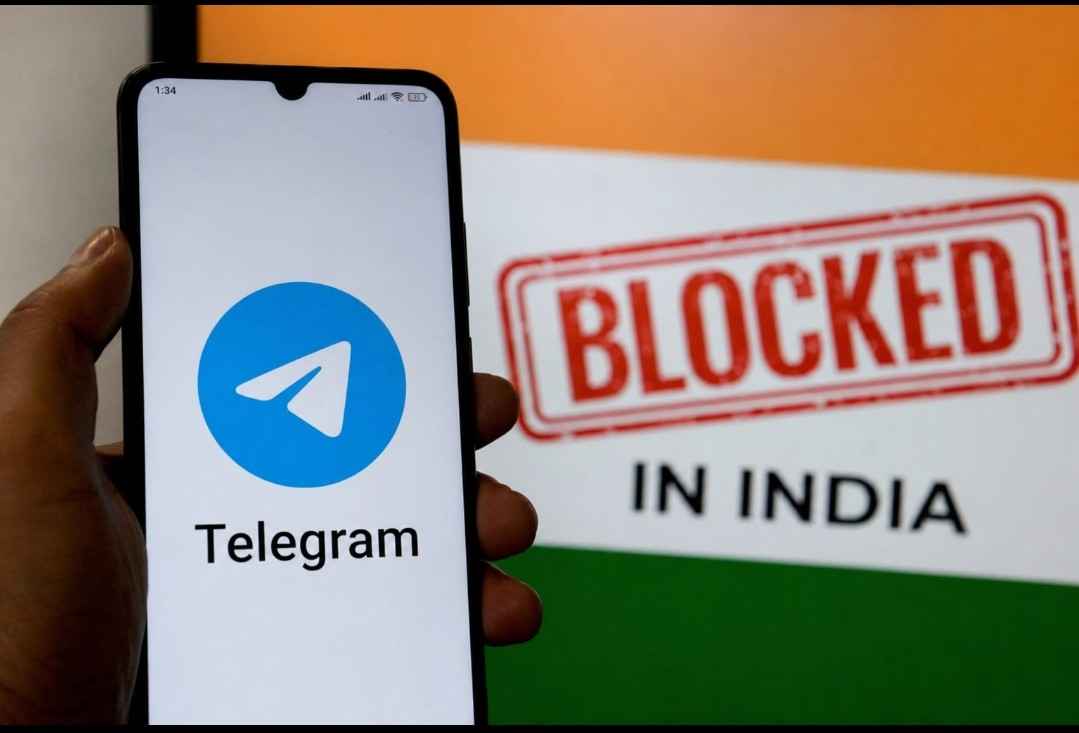
NEW DELHI: The Government of India Imposes Temporary Telegram Restrictions Before NEET Re-Examination. In a major move to protect the integrity of national examinations, the Government of India has temporarily restricted access to Telegram across the country until June 22, 2026, ahead of the NEET (UG) 2026 re-examination scheduled for June 21. Simultaneously, Telegram has been directed to disable its message editing feature in India until June 30, 2026.
The decision was taken by the Ministry of Electronics and Information Technology (MeitY) based on recommendations from the National Testing Agency (NTA) to prevent the spread of fake paper leak claims and online fraud targeting students and their families.
Why Was Telegram Temporarily Blocked?
According to NTA, organised cheating networks have increasingly used Telegram to deceive NEET aspirants by falsely claiming to possess examination papers.
Authorities observed that numerous Telegram channels and groups were actively demanding money from students in exchange for alleged access to leaked question papers.
The government described the action as a temporary and targeted measure, intended to maintain public order and ensure a fair examination process.
Important Note:
- Telegram access in India will remain restricted until June 22, 2026.
- The message editing feature will remain disabled until June 30, 2026.
How Fraudsters Used Telegram to Spread Fake Paper Leak Claims
NTA explained a sophisticated method adopted by fraudsters to create false evidence of paper leaks.
The process typically involved channel administrators posting a harmless message before the examination. After the exam concluded and the genuine question paper became publicly available, they edited the original message to insert the actual questions while keeping the old timestamp intact.
These altered screenshots were then circulated on social media as supposed proof that the examination paper had leaked beforehand.
This deceptive tactic created widespread panic among students and damaged public trust in the examination process.
Important Note:
The message editing feature was specifically targeted to stop the creation of fake ‘proof’ of paper leaks.
Government Invoked Legal Powers Under IT Act
The restriction was issued under Section 69A of the Information Technology Act, 2000, which allows the government to block online platforms in situations involving public order and national interest.
Officials stated that this measure was carefully designed and limited in duration.
Authorities emphasised that this was not a permanent ban but a temporary intervention covering the examination period and its immediate aftermath.
Important Note:
The government called this action a ‘measure of last resort’ after other efforts proved insufficient.
Role of Cyber Crime Agencies
The Indian Cyber Crime Coordination Centre (I4C) under the Ministry of Home Affairs played a key role in monitoring and responding to online fraud.
Working alongside NTA and various state police departments, I4C continuously tracked suspicious Telegram channels, bots, and groups.
States including Bihar, Gujarat, and Rajasthan shared intelligence and helped identify networks involved in spreading misinformation.
Several fraudulent channels were removed before authorities decided that stronger action was necessary.
Important Note:
I4C had already taken down numerous Telegram channels before recommending temporary platform restrictions.
Channels That Targeted Students
NTA reported that many Telegram groups openly operated under alarming names such as:
“PAPER LEAKED NEET”
“Re-NEET 2026”
“Private Mafia”
“REE NEET MAFIAA”
These channels aggressively targeted anxious students and their parents.
Some demanded only a few thousand rupees, while others asked for several lakh rupees in exchange for fake promises of examination papers.
Authorities clarified that these claims were entirely fraudulent.
Important Note:
- NTA has categorically stated that no genuine NEET question paper exists outside the official secured examination chain.
- Every promise of a leaked paper is a scam.
Impact on Ordinary Telegram Users
Officials acknowledged that millions of Indians use Telegram for legitimate purposes, including education, business communication, and personal interactions.
The temporary restriction may inconvenience genuine users. However, authorities stressed that the measure is limited in duration and intended solely to secure the examination process.
The government assured citizens that the restrictions would be lifted once the immediate examination period concludes.
Meanwhile, the message editing limitation will remain active until June 30 to prevent post-examination manipulation.
Important Note:
Users can still send and receive new messages once access is restored; only the editing feature remains restricted until June 30.
NTA’s Message to Students and Parents
NTA has urged students and parents to remain cautious and avoid falling victim to online scams.
Candidates have been advised not to trust any person, group, or channel claiming to provide examination papers in exchange for money.
Officials reiterated that all such claims are fraudulent and intended only to exploit anxious students.
Students are encouraged to rely exclusively on official announcements issued by NTA.
Important Note:
- Do not pay money to any individual or online group claiming to possess the NEET question paper.
- Always verify information through official NTA channels.
Conclusion
The temporary restriction on Telegram represents one of the strongest preventive actions taken to safeguard the credibility of a national examination. While it may temporarily inconvenience ordinary users, authorities believe the measure is necessary to protect millions of students from fraud, misinformation, and organised cheating networks.
As the NEET (UG) 2026 re-examination approaches on June 21, officials are urging candidates to remain vigilant, avoid rumours, and depend solely on authentic information sources to ensure a fair and transparent examination process.