
A fresh political controversy has erupted after Congress leader and Leader of the Opposition in the Lok Sabha, Rahul Gandhi, described India’s economic situation as an impending “economic disaster” during an interaction at Columbia University in New York.
His remarks, highlighting unemployment, weaknesses in the education system and the struggling manufacturing sector, triggered a sharp response from the Bharatiya Janata Party (BJP), which accused him of making statements against India’s national interests while speaking on foreign soil.
The exchange has once again intensified the political confrontation between the Congress and the BJP over India’s economic performance, employment opportunities, democratic institutions and the country’s global image.
Rahul Gandhi Raises Alarm Over India’s Economic Future
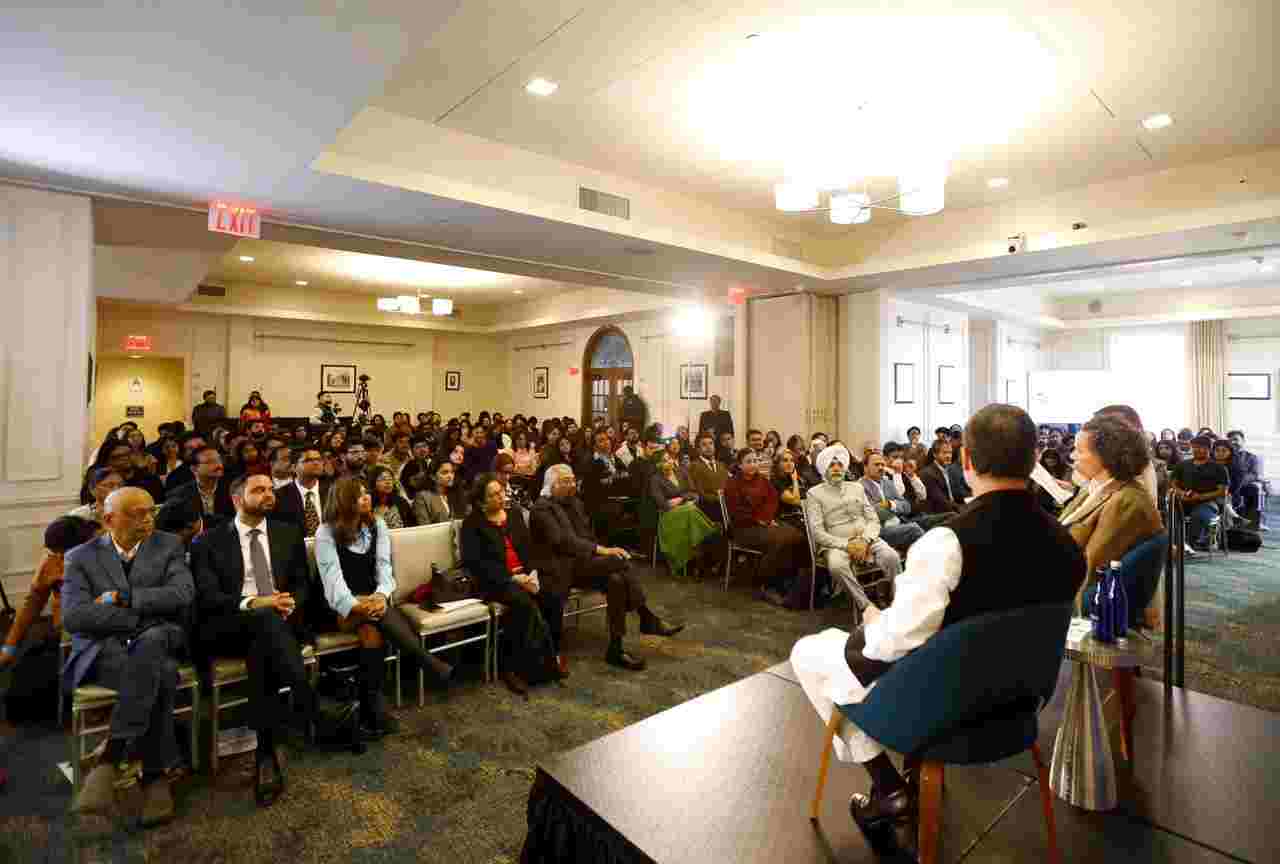
Speaking during a fireside conversation with students, academics and faculty members at Columbia University’s School of International and Public Affairs on Tuesday, November 17, Gandhi expressed serious concerns about the country’s economic direction.
He argued that India’s existing economic model had stopped delivering meaningful results nearly a decade ago and warned that the country could face serious difficulties if fundamental problems remained unaddressed.
Gandhi particularly highlighted two major challenges: widespread unemployment and shortcomings in the education system.
According to the Congress leader, a growing number of educated young Indians are struggling to find meaningful employment despite investing years in their education. He suggested that the disconnect between academic qualifications and actual job opportunities was creating frustration among the country’s younger population.
He also argued that many young people from middle-class families were increasingly questioning whether obtaining professional degrees and higher educational qualifications could genuinely secure their future.
The Congress leader said the central problem was that many young Indians no longer had confidence that their education would translate into stable employment and financial security.
Manufacturing Sector and Small Businesses at the Centre of Concerns
Gandhi also criticised what he described as the weakening of India’s manufacturing foundation. He maintained that small and medium-sized enterprises, along with agriculture, were essential pillars of the Indian economy and played a critical role in generating employment.
According to him, these sectors must receive greater attention if India wants to create sustainable opportunities for its expanding workforce. He questioned the effectiveness of government initiatives, including Make in India and Start-up India, arguing that these programmes had not delivered the manufacturing revival required to address the employment challenge.
Gandhi further maintained that the services sector alone could not generate enough jobs to accommodate India’s enormous workforce.
He argued that although services could contribute significantly to economic growth, manufacturing remained indispensable for providing employment opportunities on a much larger scale.
Calling for a revival of the country’s industrial foundation, he said India could not achieve sustainable economic success without rebuilding its manufacturing capabilities.
Rahul Gandhi Questions Private Investment and Corporate Concentration
Another important aspect of Gandhi’s address involved his criticism of private investment and the concentration of economic opportunities among major corporate groups.
He questioned why private investment was not expanding sufficiently across different sections of the economy and alleged that a limited number of powerful business groups were experiencing significant growth while smaller enterprises continued to face difficulties.
Gandhi specifically mentioned industrialists Gautam Adani and Mukesh Ambani while questioning the distribution of economic opportunities. He also referred to the Tata Group in the context of his concerns about corporate concentration.
The Congress leader argued that a healthy economy required broader participation from businesses of different sizes rather than excessive dependence on a small number of large corporate entities.
He further alleged that the economic framework developed during previous Congress governments had been weakened and needed to be rebuilt. These statements formed part of his wider criticism of the government’s economic policies and its approach towards employment generation.
BJP Launches Strong Counterattack Against Rahul Gandhi
The BJP responded aggressively to Gandhi’s remarks, accusing him of damaging India’s international reputation through his statements during overseas visits.
BJP national spokesperson Pradeep Bhandari described Gandhi as a “leader of anti-India propaganda” and accused him of repeatedly questioning India’s progress and democratic institutions while travelling abroad.
In a post on social media platform X, Bhandari criticised Gandhi for describing India as an economic disaster despite what the BJP considers the country’s strong economic performance and international standing.
He also contrasted Gandhi’s comments with Prime Minister Narendra Modi’s approach during international engagements, arguing that the Prime Minister consistently represents India’s national interests abroad.
Bhandari further alleged that Gandhi’s criticism reflected hostility towards India’s progress and democratic institutions.
The BJP’s response transformed Gandhi’s economic criticism into a broader political confrontation over national pride, economic achievements and the responsibilities of opposition leaders.
Dilip Ghosh Questions Gandhi’s Economic Assessment
BJP leader and West Bengal minister Dilip Ghosh also criticised the Congress leader, accusing him of making politically motivated statements because he was dissatisfied with the government’s performance.
Also Read | Terrorist Lateef Bhat Killed: Security Forces End Year-Long Hunt After 3 Escapes
Ghosh defended India’s economic position, pointing towards the country’s GDP performance and foreign exchange reserves.
He argued that India had achieved considerable progress under Prime Minister Narendra Modi’s leadership and suggested that Gandhi’s criticism was driven by political frustration. His remarks added another dimension to the growing confrontation between the two political parties.
Rahul Gandhi Repeats Vote Chori Allegations Against Election Commission
Apart from the economic controversy, Gandhi also raised questions about India’s electoral system during his interaction at Columbia University.
He reiterated his allegations of “vote chori” and questioned the functioning of the Election Commission.
The Congress leader claimed that approximately 140 million voters who could have participated in the 2024 Lok Sabha elections had been removed from electoral rolls.
He questioned how an election could be considered valid under such circumstances and demanded reforms in the electoral system.
Gandhi also alleged that his party possessed evidence of electoral irregularities and maintained that meaningful reforms were necessary to restore public confidence in the democratic process.
He further expressed concerns about the political atmosphere in the country, claiming that increasing public dissatisfaction could create additional tensions.
These allegations have been repeatedly disputed by the BJP, making electoral integrity another major point of disagreement between the ruling party and the Congress.
Political Battle Over India’s Economy Intensifies
The latest confrontation highlights the continuing political divide over India’s economic direction and development priorities.
While Rahul Gandhi has focused on unemployment, manufacturing weaknesses, educational challenges and the concentration of corporate power, the BJP has defended the government’s economic record and accused the opposition leader of presenting a negative picture of the country internationally.
The controversy is also significant because Gandhi’s comments were delivered before an international academic audience, giving the political exchange an international dimension.
Rahul Gandhi is on a two-day visit to the United States and is also scheduled to interact at the University of Chicago on November 18.
With employment, economic growth, manufacturing and democratic accountability remaining important political issues, the latest exchange is likely to keep the Congress-BJP confrontation in the spotlight.
The central question remains whether India’s economic growth can translate into sufficient employment opportunities and a stronger manufacturing base for millions of young people entering the workforce.
Click here to join our WhatsApp Channel for real-time news updates and exclusive coverage.