
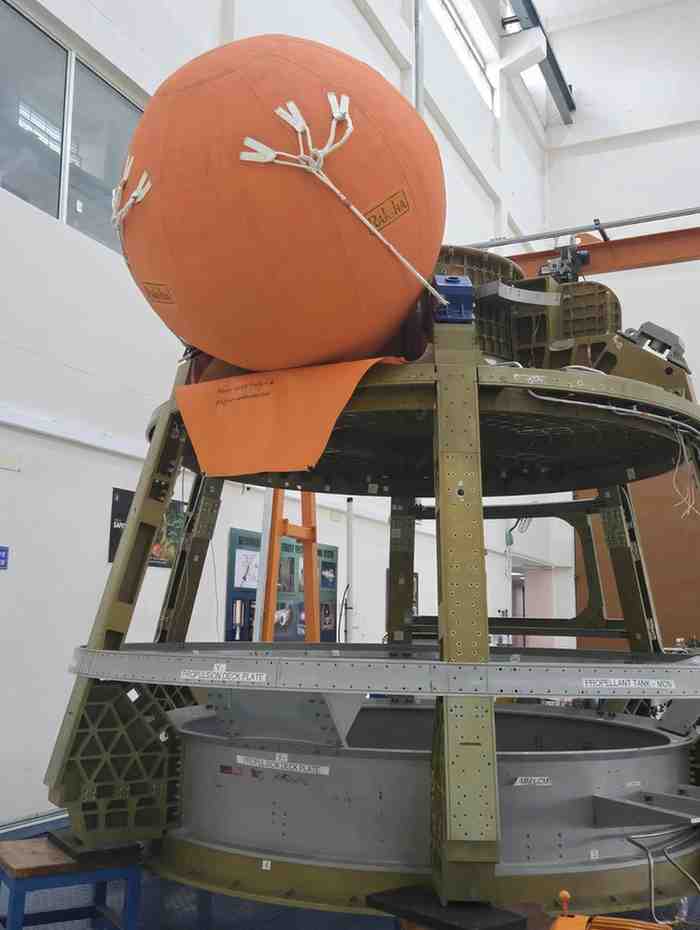
NEW DELHI: The Indian Space Research Organisation (ISRO) has achieved another significant milestone in the Gaganyaan programme after successfully completing three major qualification tests for the crew module systems that will carry Indian astronauts into space. The successful trials represent a major step towards India’s maiden human spaceflight mission, reinforcing the safety and reliability of the spacecraft that will transport astronauts to orbit and bring them safely back to Earth.
Crew Module Passes Three Major Qualification Tests
According to ISRO, the latest qualification campaign focused on validating critical systems of the crew module, the pressurised capsule designed to house astronauts throughout the mission. The tests assessed whether the spacecraft can withstand demanding mission conditions while ensuring crew safety during launch, orbital operations, atmospheric re-entry and recovery.
The successful completion of all three qualification trials demonstrates that the crew module has met stringent performance and safety standards required before progressing to future mission phases. Each test simulated conditions the spacecraft could encounter during actual operations, helping engineers verify system performance under realistic mission environments.
Focus on Astronaut Safety
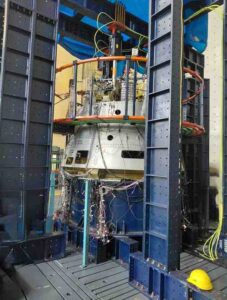
Safety remains the highest priority for the Gaganyaan mission, and the recent qualification tests were aimed at ensuring that every critical subsystem performs flawlessly.
The crew module is the most important component of the human spaceflight mission because it serves as the living and survival compartment for astronauts. It must protect the crew from extreme temperatures during atmospheric re-entry, withstand immense aerodynamic forces, maintain a safe internal environment in orbit and ensure a controlled splashdown in the sea.
ISRO stated that the latest tests examined several aspects of the module’s operational capability, including its ability to remain structurally stable after sea landing, perform separation events correctly and support safe recovery operations. These systems are essential to guaranteeing the astronauts’ safe return to Earth after completing their mission.
Building on Earlier Successes
The latest achievement comes shortly after ISRO completed a series of successful parachute qualification trials for the Gaganyaan programme.
Over the past few days, the space agency has tested the integrated main parachute system, which plays a crucial role in slowing the descending crew module before splashdown. Earlier qualification tests also validated the drogue parachute system, ensuring that the spacecraft can safely transition from high-speed atmospheric re-entry to a controlled descent.
Together, these successful tests significantly improve confidence in the crew recovery sequence, one of the most critical phases of any human spaceflight mission.
Preparing for Future Test Flights
ISRO is gradually moving through an extensive qualification programme before launching astronauts into space.
The agency has adopted a phased testing strategy involving thousands of ground evaluations, subsystem validations, abort demonstrations and uncrewed orbital missions. Each milestone is intended to eliminate technical uncertainties before the first crewed launch.
Upcoming activities are expected to include additional integrated flight demonstrations, abort system validations and uncrewed Gaganyaan missions, all designed to verify the spacecraft’s readiness under actual flight conditions before astronauts board the vehicle.
India’s Ambitious Human Spaceflight Programme
The Gaganyaan mission represents one of India’s most ambitious scientific and technological projects. Once completed, India will join the select group of nations capable of independently sending humans into space using domestically developed launch systems and spacecraft.
The mission is expected to place Indian astronauts into low-Earth orbit for several days before safely returning them to Earth. Besides demonstrating advanced spaceflight capability, the programme is expected to accelerate innovation in aerospace engineering, materials science, life-support technologies and precision manufacturing.
The project has also encouraged collaboration between ISRO, the Indian Air Force, DRDO, Indian Navy and several industrial partners responsible for developing specialised technologies needed for human spaceflight.
Strengthening India’s Future Space Ambitions
Experts believe every successful qualification test reduces mission risk and moves India closer to achieving a historic milestone in space exploration. The rigorous validation process reflects ISRO’s emphasis on reliability and international safety standards, especially for missions involving human lives.
The successful completion of the latest crew module qualification tests demonstrates that the spacecraft’s critical systems continue to perform as designed. As testing progresses, ISRO is steadily building confidence in the technologies that will eventually carry Indian astronauts on the country’s first indigenous human spaceflight mission.
With every milestone achieved, Gaganyaan advances from an ambitious vision toward operational reality, laying the foundation for future crewed missions, expanded scientific research and India’s long-term presence in human space exploration.
Click here to join our WhatsApp Channel for real-time news updates and exclusive coverage.